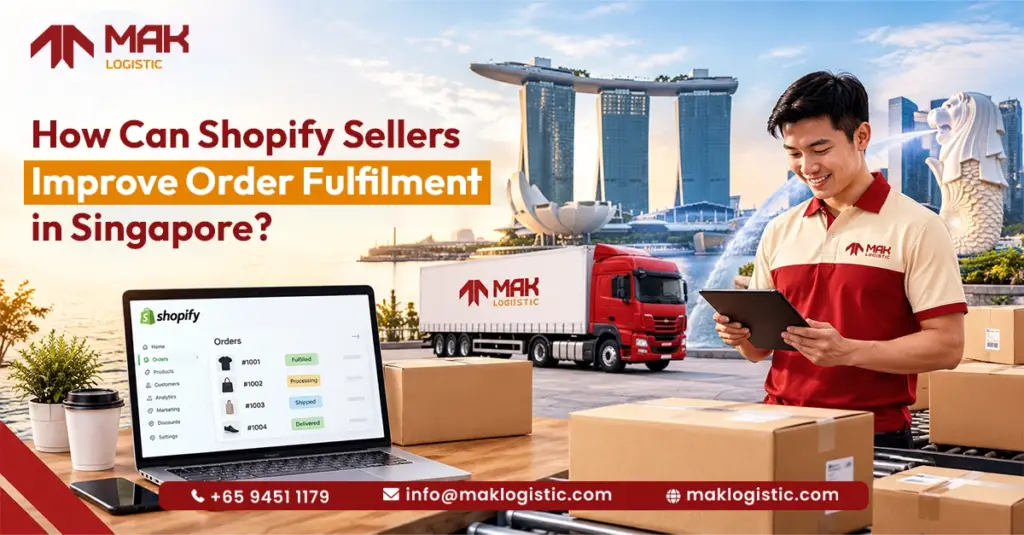
Running a Shopify store involves more than listing products and attracting customers. Once an order comes in, sellers must ensure that the product is available, the correct item is picked and packed, and the order is dispatched on time.
As an online store grows, managing these activities manually can become increasingly challenging. Inventory discrepancies, delayed dispatches, packing errors and rising fulfilment costs can affect both customer satisfaction and business performance.
For Shopify sellers in Singapore, improving order fulfilment means building a process that can handle everyday orders efficiently while remaining flexible during sales campaigns and peak periods. Working with a reliable order fulfillment service in Singapore can also help businesses manage warehousing, picking, packing and dispatch as order volumes grow.
In this guide, we explore how Shopify sellers can improve order fulfilment, common challenges to address and how warehousing and logistics support can help businesses manage growing order volumes.
What Is Order Fulfilment for Shopify Sellers?
Order fulfilment is the process of managing an online order from the moment a customer completes a purchase until the product is delivered. It can also include returns processing and updating inventory after returned products are inspected.
For a Shopify seller, the typical fulfilment process involves:
- Order receipt: A customer places an order through the Shopify store.
- Inventory verification: The seller confirms that the ordered products are available.
- Order picking: The correct products and quantities are collected from storage.
- Packing and checking: Products are checked, packed and labelled for dispatch.
- Dispatch and transportation: The order is handed over for delivery.
- Order updates: Delivery information is shared with the customer where available.
- Returns management: Returned products are inspected and processed according to the seller’s policy.
Each step affects the next. If stock records are inaccurate or picking is delayed, the entire fulfilment process can fall behind schedule.
8 Ways Shopify Sellers Can Improve Order Fulfilment in Singapore
1. Maintain Accurate Inventory Records
Inventory accuracy is one of the foundations of effective e-commerce fulfilment. When product quantities are incorrect, sellers may accept orders for unavailable items or discover stock shortages only after a customer has paid.
Shopify sellers should establish a consistent process for recording incoming stock, sales, damaged products, returns and inventory adjustments.
Practical steps include:
- Update stock records whenever inventory changes.
- Conduct regular physical stock checks.
- Set reorder levels for fast-moving products.
- Separate damaged or returned products until they are inspected.
- Review discrepancies between physical stock and recorded quantities.
As order volumes grow, sellers can consider inventory management tools that suit their operations. If multiple sales channels are used, ensure that stock updates are coordinated across the relevant systems.
Accurate inventory records help reduce cancellations, improve purchasing decisions and make it easier to fulfil orders confidently.
2. Organise Warehouse Storage for Faster Picking
A poorly organised warehouse can slow down order processing. Staff may spend unnecessary time locating products, checking labels or moving between storage areas.
Shopify sellers can improve picking efficiency by organising products according to their characteristics, turnover and handling requirements.
For example, frequently ordered products can be placed in accessible locations, while clear labels can help staff identify stock quickly. Products with similar packaging or variations should be stored and identified carefully to reduce picking mistakes.
Businesses should also maintain a clear distinction between receiving, storage, packing and dispatch areas where practical.
An organised warehouse layout can reduce unnecessary movement, support more consistent picking and help teams process orders efficiently.
3. Standardise the Picking and Packing Process
Picking and packing errors can lead to incorrect deliveries, customer complaints, returns and additional transportation costs.
A standard operating procedure helps warehouse staff follow the same steps for each order. This can include checking the order details, verifying product codes, confirming quantities and inspecting the package before dispatch.
Shopify sellers can improve these processes by:
- Using picking lists or digital order records.
- Checking product variants, such as size, colour or model.
- Verifying quantities before sealing packages.
- Using packaging appropriate for the product.
- Applying the correct delivery label.
- Recording errors to identify recurring problems.
Barcode scanning or other digital verification tools may also be useful when order volumes justify the investment.
The goal is to make accurate order preparation a repeatable process rather than relying entirely on memory or manual checking.
4. Set Clear Order Processing and Dispatch Cut-Off Times
Customers may expect quick delivery, but sellers must account for the time required to confirm orders, pick products, pack them and arrange transportation.
Without clear cut-off times, orders may remain unprocessed or miss planned collections.
Shopify sellers should establish internal deadlines for processing orders and communicate realistic dispatch expectations to customers. The schedule should account for warehouse operating hours, weekends, public holidays and transportation arrangements.
For example, orders received before an agreed cut-off may be prepared for the next scheduled collection, subject to stock availability and operational capacity.
It is also important to distinguish between order processing time and delivery time. An order can be packed promptly but still take longer to arrive because of transportation or delivery conditions.
Clear expectations help customers understand when their orders are likely to be dispatched and delivered.
5. Prepare for Sales Campaigns and Peak Periods
Promotional campaigns, festive sales and successful marketing activities can increase order volumes quickly. Without preparation, a sudden increase in demand can create stock shortages, packing backlogs and dispatch delays.
Shopify sellers should review historical sales, identify popular products and estimate the additional inventory and staffing required for upcoming campaigns.
Preparation may include:
- Checking stock availability before launching promotions.
- Preparing packaging materials in advance.
- Reviewing warehouse space and picking arrangements.
- Planning additional manpower where necessary.
- Confirming transportation and collection schedules.
- Setting realistic order processing expectations.
For sellers experiencing seasonal demand, flexible warehouse manpower or outsourced fulfilment support may help manage additional workloads, depending on availability and the agreed service scope.
Planning ahead allows businesses to respond to demand without compromising order accuracy.
6. Improve Transportation and Delivery Coordination
Once an order is packed, it must be handed over for delivery. Poor coordination between warehouse operations and transportation providers can result in missed collections, delayed dispatches and unnecessary waiting time.
Shopify sellers should confirm collection schedules, prepare orders before the agreed cut-off and ensure that delivery information is accurate.
They should also monitor recurring delivery issues to identify whether delays are caused by warehouse preparation, incorrect details, collection arrangements or transportation.
For businesses handling frequent orders, a structured dispatch process can make daily operations easier to manage.
If a seller also transfers inventory between storage locations, coordinating warehouse-to-warehouse transportation can help maintain stock availability across the fulfilment network.
7. Establish a Clear Returns Management Process
Returns are a normal part of many e-commerce operations. However, poorly managed returns can create inventory discrepancies and delay the resale of products that are still in suitable condition.
Shopify sellers should establish a process for receiving returned items, checking their condition and recording the outcome.
Depending on the product and the seller’s policy, returned stock may be:
- Restocked after inspection.
- Held separately while awaiting further checks.
- Repaired or repackaged where appropriate.
- Marked as damaged or unsuitable for resale.
Inventory records should be updated only after the returned product has been assessed and its status confirmed.
A clear returns process helps sellers maintain accurate stock information, identify recurring product issues and manage customer requests more consistently.
8. Review Fulfilment Performance Regularly
Improving fulfilment requires more than responding to problems when they occur. Shopify sellers should track performance to understand where time and money are being spent.
Useful metrics include:
Order accuracy rate: Measures how often orders are prepared correctly.
Order processing time: Tracks how long it takes to prepare an order for dispatch.
On-time dispatch rate: Measures the percentage of orders dispatched by the agreed deadline.
Inventory accuracy: Compares recorded stock with physical inventory.
Return rate: Tracks how frequently products are returned.
Fulfilment cost per order: Measures relevant fulfilment expenses against the number of orders processed.
Review these metrics regularly and look for patterns. If packing errors increase during busy periods, for example, the business may need clearer procedures, better product identification or additional staffing support.
The most useful metrics depend on the store’s size, product range and fulfilment model.
Should Shopify Sellers Manage Fulfilment In-house or Outsource It?
Shopify sellers can fulfil orders themselves or work with a third-party logistics (3PL) provider. The right option depends on order volume, available resources, product requirements and business goals.
In-house fulfilment
Managing fulfilment internally gives sellers direct control over stock, packaging and daily order preparation. It may suit smaller stores with manageable order volumes and sufficient storage space.
However, as sales grow, the business must also manage warehouse space, staffing, inventory records, packing materials and dispatch coordination.
Outsourced fulfilment
An outsourced fulfilment arrangement allows a business to assign selected logistics activities to an external provider. Depending on the provider’s capabilities and agreement, services may include warehouse storage, inventory handling, picking and packing, and transportation coordination.
This may be worth considering when a seller has limited storage capacity, experiences frequent order backlogs or wants to reduce the time spent managing daily warehouse activities.
Before choosing a provider, compare the total cost, inventory reporting process, order cut-off times, service scope and ability to accommodate changes in demand.
The objective is not simply to outsource as much as possible. It is to select a fulfilment model that fits the business’s current requirements and can adapt as it grows.
How MAK Logistic Supports E-commerce Fulfilment in Singapore
As Shopify stores grow, managing storage, inventory, order preparation and transportation can require additional operational resources.
MAK Logistic supports businesses in Singapore with warehousing and logistics services designed around their operational requirements. Depending on the agreed service scope, relevant support may include:
- Warehouse storage: Storage arrangements for products based on business needs.
- Inventory handling: Support for organising and managing stored products.
- Picking and packing: Operational assistance with preparing orders for dispatch.
- E-commerce fulfilment: Support with warehouse activities involved in processing online orders.
- Transportation services: Coordination of product movement between relevant locations.
- Flexible warehouse manpower: Staffing support for changing warehouse workloads, subject to availability and agreed arrangements.
Shopify sellers should confirm how any external fulfilment arrangement will receive order information and communicate inventory and dispatch updates. System integration, reporting and other technical requirements should be agreed upon before operations begin.
If your store is experiencing growing order volumes or needs additional warehouse support, reviewing your fulfilment workflow can help identify the most suitable next steps.
Looking for e-commerce fulfilment support in Singapore?
Contact MAK Logistic to discuss your warehousing and logistics requirements.
Phone/WhatsApp: +65 9451 1179
Email: info@maklogistic.com
Website: https://maklogistic.com/
Frequently Asked Questions
1. How can Shopify sellers improve order fulfilment in Singapore?
Shopify sellers can improve fulfilment by maintaining accurate inventory records, organising warehouse storage, standardising picking and packing, setting clear dispatch cut-off times, preparing for peak demand and reviewing fulfilment performance regularly.
2. What is the best way to manage Shopify inventory?
The best approach depends on the size and complexity of the store. Sellers should record every stock movement, conduct regular inventory checks, set reorder levels and use suitable inventory management tools. Businesses selling through multiple channels should also coordinate stock updates across those channels.
3. When should a Shopify seller outsource order fulfilment?
Outsourcing may be worth considering when order volumes increase, storage space becomes limited, fulfilment errors occur frequently or managing orders takes too much time away from core business activities. Sellers should compare costs, service capabilities and reporting arrangements before choosing a provider.
4. What should Shopify sellers look for in a fulfilment provider in Singapore?
Look for suitable warehouse storage, accurate inventory handling, picking and packing support, reliable dispatch coordination, transparent pricing and the ability to handle changing order volumes. Confirm the provider’s exact services and how order and inventory information will be shared.
5. How can businesses reduce Shopify order fulfilment costs?
Businesses can review warehouse space utilisation, reduce picking errors, use suitable packaging, improve inventory planning, prepare for peak periods and monitor fulfilment cost per order. Comparing in-house costs with an outsourced arrangement can also help identify the right operating model.
Conclusion
Improving order fulfilment is essential for Shopify sellers who want to grow their businesses while maintaining reliable operations. Accurate inventory, organised storage, consistent picking and packing, effective transportation coordination and structured returns handling all contribute to a smoother fulfilment process.
As order volumes increase, sellers should regularly review their processes and determine whether their current storage, staffing and logistics arrangements remain suitable.
With the right workflow and operational support, Singapore businesses can manage orders more consistently and prepare their stores for future growth.
Need support with warehousing and e-commerce fulfilment in Singapore? Contact MAK Logistic to discuss a solution that suits your business.