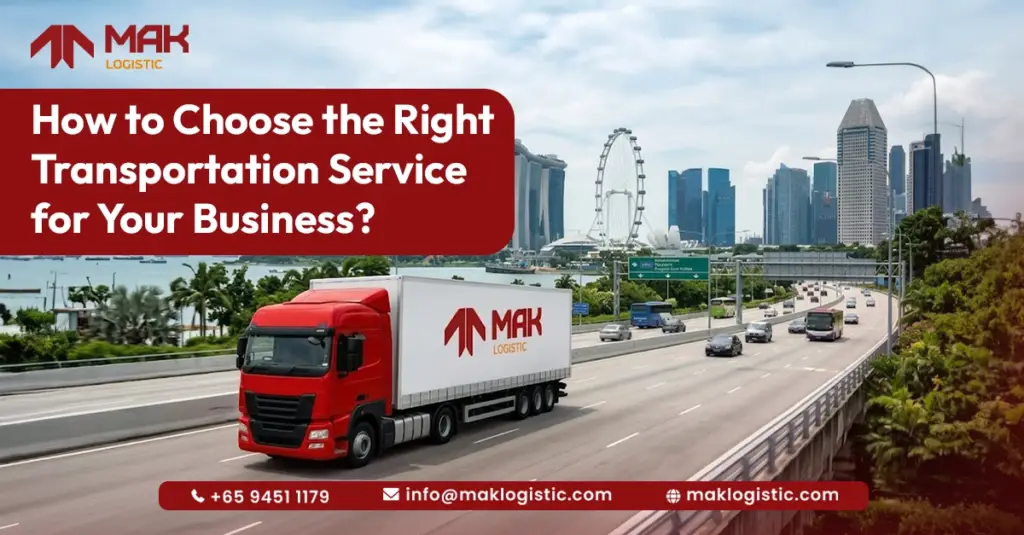
Choosing the right transportation service is an important decision for businesses that need to move products between warehouses, suppliers, distribution centres and customers. The right provider can help businesses coordinate deliveries, manage operating costs and maintain a more reliable supply chain.
In Singapore, businesses across e-commerce, wholesale, manufacturing, food distribution and electronics may have different transportation requirements. Some need regular warehouse-to-warehouse transfers, while others require airport-to-warehouse transportation, temperature-controlled handling or scheduled deliveries to multiple locations.
With different providers and service options available, how can you identify the right transportation partner for your business?
This guide explains the key factors to consider when choosing transportation services in Singapore, common mistakes to avoid and how to find a solution that suits your operational needs.
What Is a Business Transportation Service?
A business transportation service involves moving products or goods between locations as part of a company’s supply chain. Depending on the provider and agreed service scope, this may include collection, scheduled transportation, delivery coordination and handling requirements.
Transportation services can support several business activities, including:
- Moving products from suppliers to warehouses.
- Transferring inventory between warehouse locations.
- Transporting products from airports to warehouses.
- Delivering products to retailers, distributors or business customers.
- Supporting e-commerce distribution and replenishment.
- Transporting goods that require specific handling conditions.
For businesses that rely on regular product movement, choosing a suitable transportation provider can help connect warehousing, inventory management and distribution more effectively.
10 Factors to Consider When Choosing a Transportation Service
1. Understand Your Business Transportation Requirements
Before comparing providers, identify exactly what your business needs to transport and where the products need to go.
Consider the type of products, delivery locations, shipment frequency, average load size and required delivery schedule. A business transporting electronics may have different handling requirements from a food distributor or an online retailer.
Ask yourself:
- Do you need regular or occasional transportation?
- Are you moving products between warehouses, airports or customer locations?
- Do your products require special handling?
- Are deliveries scheduled, urgent or dependent on changing order volumes?
- Do you need transportation only, or support with warehousing and inventory handling as well?
Having clear answers makes it easier to compare providers against your actual requirements rather than choosing based on price alone.
2. Check the Provider’s Experience and Capabilities
Not every transportation provider handles every type of product or delivery arrangement. Before engaging a company, check whether its services match your business operations.
For example, electronics businesses may prioritise careful handling and suitable transport arrangements. Food distributors may require temperature-controlled transportation for products that must remain within specified temperature ranges. E-commerce businesses may focus on dependable dispatch coordination and the ability to manage changing order volumes.
Ask prospective providers about their relevant experience, vehicle availability, handling procedures and ability to accommodate your delivery schedule.
A provider should be able to explain its capabilities clearly and identify any limitations before you commit.
3. Evaluate Delivery Reliability
Reliable transportation helps businesses maintain stock availability, meet delivery commitments and coordinate downstream operations.
Frequent delays can affect warehouse schedules, customer satisfaction and relationships with business partners. When evaluating transportation services in Singapore, ask how the provider manages collection schedules, delivery coordination and unexpected disruptions.
Useful questions include:
- How are collection and delivery schedules confirmed?
- How does the provider communicate delays?
- What happens when a vehicle or delivery arrangement is disrupted?
- Is delivery status information available?
- How are recurring service issues reviewed?
Where possible, establish measurable service expectations, such as agreed collection windows, delivery schedules and communication procedures.
4. Compare the Total Transportation Cost
Price is an important consideration, but the lowest quotation may not provide the best overall value.
Transportation costs can depend on distance, load size, delivery frequency, vehicle requirements, waiting time, handling needs and scheduling arrangements. Additional charges may also apply depending on the provider’s pricing structure.
When comparing transportation services, request a clear breakdown of the charges and confirm what is included.
Review the following:
- Base transportation charges.
- Additional handling or waiting-time fees.
- Charges for urgent or special delivery arrangements.
- Minimum booking requirements, if applicable.
- Cancellation and rescheduling terms.
- Any additional service or administrative charges.
It is also worth considering the indirect cost of unreliable transportation. Missed collection windows, delayed inventory transfers and repeated coordination problems can create extra work for your team.
The goal is to find a transportation service that offers suitable capabilities, transparent pricing and dependable operations.
5. Confirm Product Handling and Safety Requirements
Different products require different transportation arrangements. Before selecting a provider, explain any handling requirements associated with your goods.
For example, temperature-sensitive products may require suitable cold-chain arrangements. Electronics and semiconductor-related products may need careful handling and appropriate protection during movement. Fragile or high-value products may require additional precautions based on their characteristics.
Ask the provider to explain how it accommodates these requirements and what responsibilities remain with your business.
If your products require temperature control, confirm the applicable temperature range, monitoring arrangements and procedures for handling deviations. If special handling is needed, clarify how it will be documented and communicated.
A suitable transportation partner should understand your requirements before the service begins.
6. Check Flexibility and Scalability
Transportation demand can change throughout the year. Promotional campaigns, seasonal peaks, new business contracts and changes in inventory levels may increase or reduce the number of required trips.
A suitable provider should be able to explain how it handles changes in delivery volume and scheduling, subject to available capacity and agreed terms.
When evaluating flexibility, consider whether the provider can support:
- Changes in regular collection schedules.
- Additional trips during busy periods.
- Different delivery locations.
- Changes in load size or frequency.
- Coordination with your warehouse operating hours.
Businesses experiencing growth should also consider whether the provider can support future requirements without forcing them to change their entire logistics arrangement.
7. Look for Clear Communication and Service Coordination
Transportation involves coordination between the business, warehouse staff, drivers and sometimes customers or receiving locations. Unclear instructions can lead to missed collections, waiting time and delivery errors.
Before choosing a provider, understand how bookings are confirmed, how delivery instructions are shared and whom your team should contact when an issue arises.
Clear communication is particularly important when transportation is connected to warehouse operations. Products need to be ready for collection, documentation must be available where required, and receiving locations need to be prepared for delivery.
Establishing clear responsibilities and escalation procedures helps reduce confusion and keeps operations moving.
8. Consider Tracking and Operational Visibility
Businesses need to know where their products are in the transportation process, especially when deliveries affect inventory availability or customer commitments.
Depending on the service, tracking and reporting capabilities may help businesses confirm collection, monitor delivery progress and investigate delays.
Ask what information the provider can supply and how frequently updates are available. Also clarify whether tracking is available for every service or only for selected arrangements.
Even when sophisticated tracking systems are not available, clear communication about collection and delivery status can improve operational visibility.
9. Assess Warehouse and Logistics Integration
Transportation rarely operates in isolation. Many businesses also need warehouse storage, inventory handling, order preparation and coordination between different locations.
Working with providers that can support relevant warehousing and logistics activities may simplify coordination, depending on the service arrangement.
For example, a business transferring stock between warehouses may need its transportation schedule to align with inventory preparation and receiving procedures. An e-commerce business may need packed orders to be ready before the agreed collection time.
If your business has several logistics requirements, consider whether coordinating them through one provider or a smaller number of partners would improve efficiency. Compare the actual service scope, costs and responsibilities before deciding.
Learn more about the role of third-party logistics in our article, 3PL Services Explained: Warehousing, Transportation and Fulfillment in Singapore.
10. Review Service Terms and Responsibilities
Before finalising an agreement, ensure that the service scope and responsibilities are clearly documented.
Check the agreed collection and delivery arrangements, pricing, cancellation terms, handling requirements and procedures for reporting damaged or missing products.
You should also clarify how claims are handled, what insurance or liability provisions apply and whether any exclusions or limitations are stated in the agreement.
For businesses transporting specialised or high-value products, these details are especially important. Do not assume that every provider offers the same coverage or accepts the same responsibilities.
A clear agreement helps both parties understand expectations and provides a basis for reviewing service performance.
Which Type of Transportation Service Does Your Business Need?
The right transportation arrangement depends on your products, delivery routes and operational requirements.
| Business requirement | What to look for |
| Warehouse-to-warehouse transfers | Coordinated collection and receiving schedules, suitable vehicle capacity and clear inventory transfer procedures |
| Airport-to-warehouse transportation | Collection coordination, relevant documentation and alignment with warehouse receiving hours |
| E-commerce distribution | Dependable dispatch coordination, suitable delivery arrangements and flexibility for changing order volumes |
| Food and temperature-sensitive products | Appropriate cold-chain capability and clearly defined temperature requirements |
| Electronics and semiconductor products | Suitable handling procedures, product protection and transport arrangements matched to the goods |
| Regular wholesale distribution | Consistent scheduling, appropriate load capacity and clear delivery communication |
These are general considerations rather than guarantees that every provider offers each service. Always confirm the provider’s capabilities and the agreed service scope before booking.
Common Mistakes to Avoid When Selecting a Transportation Provider
Even businesses with clear delivery requirements can overlook important details when comparing providers.
Choosing based on price alone: A low initial quotation may not include all handling, waiting-time or special-service charges.
Ignoring product requirements: A provider must be able to accommodate the handling conditions your goods need.
Failing to define delivery expectations: Unclear collection windows, receiving arrangements and communication procedures can create avoidable delays.
Overlooking peak-period demand: Confirm how additional transportation requirements will be handled when demand increases.
Not checking service limitations: Verify vehicle availability, delivery coverage, tracking options and any restrictions before making a commitment.
Treating transportation as a separate activity: If warehouse preparation and delivery schedules are not aligned, even a capable transportation provider may struggle to meet the intended timeline.
Taking time to clarify these details can help businesses make a more informed decision.
How MAK Logistic Supports Business Transportation in Singapore
MAK Logistic supports businesses in Singapore with logistics services designed to help coordinate product movement and warehouse operations.
Depending on your requirements and the agreed service scope, our transportation support may include warehouse-to-warehouse transfers, airport-to-warehouse transportation, general goods transportation and specialised arrangements for products that require appropriate handling.
MAK Logistic also offers related services such as warehouse storage, inventory handling, e-commerce fulfillment and flexible warehouse manpower supply. For businesses managing several logistics activities, combining suitable services can help improve coordination between storage, handling and transportation.
Every business has different operational requirements. The first step is to understand your delivery routes, product characteristics, load sizes and scheduling needs before identifying an appropriate arrangement.
Looking for transportation services in Singapore?
Contact MAK Logistic to discuss your business requirements and explore suitable warehousing and transportation support.
Phone/WhatsApp: +65 9451 1179
Email: info@maklogistic.com
Website: https://maklogistic.com/
Frequently Asked Questions
1. How do I choose the right transportation service for my business?
Start by identifying your delivery routes, product types, load sizes, delivery frequency and handling requirements. Compare providers based on service capabilities, reliability, pricing transparency, flexibility, communication and relevant experience.
2. How much do transportation services in Singapore cost?
The cost depends on factors such as distance, load size, delivery frequency, vehicle requirements, waiting time and special handling needs. Request a detailed quotation and confirm whether additional charges may apply before engaging a provider.
3. What is the difference between transportation and logistics services?
Transportation focuses on moving goods between locations. Logistics services can cover a broader range of activities, including warehousing, inventory handling, order fulfillment, distribution planning and transportation coordination.
4. Should a business use the same provider for warehousing and transportation?
Using one provider for both services may simplify coordination when warehouse operations and transportation schedules are closely connected. However, the best arrangement depends on service capabilities, costs, operational requirements and the responsibilities covered by each agreement.
5. What should I check before hiring a transportation provider in Singapore?
Check the provider’s relevant experience, vehicle and handling capabilities, delivery reliability, pricing structure, scheduling flexibility, communication procedures and service terms. Confirm that the provider can accommodate your products and delivery requirements before entering into an agreement.
Conclusion
Choosing the right transportation service requires more than comparing quotations. Businesses should consider product handling, delivery reliability, operational flexibility, communication, total cost and coordination with warehouse activities.
By evaluating these factors carefully, Singapore businesses can select a transportation partner that supports their current operations and future growth.
Whether you need regular product transfers, warehouse-to-warehouse transportation or support coordinating transportation with warehousing, the right arrangement can help make your supply chain more organised and dependable.
Speak with MAK Logistic to discuss transportation and logistics support for your business in Singapore.