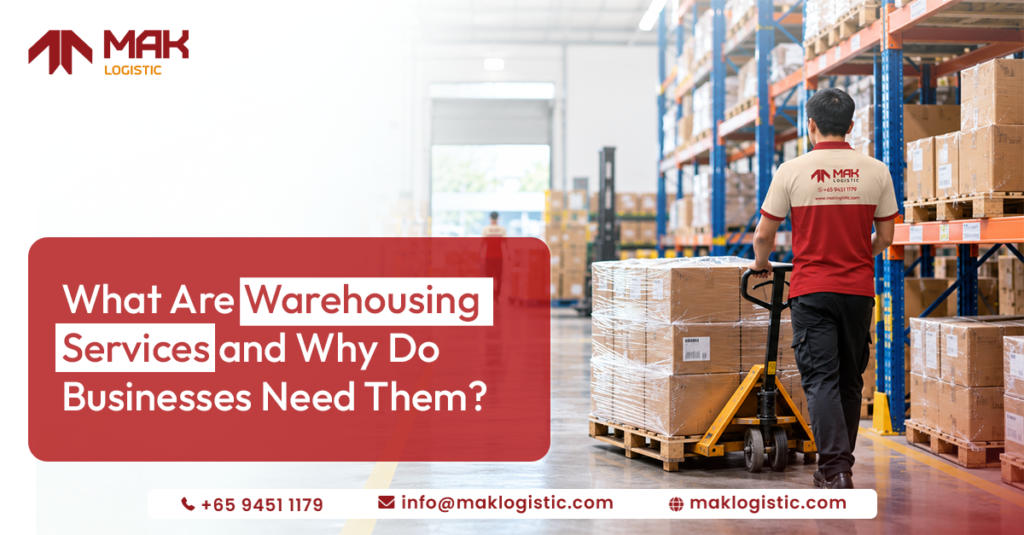
Warehousing plays an important role in helping businesses store products, manage inventory, and fulfil customer orders efficiently. Whether a company sells products online, distributes goods to retailers, or manages a manufacturing supply chain, having the right storage and inventory management system can improve daily operations.
For businesses in Singapore, increasing customer expectations, limited storage space, and the need for timely deliveries make professional warehousing services in Singapore an important part of logistics management.
But what exactly are warehousing services, and why do businesses need them? In this guide, we explain the different types of warehousing services, their benefits, and how to choose the right warehousing partner for your business.
What Are Warehousing Services?
Warehousing services involve storing goods and managing inventory in a designated facility until products are required for sale, distribution, manufacturing, or delivery. These services may include receiving goods, organising stock, tracking inventory, picking and packing orders, and coordinating transportation.
Professional warehousing services help businesses maintain organised storage facilities, improve stock visibility, and manage inventory movements more efficiently.
Depending on operational requirements, warehousing and logistics services may include short-term storage, long-term storage, pallet storage, rack storage, inventory management, cross-docking, and e-commerce fulfilment.
Businesses can outsource these activities to a third-party logistics provider instead of managing their own warehouse facilities. For companies looking for warehousing services in Singapore, outsourcing can provide access to storage facilities and logistics support without requiring a significant investment in warehouse infrastructure.
What Are the Different Types of Warehousing Services?
Warehousing requirements vary depending on the products a business handles, its inventory volume, and its distribution needs. Here are some common warehouse storage solutions businesses can consider.
1. General Warehouse Storage
General warehouse storage provides space for businesses to store products, raw materials, packaging supplies, and other inventory before they are needed.
Businesses searching for warehouse storage Singapore solutions may include wholesalers, retailers, manufacturers, and distributors that require organised storage for their goods.
Using a suitable warehouse can help businesses manage stock more systematically while keeping products available for future orders and distribution.
2. Pallet and Rack Storage
Pallet and rack storage help businesses organise inventory systematically and make better use of available warehouse space.
These solutions are useful for businesses handling large quantities of goods, cartons, bulk products, and palletised stock. Proper storage arrangements can also make it easier to locate products and coordinate stock movement.
3. Inventory Management
Inventory management Singapore businesses require involves monitoring stock quantities, recording incoming and outgoing goods, and maintaining accurate inventory records.
Effective inventory management helps businesses identify low-stock items, reduce stock discrepancies, and make informed purchasing decisions. Depending on the warehouse’s systems and service scope, inventory tracking tools can also improve visibility into stock levels and movements.
For growing businesses, outsourcing inventory management and warehouse operations can help improve stock control while allowing internal teams to focus on sales and business development.
4. E-Commerce Warehousing and Fulfilment
E-commerce warehousing supports online retailers by combining product storage with order processing activities.
Depending on the service arrangement, e-commerce warehousing may include receiving inventory, storing products, picking and packing customer orders, dispatching shipments, and handling returns.
Businesses that receive orders through online stores or marketplaces can benefit from coordinated storage and fulfilment processes. Outsourcing these activities can help online retailers manage increasing order volumes without having to establish their own warehouse.
5. Bonded and Non-Bonded Warehousing
Bonded warehouses operate under customs control, allowing eligible imported goods to be stored under applicable customs procedures before duties and taxes become payable.
Non-bonded warehouses generally store goods outside a bonded customs arrangement, subject to relevant import, customs, and regulatory requirements.
Businesses should select the appropriate facility based on their products, import arrangements, and compliance obligations.
6. Cross-Docking Services
Cross-docking involves transferring goods from incoming shipments to outgoing shipments with little or no long-term storage.
This service can help businesses reduce storage time and move products through the supply chain more quickly when inbound and outbound shipments are properly coordinated.
Cross-docking may be particularly useful for distributors and businesses that handle frequent deliveries and need to move products between suppliers, warehouses, and customers efficiently.
Why Do Businesses Need Warehousing Services?
Professional warehousing services offer several advantages beyond providing storage space. Here are the key reasons businesses consider outsourcing their warehouse operations.
1. Better Inventory Organisation
Disorganised stock can lead to misplaced products, picking errors, and delays in fulfilling customer orders.
Professional warehouse processes help businesses organise goods, maintain inventory records, and improve stock visibility. Effective warehouse management also supports more systematic receiving, storage, stock movement, and dispatch activities.
2. Reduced Warehouse Operating Costs
Operating a private warehouse involves expenses such as rental, utilities, equipment, staffing, maintenance, and inventory systems.
Outsourcing to a third-party provider can help businesses avoid some of these fixed investments and access storage and handling services according to their requirements.
Third-party warehousing may be particularly useful for small and medium-sized businesses that need professional storage facilities but do not want to commit to operating an entire warehouse.
Actual cost savings depend on inventory volume, storage duration, service charges, and the business’s existing operating costs.
3. More Efficient Order Fulfilment
Customers expect orders to be processed accurately and delivered on time. Delays in locating, picking, packing, or dispatching products can affect customer satisfaction.
Professional warehousing can support order fulfilment services by coordinating inventory storage with order processing and shipment preparation.
When warehousing and transportation are managed together, businesses can improve coordination between stock availability, order preparation, and delivery schedules.
4. Flexible Storage Capacity
Inventory requirements often change during festive periods, promotional campaigns, product launches, and seasonal demand peaks.
Outsourced warehousing allows businesses to explore flexible storage arrangements without immediately committing to a larger permanent facility.
Before choosing a provider, businesses should confirm available capacity, minimum storage commitments, contract terms, and additional handling charges.
5. Improved Supply Chain Coordination
Warehousing is closely connected to transportation, distribution, and inventory planning.
A provider offering integrated warehousing and logistics services can help coordinate goods receiving, storage, order preparation, and dispatch. Better coordination can reduce unnecessary handling and improve the movement of products between supply chain stages.
Businesses looking for a reliable logistics company in Singapore should consider whether the provider can support their warehousing requirements alongside transportation, fulfilment, and other relevant logistics activities.
6. Support for Business Growth
As a business grows, the number of products, customer orders, and inventory movements may increase.
Professional warehousing services can provide access to additional storage capacity and operational support, helping businesses manage growth without having to establish their own warehouse independently.
This flexibility allows businesses to concentrate on expanding their customer base, improving products, and developing their operations.
Which Businesses Benefit from Warehousing Services?
Businesses across different industries can benefit from professional warehousing services, particularly those that manage physical products and require organised inventory storage.
- E-commerce retailers: Store products and manage picking, packing, dispatch, and returns.
- Wholesalers and distributors: Organise bulk inventory and coordinate deliveries to retailers and business customers.
- Manufacturers: Store raw materials, components, packaging supplies, and finished goods.
- Electronics and semiconductor businesses: Manage products according to their storage, handling, security, and environmental requirements.
- Food suppliers and distributors: Arrange suitable dry, chilled, or frozen storage where available and appropriate for the products.
- Medical and healthcare suppliers: Organise medical supplies according to applicable storage, traceability, and regulatory requirements.
The right warehousing solution depends on product characteristics, stock turnover, storage conditions, and distribution requirements.
How to Choose the Right Warehousing Service Provider in Singapore
Choosing a warehousing partner involves more than comparing storage prices. Businesses should evaluate the provider’s facilities, operational processes, service capabilities, and ability to support their logistics requirements.
Check Storage Capacity and Facility Suitability
Ensure the warehouse can accommodate your inventory volume, pallet requirements, product dimensions, and storage conditions. Businesses handling specialised products should confirm whether the required storage environment is available.
Review Inventory Tracking and Warehouse Management
Ask how stock movements are recorded, how inventory reports are provided, and whether a warehouse management system is available.
Reliable warehouse management processes can help improve stock visibility and reduce inventory discrepancies.
Evaluate Order Fulfilment Capabilities
If your business requires fulfilment support, confirm whether the provider offers receiving, picking, packing, dispatch, and returns management.
These capabilities are particularly important for e-commerce businesses and retailers handling regular customer orders.
Check Transportation Coordination
Determine whether the provider can arrange transportation from the warehouse to retailers, customers, distribution centres, or other facilities.
Integrated services can help businesses coordinate storage and delivery requirements more effectively.
Understand Pricing and Contract Terms
Request a clear breakdown of storage fees, receiving charges, handling costs, picking and packing fees, and any additional service charges.
Businesses should also check minimum commitments, service-level expectations, and whether storage capacity can be adjusted when demand changes.
Consider Industry Experience and Security
Review the provider’s experience with similar products and business requirements. Ask about access controls, stock-handling procedures, loss prevention, and processes for damaged or missing inventory.
Choosing a provider that matches your operational requirements can help establish a more efficient and reliable warehousing process.
How MAK Logistic Supports Warehousing and Logistics Operations in Singapore
MAK Logistic supports businesses looking for logistics solutions to help manage the storage and movement of goods.
Businesses exploring warehousing services in Singapore should consider their storage requirements, inventory volume, order processing needs, and transportation arrangements when selecting a suitable solution.
Depending on the agreed service scope, MAK Logistic’s logistics solutions can support requirements relating to warehouse storage, inventory management, e-commerce fulfilment, picking and packing, transportation, and other logistics activities.
Coordinating the right combination of services can help businesses improve inventory organisation, streamline order processing, and manage distribution requirements more effectively.
If your business needs warehousing or integrated logistics support, contact MAK Logistic to discuss your operational requirements.
MAK Logistic Singapore
Website: https://maklogistic.com
Phone / WhatsApp: +65 9451 1179
Email: info@maklogistic.com
Frequently Asked Questions About Warehousing Services
1. What is the main purpose of warehousing services?
The main purpose of warehousing services is to provide organised storage for goods while supporting inventory control, order preparation, and distribution. These services help businesses manage stock and coordinate the movement of products throughout the supply chain.
2. What is included in professional warehousing services?
Professional warehousing services may include receiving goods, warehouse storage, pallet and rack storage, inventory tracking, picking and packing, order fulfilment, cross-docking, and transportation coordination. The exact services depend on the provider and the agreed service arrangement.
3. How can warehousing services reduce business costs?
Warehousing services can reduce the need to invest in private warehouse space, equipment, staffing, and warehouse systems. Outsourcing may also help businesses adjust storage capacity according to demand. Actual savings depend on the provider’s pricing and the business’s existing operating costs.
4. What is the difference between warehousing and storage?
Storage generally refers to keeping goods in a designated space. Warehousing is a broader operation that may include storage, inventory tracking, goods receiving, stock handling, order processing, and distribution support.
5. Are warehousing services suitable for small businesses?
Yes. Small businesses, including online retailers and growing wholesalers, can use third-party warehousing to access storage space and operational support without establishing their own warehouse. Suitability depends on the provider’s minimum requirements, pricing, and service flexibility.
Conclusion
Warehousing services help businesses store goods, manage inventory, prepare orders, and coordinate distribution more efficiently. From general warehouse storage and inventory management to e-commerce warehousing and cross-docking, the right solution depends on a company’s products, order volumes, and supply chain needs.
For businesses seeking warehousing services in Singapore, partnering with a suitable logistics provider can help improve operational flexibility, support business growth, and simplify daily logistics activities.
If your business needs warehouse storage or integrated logistics support, contact MAK Logistic to discuss a solution that fits your requirements.