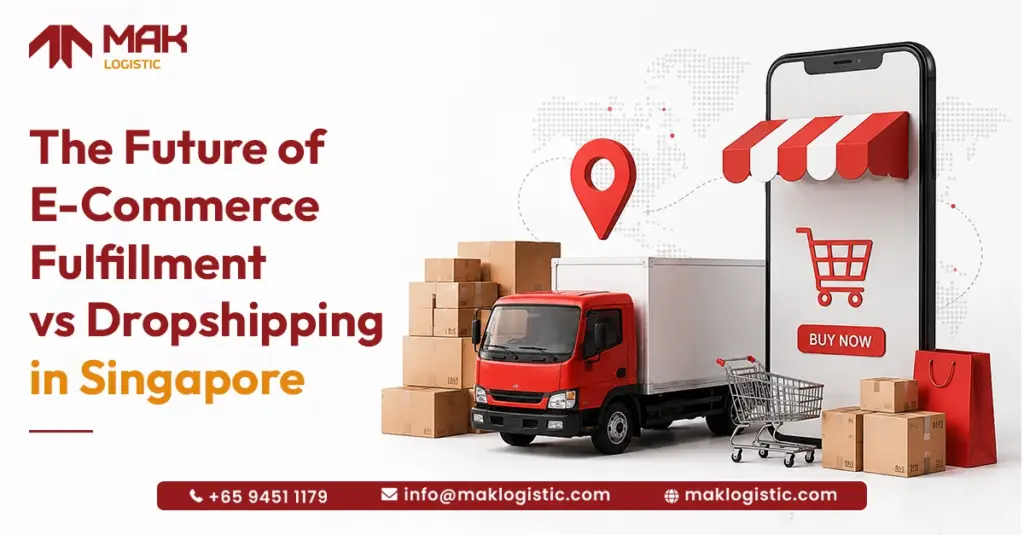
E-commerce has changed how businesses sell products, manage orders, and reach customers. As online businesses grow, choosing the right way to manage inventory, fulfillment, and delivery becomes increasingly important.
Two popular approaches are e-commerce fulfillment and dropshipping.
Although both models help businesses sell products online, they work differently. E-commerce fulfillment generally involves storing inventory in a warehouse and outsourcing activities such as picking, packing, and delivery. Dropshipping allows a business to sell products without holding inventory, with the supplier handling storage and shipping directly to the customer.
So, which model is better for the future of e-commerce in Singapore?
The answer depends on factors such as inventory ownership, order volume, product control, customer expectations, and long-term business goals.
What Is E-Commerce Fulfillment?
E-commerce fulfillment is the process of storing products, managing inventory, processing customer orders, picking products, packing orders, and preparing them for delivery.
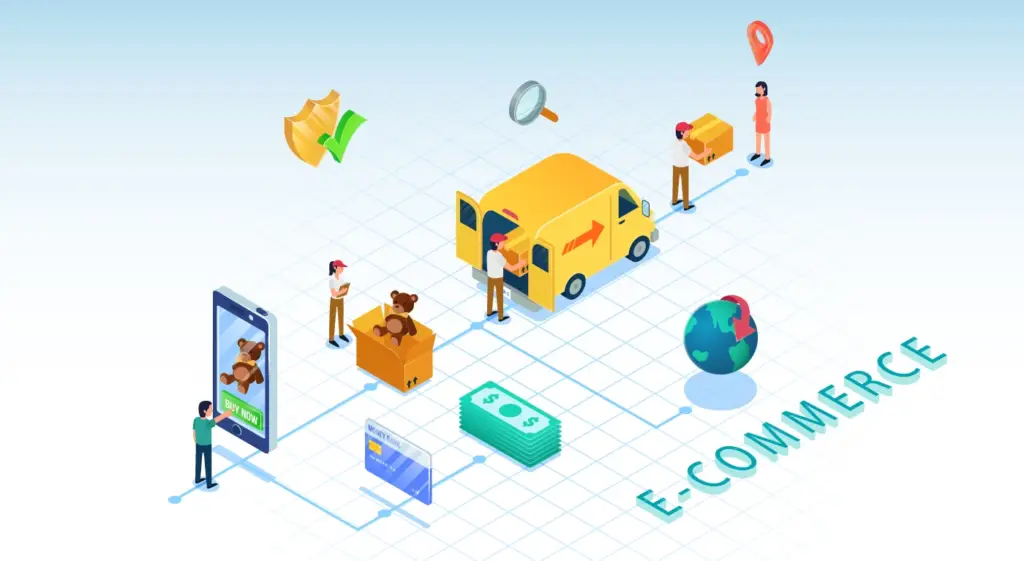
A typical fulfillment process looks like:
Inventory Received → Warehouse Storage → Customer Order → Picking → Packing → Dispatch → Delivery
Businesses can manage these activities themselves or work with a third-party logistics provider.
Using e-commerce fulfillment services Singapore businesses can outsource warehouse and order processing activities while focusing on sales, marketing, products, and customer service.
E-commerce fulfillment services may include:
- Inventory storage
- Stock management
- Order processing
- Picking and packing
- Labelling
- Dispatch preparation
- Transportation coordination
What Is Dropshipping?
Dropshipping is an e-commerce model where the seller does not normally keep products in its own warehouse.
The process generally works as follows:
Customer Places Order → Seller Receives Order → Supplier Processes Order → Supplier Ships Product → Customer Receives Product
The seller manages the online store and customer relationship, while the supplier manages inventory and shipping.
This can make dropshipping attractive to businesses that want to start selling products without purchasing and storing large quantities of inventory upfront.
However, less inventory responsibility can also mean less control over product availability, packaging, product quality, and delivery.
What Is the Difference Between E-Commerce Fulfillment and Dropshipping?
The main difference is who owns and manages the inventory.
| Factor | E-Commerce Fulfillment | Dropshipping |
| Inventory | Business usually owns inventory | Supplier usually owns inventory |
| Storage | Fulfillment warehouse | Supplier’s facility |
| Picking & packing | Business or fulfillment provider | Supplier |
| Shipping | Fulfillment provider or logistics partner | Supplier |
| Inventory control | Higher | Lower |
| Product control | Higher | Lower |
| Upfront inventory investment | Higher | Lower |
| Packaging control | Generally higher | Generally lower |
| Supplier dependency | Lower | Higher |
Neither model is automatically better. The right choice depends on the business model, product demand, customer expectations, and growth plans.
Why Is E-Commerce Fulfillment Important in Singapore?
As online order volumes increase, businesses need efficient ways to manage inventory and process orders.
Managing storage, picking, packing, dispatch, and delivery internally can become difficult as an e-commerce business grows.
This is where e-commerce logistics Singapore solutions can help.
A business can store inventory with a fulfillment provider and outsource activities such as:
Storage → Order Processing → Picking → Packing → Dispatch → Transportation
This creates a more structured fulfillment process without requiring the business to manage its own warehouse operations.
Singapore’s strong connectivity and logistics infrastructure support its role as an important regional logistics and supply chain hub. Learn more about Singapore’s logistics and supply chain ecosystem
What Are the Benefits of E-Commerce Fulfillment?
Better Inventory Control
Businesses that own their inventory can have greater control over stock levels, product availability, and order processing.
Greater Packaging Control
Fulfillment allows businesses to have more control over packaging, labels, promotional materials, and branding.
Organised Order Processing
A structured warehouse process can help businesses manage picking, packing, and dispatch more efficiently.
Better Customer Experience
Greater control over inventory and order processing can help businesses manage customer expectations.
Support for Growing Businesses
Businesses with increasing order volumes can outsource fulfillment operations to a 3PL provider instead of managing every warehouse activity internally.
What Are the Benefits of Dropshipping?
Dropshipping can be useful for businesses that want to reduce their initial inventory commitment.
Lower Upfront Inventory Investment
Businesses generally do not need to purchase large quantities of products before receiving orders.
Reduced Warehouse Requirements
Since the supplier stores the products, the seller does not normally need its own warehouse.
Easier Product Testing
Businesses can test different products without committing to large amounts of inventory.
Simpler Initial Setup
The business can focus on its online store, marketing, sales, and customer relationships while the supplier handles product fulfillment.
However, the seller becomes more dependent on the supplier for product availability, quality, packaging, and delivery.
What Are the Challenges of E-Commerce Fulfillment?
E-commerce fulfillment requires businesses to hold or purchase inventory.
This can create challenges such as:
- Upfront inventory investment
- Storage requirements
- Inventory management
- Unsold stock
- Warehouse handling costs
- Demand forecasting
For businesses that want inventory ownership but do not want to operate their own warehouse, a 3PL fulfillment Singapore provider can manage storage and fulfillment operations on their behalf.
What Are the Challenges of Dropshipping?
Dropshipping reduces the need to hold inventory, but it can reduce operational control.
Common challenges include:
- Supplier dependency
- Stock availability issues
- Product quality concerns
- Limited packaging control
- Delivery delays
- Less control over customer experience
If the supplier has a stock shortage or delivery problem, the seller may still need to handle customer complaints and expectations.
Which Model Offers Better Customer Experience?
For businesses that want greater control over customer experience, e-commerce fulfillment generally provides more flexibility.
With inventory stored through a fulfillment operation, businesses can have greater control over:
- Product availability
- Packaging
- Branding
- Order preparation
- Inventory management
- Dispatch processes
Dropshipping provides less direct control because the supplier normally handles storage and shipping.
For businesses building a long-term brand, this difference can become important.
Which Model Is Better for Growing E-Commerce Businesses?
For businesses with consistent and increasing demand, e-commerce fulfillment can be a practical option.
Holding inventory and using a fulfillment provider allows businesses to establish a structured process:
Inventory Storage → Order Processing → Pick & Pack → Dispatch → Transportation → Delivery
Dropshipping may be more suitable for businesses that are testing products or have uncertain demand.
However, businesses do not necessarily need to choose only one model permanently.
Can Businesses Combine Dropshipping and E-Commerce Fulfillment?
Yes.
Some businesses use both models depending on product demand.
For example, a business could store popular products in a fulfillment warehouse while using dropshipping for newly tested products.
A hybrid approach can allow businesses to:
- Keep fast-moving products locally
- Reduce inventory commitment for new products
- Test products before purchasing stock
- Use fulfillment for products with consistent demand
This means the right fulfillment model can vary between products within the same online store.
What Is the Future of E-Commerce Fulfillment in Singapore?
The future of e-commerce logistics is likely to focus on inventory visibility, efficient order processing, technology, flexible storage, and delivery coordination.
Businesses are increasingly looking for ways to process orders efficiently while meeting customer expectations.
Recent logistics investments in Singapore also demonstrate the growing importance of automation and e-commerce fulfillment capabilities. EDB – Maersk Automated Logistics Hub in Singapore
Important areas include:
Inventory Visibility
Accurate inventory information helps businesses understand stock availability and reduce order issues.
Technology Integration
Connecting online stores with warehouse and fulfillment systems can reduce manual order processing.
Flexible Fulfillment
Businesses may need different storage and fulfillment arrangements as order volumes change.
Transportation Coordination
Connecting warehouse operations with transportation can help products move more efficiently from storage to customers.
Singapore continues to encourage digitalisation and technology adoption across the logistics sector, with supply chain visibility and productivity among key areas of focus.
Singapore continues to encourage digitalisation and technology adoption across the logistics sector. Enterprise Singapore’s logistics industry resources
How Can Businesses Choose Between Dropshipping and Fulfillment?
Businesses should consider several factors before choosing a model.
Do you want to own inventory?
If yes, e-commerce fulfillment may be more suitable.
Do you want to minimise upfront inventory investment?
Dropshipping may be worth considering.
Do you need control over packaging and branding?
Fulfillment generally provides greater control.
Do you have consistent product demand?
Holding inventory and using fulfillment can make sense when demand is predictable.
Are you still testing products?
Dropshipping can help reduce inventory commitments during the testing stage.
The best choice ultimately depends on the business’s products, customers, order volumes, and long-term goals.
How Can MAK Logistic Support E-Commerce Fulfillment in Singapore?
MAK Logistic provides e-commerce fulfillment services in Singapore to support businesses with their warehousing, storage, fulfillment, and transportation requirements.
Our services include:
- Warehouse storage
- Inventory storage
- E-commerce fulfillment
- Picking and packing
- Dispatch preparation
- Pallet storage
- Racked storage
- Transportation services
- Warehouse-to-warehouse transportation
- Airport-to-warehouse transportation
By connecting warehousing, fulfillment, and transportation, MAK Logistic helps businesses manage the movement of products from storage to delivery.
For businesses that have moved beyond the product-testing stage and need greater control over inventory and order processing, working with a local fulfillment provider can create a more organised logistics process.
Frequently Asked Questions
1. What is the difference between e-commerce fulfillment and dropshipping?
E-commerce fulfillment generally involves storing inventory with a business or fulfillment provider and outsourcing activities such as picking, packing, and shipping. Dropshipping allows the supplier to store and ship products directly to customers.
2. Is dropshipping better than e-commerce fulfillment?
Not necessarily. Dropshipping can be useful for businesses that want lower inventory commitments, while e-commerce fulfillment can provide greater control over inventory, packaging, and customer experience.
3. Can a business switch from dropshipping to fulfillment?
Yes. A business can start with dropshipping to test products and later move popular products into inventory-based fulfillment as demand becomes more predictable.
4. Can a business use both dropshipping and fulfillment?
Yes. Businesses can use fulfillment for fast-moving products while using dropshipping for products with uncertain or lower demand.
5. How do I choose an e-commerce fulfillment provider in Singapore?
Consider warehouse capabilities, inventory management, order processing, picking and packing, transportation services, storage options, communication, and experience with e-commerce businesses.
Conclusion
Both e-commerce fulfillment and dropshipping can play an important role in the future of online retail.
Dropshipping can be useful for businesses that want to test products without holding significant inventory. E-commerce fulfillment can provide greater control over inventory, packaging, order processing, and customer experience.
As an e-commerce business grows, its logistics requirements may change. A business may begin with dropshipping and later move popular products into a fulfillment warehouse as demand becomes more predictable.
For businesses looking for e-commerce fulfillment services in Singapore, MAK Logistic provides warehouse storage, inventory handling, fulfillment, and transportation solutions to support the movement of products from warehouse to customer.
Looking for e-commerce fulfillment in Singapore? Contact MAK Logistic to discuss your storage, fulfillment, and transportation requirements.