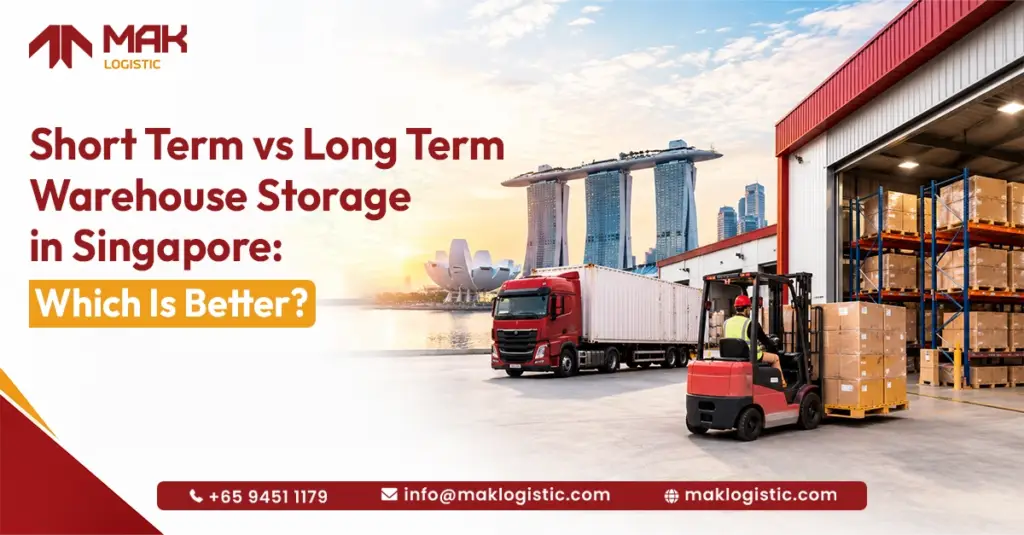
Finding the right warehouse storage option can be challenging for businesses in Singapore. Some businesses need additional space for only a few weeks or months, while others require a stable storage solution for several years.
Choosing between short term warehouse storage Singapore and long-term storage depends on factors such as inventory volume, business growth, seasonal demand, contract requirements, warehouse location, and how frequently products need to move in and out of storage.
For businesses that do not want to commit to a permanent warehouse, flexible storage can provide an alternative. On the other hand, businesses with predictable inventory requirements may benefit from a longer-term arrangement.
So, which option is better?
The answer depends on your operational requirements.
What Is Short-Term Warehouse Storage?
Short-term warehouse storage is a storage arrangement designed for businesses that need warehouse space for a limited period.
The exact duration can vary depending on the provider and business requirements. It may be suitable for companies that need additional space temporarily without committing to a long-term warehouse contract.
Businesses may require short term storage Singapore for:
- Seasonal inventory
- Promotional campaigns
- Temporary stock overflow
- New product launches
- Business relocation
- Import or export activities
- Project-based inventory
- Temporary operational requirements
- Peak e-commerce periods
For example, an e-commerce business may experience a significant increase in inventory before a major sales campaign. Instead of expanding its permanent warehouse immediately, the business could use short-term storage to accommodate the additional stock.
What Is Long-Term Warehouse Storage?
Long-term warehouse storage is designed for businesses that require warehouse space on a more consistent and ongoing basis.
It can be suitable for businesses with stable inventory levels and predictable storage requirements.
Long term warehouse storage Singapore may be useful for:
- Established businesses with regular inventory
- Importers and distributors
- Manufacturers
- E-commerce businesses with consistent stock
- Retail businesses
- Businesses requiring ongoing inventory storage
- Companies outsourcing warehouse operations
Long-term storage can provide greater operational stability because businesses can plan their inventory and warehouse requirements over a longer period.
What Is the Difference Between Short-Term and Long-Term Storage?
The biggest difference is the level of flexibility and commitment.
| Factor | Short-Term Storage | Long-Term Storage |
| Storage period | Temporary or flexible | Extended or ongoing |
| Commitment | Lower | Higher |
| Flexibility | High | Moderate |
| Suitable for | Seasonal and changing requirements | Stable inventory requirements |
| Inventory planning | Short-term | Long-term |
| Scalability | Easier to adjust | Better for predictable volumes |
| Best for | Temporary stock and projects | Regular business operations |
Neither option is automatically better.
The right choice depends on how your business uses warehouse space.
When Should You Choose Short-Term Warehouse Storage?
Short-term storage can be a good option when your warehouse requirements are likely to change.
1. Your Inventory Is Seasonal
Businesses selling seasonal products may not need the same amount of warehouse space throughout the year.
For example, a retailer may need additional space before:
- Christmas
- Chinese New Year
- Hari Raya
- Great Singapore Sale periods
- Major e-commerce campaigns
Temporary storage can help accommodate increased inventory during these periods without permanently increasing warehouse capacity.
2. You Are Experiencing Temporary Stock Overflow
Sometimes inventory increases unexpectedly because of bulk purchasing, delayed sales, supplier shipments, or changes in customer demand.
If your existing warehouse is full, flexible warehouse storage can provide additional space.
3. You Are Testing a New Market
Businesses entering Singapore may not immediately know how much inventory they will require.
Using short-term storage can allow them to test demand before committing to a larger long-term warehouse arrangement.
4. You Are Relocating Your Warehouse
During a warehouse relocation, businesses may need temporary space to prevent disruptions to inventory operations.
Short-term storage can provide a transition point while the new warehouse is being prepared.
5. You Need Project-Based Storage
Some businesses receive inventory for specific projects.
Once the project is completed, the storage requirement may disappear.
In such situations, a long-term warehouse commitment may not be necessary.
When Should You Choose Long-Term Warehouse Storage?
Long-term storage may be more suitable when warehouse requirements are predictable.
1. You Have Consistent Inventory
If your business regularly stores similar volumes of products, a long-term arrangement can provide greater stability.
2. You Need Continuous Warehouse Operations
Businesses with ongoing receiving, storage, picking, packing, and dispatch activities may benefit from having a consistent warehouse setup.
3. You Have Established Distribution Requirements
Importers, distributors, manufacturers, and retailers may require ongoing inventory storage to support regular distribution.
4. You Want Predictable Warehouse Planning
Long-term arrangements can make it easier to plan warehouse space, inventory movements, manpower, and transportation requirements.
5. Your Business Is Growing Consistently
If inventory volumes are increasing steadily rather than temporarily, a longer-term warehouse solution may provide a more suitable operational foundation.
What Are the Benefits of Short-Term Warehouse Storage?
Short-term storage provides flexibility, particularly when inventory requirements change frequently.
Greater Flexibility
Businesses can avoid committing to warehouse space they may not need in the future.
Useful During Peak Periods
Temporary storage can help businesses manage increased inventory during seasonal or promotional periods.
Supports Business Transitions
Short-term storage can be useful during warehouse relocation, expansion, market entry, or operational changes.
Helps Manage Temporary Overflow
Businesses can move excess inventory into an additional storage facility instead of overcrowding their existing warehouse.
Suitable for Changing Business Needs
For startups and growing businesses, storage requirements can change quickly. Flexible arrangements can help businesses respond to these changes.
What Are the Benefits of Long-Term Warehouse Storage?
Long-term storage can provide stability for businesses with predictable requirements.
Consistent Storage Capacity
Businesses can plan around a known warehouse arrangement instead of searching for additional space frequently.
Better Operational Planning
Long-term warehouse arrangements can support more consistent inventory, manpower, and transportation planning.
Suitable for Regular Inventory
Businesses with ongoing stock requirements can benefit from maintaining a stable warehouse operation.
Supports Fulfillment Operations
Businesses that regularly process orders may prefer a consistent warehouse location for receiving, storage, picking, packing, and dispatch.
Supports Long-Term Growth
A suitable long-term warehouse arrangement can become part of a company’s wider supply chain strategy.
Is Short-Term or Long-Term Warehouse Storage More Cost-Effective?
Cost should not be the only factor when comparing storage options.
The most cost-effective option depends on how long the space is required, how much inventory is stored, and what additional services the business needs.
Short-term storage may be more appropriate when the requirement is temporary because businesses can avoid committing to warehouse space they do not need throughout the year.
Long-term storage may make more sense for businesses with predictable and ongoing inventory requirements.
Businesses should also consider additional costs related to:
- Receiving
- Inventory handling
- Picking and packing
- Warehouse manpower
- Transportation
- Loading and unloading
- Inventory management
- Special storage requirements
The cheapest storage option is not necessarily the most cost-effective if it creates additional handling or transportation costs.
What Should You Consider Before Choosing Warehouse Storage?
Before selecting a warehouse storage in Singapore solution, businesses should evaluate several factors.
Storage Duration
Determine whether your requirement is temporary, seasonal, project-based, or ongoing.
Inventory Volume
Estimate your current inventory and expected future requirements.
Product Type
Different products may require different storage conditions, handling procedures, or security requirements.
Warehouse Location
The warehouse location can affect transportation time and delivery costs.
A strategically located facility can help businesses coordinate storage and transportation more efficiently.
Inventory Movement
Consider how frequently products need to enter and leave the warehouse.
A business with high inventory movement may require more than basic storage.
Additional Services
Some businesses require services such as:
- Inventory management
- Picking and packing
- Order fulfillment
- Labelling
- Kitting
- Transportation
- Warehouse manpower
Choosing a provider that can support multiple logistics activities can simplify operations.
Can 3PL Services Support Both Short-Term and Long-Term Storage?
Yes.
A 3PL provider can support businesses with different warehouse and logistics requirements depending on the services offered.
3PL warehouse services may include:
- Receiving products
- Warehouse storage
- Inventory management
- Picking and packing
- Order fulfillment
- Transportation coordination
- Warehouse manpower
- Dispatch support
This can be useful for businesses that want to outsource some or all of their logistics operations.
Singapore’s logistics sector is also increasingly adopting digital solutions to streamline operations and improve efficiency. The IMDA Logistics Industry Digital Plan provides a roadmap for local logistics SMEs to adopt digital solutions at different stages of business growth.
How Does Warehouse Storage Connect With Fulfillment and Transportation?
Warehouse storage is not an isolated activity.
For many businesses, products move through several stages:
Supplier → Warehouse → Inventory Storage → Order Processing → Picking & Packing → Transportation → Customer
If these activities are managed separately, businesses may face communication gaps, delays, or additional coordination work.
This is why businesses should consider whether their storage provider can also support fulfillment and transportation requirements.
For example, an e-commerce business may need:
Warehouse Storage → Order Fulfillment → Packing → Delivery
A logistics provider that can support multiple stages can help create a more coordinated process.
Singapore’s position as a regional logistics and supply-chain hub makes efficient coordination between warehousing and transportation particularly important for businesses serving local and regional markets.
How Can Businesses Choose the Right Warehouse Storage Option?
A simple way to decide is to evaluate your business against the following questions:
Do you need storage for only a few months or a specific project?
→ Consider short-term storage.
Does your inventory requirement change significantly throughout the year?
→ Consider flexible storage that can scale with demand.
Do you have stable inventory and ongoing warehouse requirements?
→ Consider long-term storage.
Do you need storage plus fulfillment and transportation?
→ Consider a 3PL or integrated logistics solution.
Are you unsure about your future warehouse requirements?
→ Start with a flexible solution and review your requirements as the business grows.
How Can MAK Logistic Support Warehouse Storage in Singapore?
Choosing the right warehouse solution involves more than finding available space.
Businesses need to consider inventory handling, accessibility, manpower, fulfillment requirements, and transportation.
MAK Logistic provides logistics solutions in Singapore that can support businesses with warehouse storage, e-commerce fulfillment, transportation, warehouse manpower, and 3PL services.
For businesses with changing inventory requirements, flexible storage can provide additional capacity without requiring them to immediately commit to a larger permanent warehouse operation.
For businesses with regular inventory and ongoing logistics requirements, a more structured warehouse solution can support continuous storage and fulfillment operations.
The right solution depends on your inventory volume, storage duration, product requirements, and wider logistics needs.
Short-Term vs Long-Term Warehouse Storage: Which Is Better?
There is no single answer.
Short-term warehouse storage is generally better for businesses with temporary, seasonal, project-based, or uncertain storage requirements.
Long-term warehouse storage is generally better for businesses with stable inventory, predictable warehouse requirements, and ongoing distribution operations.
The best approach is to choose storage based on your actual business requirements rather than simply choosing the lowest storage rate.
A warehouse should support your wider logistics operation—not just hold your products.
“The right warehouse storage solution is not simply about how much space you need. It is about choosing the right level of flexibility for how your business operates.”
Frequently Asked Questions
What is short-term warehouse storage?
Short-term warehouse storage is a temporary storage solution for businesses that need warehouse space for a limited period, such as during seasonal demand, stock overflow, relocation, or specific projects.
What is long-term warehouse storage?
Long-term warehouse storage is an ongoing storage arrangement for businesses that require consistent warehouse capacity for regular inventory and distribution operations.
Is short-term warehouse storage suitable for e-commerce businesses?
Yes. E-commerce businesses can use short-term storage to manage seasonal inventory, promotional campaigns, new product launches, and temporary increases in order volumes.
Which is cheaper, short-term or long-term warehouse storage?
The cost depends on the storage period, inventory volume, warehouse location, handling requirements, and additional logistics services. Long-term arrangements may suit predictable requirements, while short-term storage can be more practical when the need is temporary.
Can a 3PL provider provide both short-term and long-term storage?
Many 3PL providers offer different storage arrangements and additional services such as inventory management, fulfillment, picking and packing, manpower, and transportation. Availability depends on the provider and the business requirements.
Conclusion
Choosing between short-term and long-term warehouse storage depends on your business model, inventory requirements, and future plans.
If your storage needs are temporary or frequently changing, short term warehouse storage Singapore can provide the flexibility you need. If your business has stable inventory and ongoing distribution requirements, long term warehouse storage in Singapore may provide greater operational consistency.
Before making a decision, consider storage duration, inventory volume, warehouse location, product requirements, inventory movement, fulfillment needs, and transportation.
With the right logistics partner, businesses can choose a warehouse storage solution that supports both their current operations and future growth.