As online shopping continues to grow, customers expect their orders to arrive quickly, accurately, and with complete visibility throughout the delivery journey. Whether purchasing groceries, electronics, healthcare products, or industrial supplies, today’s consumers value fast and reliable delivery as much as the product itself.
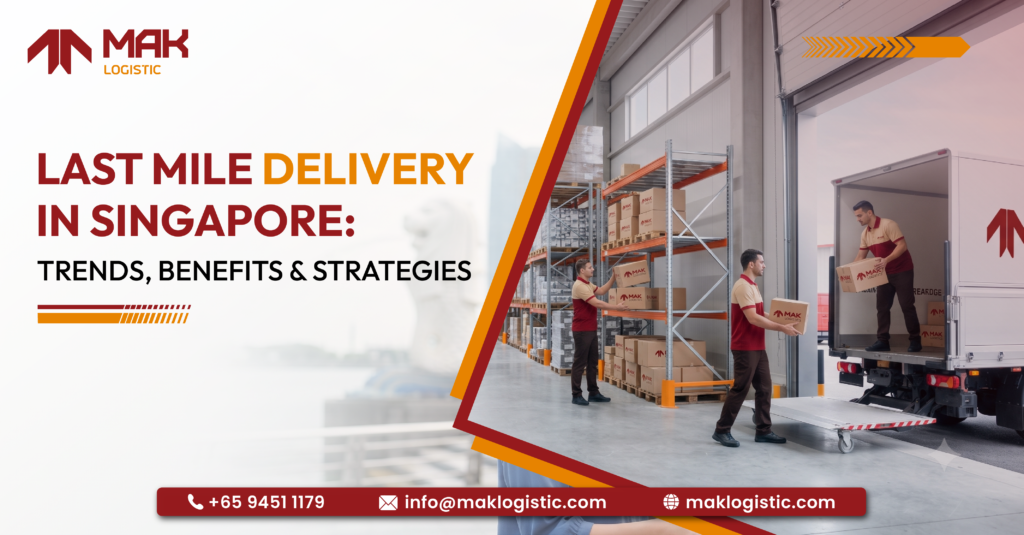
This shift in customer expectations has made Last Mile Delivery Singapore one of the most important components of modern logistics. The final stage of the supply chain—transporting goods from a warehouse or distribution hub to the end customer—often determines customer satisfaction, operational efficiency, and overall business success.
Singapore’s strategic location, world-class infrastructure, and highly connected transportation network have established the country as one of Asia’s leading logistics hubs. According to the Singapore Economic Development Board (EDB), Singapore continues to invest in digital transformation, supply chain innovation, and logistics capabilities to strengthen its position as a global distribution and trade centre.
In this article, we’ll explore the latest trends, key benefits, common challenges, and practical strategies that help businesses optimize last mile logistics Singapore and create a more resilient supply chain.
What is Last Mile Delivery?
Last mile delivery refers to the final stage of the logistics process where goods are transported from a warehouse, fulfillment centre, or distribution hub directly to the customer’s location.
Although this stage usually involves the shortest travel distance, it is often the most complex and expensive part of the delivery process. Multiple delivery stops, traffic conditions, customer availability, and time-sensitive shipments all contribute to higher operational costs.
Businesses rely on an efficient last mile courier service to ensure products arrive on time while maintaining high service standards.
Common last mile delivery services include:
- Residential deliveries
- Business-to-business (B2B) deliveries
- Same day delivery Singapore
- Next-day delivery
- Scheduled deliveries
- Express courier services
- Contactless delivery
- Returns collection and reverse logistics
An optimized last mile delivery process improves delivery accuracy, reduces delays, and enhances the overall customer experience.
Why Last Mile Delivery Matters in Singapore ?
Singapore’s dense urban landscape and digitally connected population make fast and efficient deliveries a necessity rather than a luxury.
Businesses today operate in an environment where customers expect:
- Same-day or next-day delivery
- Real-time order tracking
- Flexible delivery options
- Reliable customer service
- Hassle-free returns
Meeting these expectations requires efficient supply chain management Singapore, supported by advanced logistics technology and experienced delivery partners.
For many businesses, the delivery experience has become a key differentiator. A delayed or failed delivery can negatively affect customer satisfaction, while a smooth and reliable delivery process encourages repeat purchases and positive reviews.
Efficient order fulfillment Singapore also helps businesses reduce operational bottlenecks, improve inventory movement, and respond more effectively to changing customer demand.
Key Trends Shaping Last Mile Delivery in Singapore
1. Growing Demand for Same-Day Delivery
Consumers increasingly expect faster shipping, making Same day delivery Singapore an important competitive advantage for retailers and e-commerce businesses.
Businesses offering same-day or scheduled delivery services benefit from:
- Higher customer satisfaction
- Improved conversion rates
- Increased repeat purchases
- Better customer loyalty
As customer expectations continue to rise, investing in faster delivery capabilities has become essential.
2. AI-Powered Route Optimization
Technology is transforming modern delivery management.
Artificial intelligence and route optimization software help logistics providers plan the most efficient delivery routes by considering factors such as traffic conditions, delivery priorities, and vehicle capacity.
The benefits include:
- Reduced fuel consumption
- Lower transportation costs
- Improved driver productivity
- Faster deliveries
- Better fleet utilization
AI-powered delivery planning enables businesses to complete more deliveries while maintaining service quality.
3. Real-Time Delivery Tracking
Customers expect transparency throughout the delivery process.
Modern delivery management systems provide:
- Live GPS tracking
- Delivery notifications
- Estimated arrival times
- Electronic proof of delivery
- Instant delivery confirmation
Real-time tracking improves communication between businesses and customers while reducing customer support inquiries.
4. Sustainable Logistics Practices
Sustainability is becoming a major priority across Singapore’s logistics industry.
Many businesses are adopting environmentally responsible initiatives such as:
- Electric delivery vehicles
- Route optimization
- Eco-friendly packaging
- Delivery consolidation
- Reduced carbon emissions
These practices not only support environmental goals but also improve long-term operational efficiency.
5. Smarter Warehouse and Distribution Networks
To shorten delivery times, businesses are establishing fulfillment centres closer to their customers.
Efficient warehouse and distribution operations provide several advantages, including:
- Faster order processing
- Improved inventory visibility
- Reduced transportation distances
- Better stock availability
- Increased delivery speed
This strategy is particularly valuable for businesses handling high volumes of online orders.
Benefits of Efficient Last Mile Delivery
Improved Customer Satisfaction
Reliable deliveries create positive customer experiences that encourage repeat business and strengthen customer loyalty.
Customers who receive their orders on time are more likely to:
- Purchase again
- Recommend your business
- Leave positive reviews
- Trust your brand
Reduced Logistics Costs
Although last mile delivery is often the most expensive stage of logistics, businesses can reduce costs through efficient planning.
Optimized routes, better scheduling, and reliable transportation services Singapore help lower:
- Fuel costs
- Vehicle maintenance
- Driver overtime
- Failed delivery expenses
These savings contribute directly to improved profitability.
Stronger Brand Reputation
A consistent and dependable delivery experience strengthens customer confidence and builds a positive brand image.
Businesses known for reliable delivery services often enjoy higher customer retention and stronger word-of-mouth referrals.
Better Operational Efficiency
Integrating warehousing, inventory management, transportation, and delivery operations enables businesses to streamline workflows and improve overall productivity.
Efficient logistics processes also reduce errors, improve inventory accuracy, and support business growth.
Common Challenges in Last Mile Delivery
Despite Singapore’s advanced infrastructure, businesses continue to face several challenges.
Rising Operational Costs
Fuel prices, labour expenses, vehicle maintenance, and multiple delivery stops make the final stage of delivery one of the most expensive parts of the supply chain.
Failed Deliveries
Incorrect customer information, unavailable recipients, and restricted building access often result in costly redelivery attempts.
Urban Traffic and Delivery Restrictions
Traffic congestion during peak hours and limited parking in busy commercial areas can affect delivery schedules and operational efficiency.
Labour Shortages
Growing demand for logistics services has increased the need for skilled drivers and delivery personnel across Singapore.
Increasing Customer Expectations
Customers now expect faster deliveries, flexible delivery windows, accurate tracking, and convenient returns, requiring businesses to continuously improve their logistics operations.
Proven Strategies to Improve Last Mile Delivery
Optimizing Last Mile Delivery Singapore requires more than simply increasing the number of delivery vehicles. Businesses need a combination of technology, strategic planning, and experienced logistics support to improve efficiency while keeping costs under control.
1. Invest in Smart Delivery Management Systems
Digital technology has become an essential part of modern logistics. A robust delivery management system helps businesses automate dispatch planning, monitor deliveries in real time, and provide customers with accurate delivery updates.
Key benefits include:
- Automated route planning
- Real-time shipment visibility
- Electronic proof of delivery
- Improved communication with customers
- Faster issue resolution
These capabilities help reduce manual processes while improving delivery accuracy and customer satisfaction.
2. Optimize Warehouse and Distribution Operations
Efficient warehouse and distribution processes are the foundation of successful last mile delivery.
Businesses should focus on:
- Maintaining accurate inventory records
- Positioning inventory closer to customers
- Improving picking and packing efficiency
- Integrating warehouse systems with delivery operations
A well-organized warehouse reduces order processing times and enables faster dispatch, particularly for businesses offering same day delivery Singapore.
3. Partner with an Experienced Third-Party Logistics Provider
Managing logistics internally can be costly and resource-intensive. Working with an experienced third-party logistics Singapore provider allows businesses to scale their operations without investing heavily in infrastructure, technology, and transportation assets.
A professional logistics company Singapore can provide:
- Warehousing solutions
- Inventory management
- Transportation planning
- Distribution services
- Order fulfillment
- Last mile courier service
- Reverse logistics support
By outsourcing logistics operations, businesses can focus on product development, sales, and customer service while experienced logistics professionals handle the supply chain.
4. Improve Transportation Planning
Reliable transportation services Singapore play an important role in ensuring deliveries arrive on time.
Businesses should regularly evaluate delivery routes, fleet utilization, and scheduling to minimize delays and improve operational efficiency. Integrating transportation planning with inventory and warehouse management creates a more connected and responsive supply chain.
5. Embrace Digital Transformation
Digital innovation continues to reshape Singapore’s logistics sector. Enterprise Singapore encourages businesses to adopt automation, digital technologies, and productivity solutions that improve operational performance and strengthen supply chain resilience.
Businesses that embrace digital transformation are better positioned to improve delivery performance, reduce costs, and adapt to changing customer expectations.
How MAK Logistic Supports Last Mile Delivery in Singapore ?
At MAK Logistic, we understand that every successful delivery represents more than moving goods from one location to another—it reflects your brand’s commitment to customer satisfaction.
Our integrated logistics solutions are designed to support businesses of all sizes with reliable, scalable, and cost-effective logistics services across Singapore.
Our capabilities include:
- Last Mile Delivery Singapore
- Last mile logistics Singapore
- Order fulfillment Singapore
- Warehousing solutions
- Warehouse and distribution
- Transportation services Singapore
- Distribution services Singapore
- Inventory management
- Reverse logistics
- E-commerce fulfillment
- Logistics staffing solutions
Whether you are an e-commerce retailer, manufacturer, distributor, healthcare provider, or wholesale business, our experienced team delivers customized logistics solutions that help streamline operations and improve delivery performance.
Frequently Asked Questions
What is Last Mile Delivery?
Last mile delivery is the final stage of the logistics process where products are transported from a warehouse or fulfillment centre directly to the customer’s address. It is the final customer touchpoint and significantly influences customer satisfaction.
Why is Last Mile Delivery Important in Singapore?
Efficient Last Mile Delivery Singapore helps businesses reduce delivery times, improve customer experience, optimize logistics costs, and remain competitive in Singapore’s rapidly growing digital economy.
What is Last Mile Logistics?
Last mile logistics Singapore refers to the planning, transportation, tracking, and coordination involved in delivering products from a distribution centre to the end customer efficiently and on time.
How Can Businesses Improve Delivery Management?
Businesses can improve delivery management by:
- Implementing route optimization software
- Using real-time delivery tracking
- Improving warehouse efficiency
- Strengthening transportation planning
- Partnering with an experienced third-party logistics provider
These strategies help reduce operational costs while improving customer satisfaction.
Which Industries Benefit from Last Mile Delivery?
Efficient last mile delivery supports many industries, including:
- E-commerce
- Retail
- Healthcare
- Manufacturing
- FMCG
- Electronics
- Wholesale distribution
- Consumer goods
Businesses operating in these sectors benefit from faster order fulfillment Singapore, improved inventory visibility, and enhanced customer service.
Conclusion
As customer expectations continue to evolve, Last Mile Delivery Singapore has become a strategic priority for businesses across retail, manufacturing, healthcare, wholesale, and e-commerce. The final stage of the delivery journey directly influences customer satisfaction, operational efficiency, and long-term business growth.
By investing in modern delivery management systems, optimizing warehouse and distribution operations, strengthening transportation services Singapore, and partnering with an experienced third-party logistics Singapore provider, businesses can reduce costs while delivering a faster and more reliable customer experience.
At MAK Logistic, we combine logistics expertise with technology-driven solutions to help businesses improve order fulfillment Singapore, streamline distribution services Singapore, and build resilient supply chains that are ready for future growth.
According to the World Bank Logistics Performance Index (LPI), countries with efficient logistics infrastructure and strong supply chain capabilities are better positioned to support trade, economic competitiveness, and sustainable business growth.