
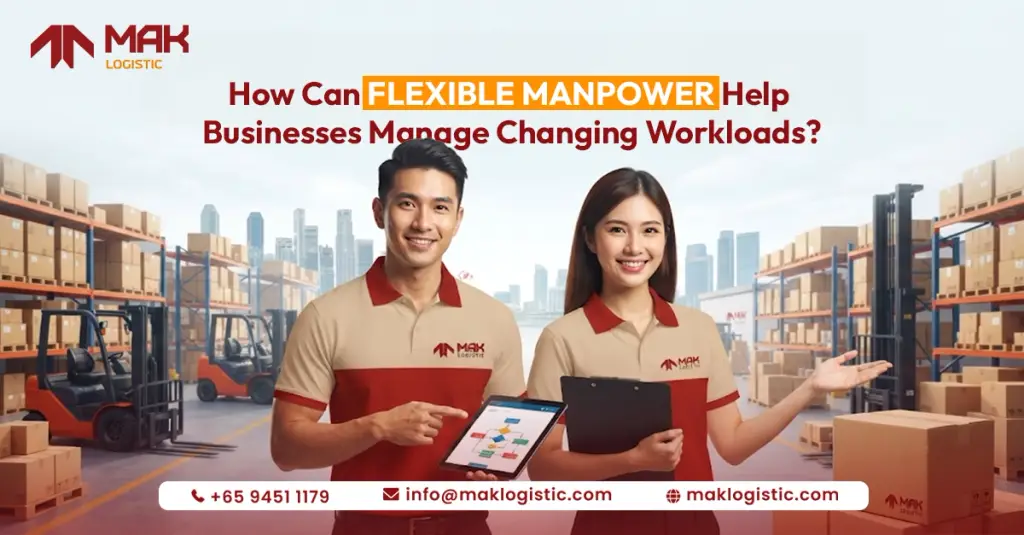
Business workloads do not always remain consistent. Some periods require additional employees to manage higher order volumes, increased warehouse activities, or seasonal demand. During quieter periods, maintaining the same workforce can increase labour costs and create unnecessary operational pressure.
For businesses in Singapore, managing these fluctuations requires a workforce that can adapt to changing operational requirements. This is where flexible manpower becomes valuable.
Flexible manpower allows businesses to adjust their workforce according to workload, operational schedules, and business demand. Instead of depending entirely on a fixed team, companies can arrange temporary, contract, or additional manpower when required.
From warehouse operations and order fulfilment to transportation support and inventory handling, flexible manpower can help businesses maintain productivity without overcommitting to permanent staffing.
What Is Flexible Manpower?
Flexible manpower refers to arranging employees or additional workforce support based on a business’s changing operational needs.
Rather than maintaining the same workforce throughout the year, businesses can increase or reduce staffing levels depending on order volumes, project requirements, seasonal demand, and daily workloads.
Flexible manpower arrangements may include:
- Temporary Manpower: Employees engaged for short-term or immediate operational requirements.
- Contract Manpower: Workers assigned for a defined contract period based on business needs.
- Part-Time Manpower: Employees working for specific hours or shifts.
- Additional Operational Support: Extra workers arranged during peak periods or increased workloads.
For example, a warehouse may normally operate with a fixed team of employees. During a promotional campaign or festive season, incoming orders may increase significantly. Additional manpower can help manage receiving, picking, packing, sorting, and dispatch activities without placing excessive pressure on the existing workforce.
Why Do Businesses Experience Changing Workloads?
Workload fluctuations can happen for several operational and commercial reasons.
1. Seasonal Business Demand
Many businesses experience higher demand during festive seasons, holidays, and promotional periods. Warehouses and distribution operations may need additional workers to handle increased product movement.
2. Changes in Customer Orders
Unexpected increases or decreases in customer orders can affect daily staffing requirements. E-commerce businesses, in particular, may experience sudden changes during online sales campaigns.
3. Business Expansion
When companies expand their operations, enter new markets, or increase distribution activities, their existing workforce may not be sufficient to manage the additional responsibilities.
4. Employee Absences and Staff Turnover
Unexpected leave, resignations, and employee shortages can affect daily operations. Businesses may require additional manpower to maintain normal productivity.
5. Project-Based Requirements
Certain warehouse, manufacturing, and distribution activities require additional workers only for a specific period. Hiring permanent employees for every temporary requirement may not be practical.
How Can Flexible Manpower Help Businesses Manage Changing Workloads?
Flexible manpower gives businesses more control over workforce planning and operational capacity. Here are eight ways it can support changing workloads.
1. Adjust Workforce According to Business Demand
One of the main advantages of flexible manpower is the ability to increase or reduce staffing levels based on operational requirements.
When order volumes increase, businesses can arrange additional workers. During quieter periods, they can avoid maintaining an unnecessarily large workforce.
This approach helps companies align manpower availability with actual workloads.
2. Maintain Warehouse Productivity During Peak Periods
Warehouses often experience increased activity during festive seasons, promotional campaigns, and large order arrivals.
Without sufficient manpower, existing employees may struggle to complete receiving, sorting, picking, packing, and dispatch activities on schedule.
Additional warehouse manpower can help distribute tasks more effectively and maintain smoother daily operations.
3. Reduce Pressure on Existing Employees
When businesses experience sudden workload increases, permanent employees may need to handle additional responsibilities. Over time, this can affect productivity, employee satisfaction, and work quality.
Flexible manpower helps distribute workloads across a larger team, allowing existing employees to focus on their assigned responsibilities.
4. Manage Labour Costs More Effectively
Maintaining a large permanent workforce throughout the year can increase fixed operating expenses, particularly when workloads fluctuate.
Flexible manpower allows businesses to arrange additional staffing according to actual requirements rather than hiring permanent employees for every temporary increase in demand.
However, businesses should evaluate the total cost of temporary and contract staffing, including recruitment, training, supervision, and applicable employment obligations.
5. Support Faster Order Processing
In e-commerce and distribution operations, delays in warehouse activities can affect order fulfilment and delivery schedules.
Additional workers can support activities such as:
- Receiving incoming products.
- Sorting and arranging inventory.
- Picking customer orders.
- Packing products for dispatch.
- Labelling and preparing shipments.
- Supporting loading and unloading activities.
With suitable workforce planning, businesses can manage higher order volumes more efficiently.
6. Improve Operational Flexibility
Different business activities require different levels of manpower. Some operations may need additional workers for a few days, while others may require support over several months.
Flexible staffing arrangements allow businesses to respond to these requirements without making unnecessary long-term staffing commitments.
7. Reduce the Impact of Employee Shortages
Unexpected employee absences or staff shortages can interrupt important warehouse activities.
Having access to additional manpower can help businesses cover workforce gaps and maintain essential operations.
Businesses should still plan for onboarding, task instructions, supervision, and appropriate safety procedures to ensure that additional workers can contribute effectively.
8. Support Business Expansion
As businesses grow, their operational requirements may increase. Higher inventory volumes, additional warehouse activities, and expanding distribution networks can create new workforce demands.
Flexible manpower can help businesses scale their workforce gradually according to operational growth.
This allows companies to focus on expansion while maintaining the workforce needed to support daily activities.
Which Industries Benefit from Flexible Manpower?
Flexible manpower can support businesses across different industries, particularly those with changing workloads and labour-intensive operations.
| Industry | Flexible Manpower Requirements |
| Logistics and Warehousing | Receiving, sorting, picking, packing, and dispatch |
| E-commerce | Order processing, inventory handling, and packaging |
| Manufacturing | Material handling, production support, and warehouse activities |
| Retail and Wholesale | Stock arrangement, replenishment, and distribution |
| Food Distribution | Product handling, storage support, and order preparation |
| Electronics and Semiconductor | Warehouse handling and operational support according to product requirements |
| Distribution Centres | Loading, unloading, sorting, and inventory movement |
The exact manpower requirements depend on the nature of the products, workplace conditions, operational schedules, and required skill levels.
Flexible Manpower vs Permanent Manpower: What Is the Difference?
Both flexible and permanent manpower arrangements serve important business purposes. The right option depends on how consistent the workload is and what responsibilities need to be covered.
| Comparison Factor | Flexible Manpower | Permanent Manpower |
| Employment Duration | Temporary, part-time, or contract-based arrangements | Ongoing employment |
| Workforce Planning | Adjusted according to workload | Generally planned for regular operations |
| Staffing Requirements | Suitable for fluctuating demand | Suitable for consistent staffing needs |
| Operational Use | Peak periods and additional projects | Core daily business activities |
| Workforce Availability | Depends on staffing arrangements and provider capacity | Depends on the company’s existing team |
| Cost Planning | Can align additional staffing with specific requirements | Includes ongoing employment costs |
Many businesses benefit from combining both arrangements. Permanent employees can manage core responsibilities, while flexible manpower supports additional workloads and temporary operational requirements.
What Should Businesses Consider Before Hiring Flexible Manpower?
Before arranging additional manpower, businesses should assess their operational requirements carefully.
1. Identify the Required Number of Workers
Estimate the additional workforce needed based on daily activities, order volumes, warehouse capacity, and expected workload.
2. Define Job Responsibilities
Clearly explain the tasks workers will perform, such as picking, packing, sorting, inventory handling, or loading and unloading.
3. Check Relevant Experience and Skills
Certain warehouse activities may require workers with specific experience, equipment-handling capabilities, or product-handling knowledge.
4. Plan Work Schedules
Determine the required working hours, shifts, duration, and reporting arrangements before confirming manpower requirements.
5. Evaluate the Manpower Provider
Choose a provider that understands your operational requirements and can arrange suitable workers within the required timeframe.
6. Prioritise Workplace Safety
Ensure workers receive appropriate safety instructions, task-specific training, and supervision. Businesses should also confirm that applicable employment and workplace safety requirements are followed.
How Can MAK Logistic Support Flexible Warehouse Manpower Requirements in Singapore?
Managing warehouse workloads requires the right number of workers at the right time. When businesses experience increased order volumes, staff shortages, or additional handling requirements, arranging suitable manpower can help maintain operational continuity.
MAK Logistic provides warehouse manpower supply in Singapore to support businesses with different operational requirements.
Our manpower support can assist with:
- Warehouse receiving and handling activities.
- Picking and packing operations.
- Sorting and product arrangement.
- Loading and unloading support.
- Inventory handling activities.
- Additional warehouse workforce requirements.
Whether your business needs temporary, contract, or additional warehouse manpower, MAK Logistic can discuss suitable staffing arrangements based on your operational requirements.
By combining warehouse manpower support with warehousing and logistics services, businesses can coordinate their day-to-day activities more effectively.
Need additional warehouse manpower in Singapore?
Contact MAK Logistic to discuss your workforce requirements.
MAK Logistic Pte Ltd
Phone: +65 9451 1179
Email: info@maklogistic.com
Website: https://maklogistic.com/
Explore our Manpower Supply Services in Singapore to learn more.
Frequently Asked Questions
1. What is flexible manpower in business operations?
Flexible manpower refers to arranging additional workers based on changing business requirements. It may include temporary, part-time, or contract-based staffing to manage fluctuating workloads.
2. How does flexible manpower help warehouse operations?
Flexible manpower helps warehouses manage increased receiving, sorting, picking, packing, and dispatch activities. It can also reduce pressure on existing employees during peak periods.
3. Is flexible manpower suitable for small businesses?
Yes. Small businesses can use flexible manpower when they experience seasonal demand, temporary projects, employee shortages, or increased order volumes without necessarily expanding their permanent workforce.
4. What is the difference between temporary and contract manpower?
Temporary manpower is generally arranged for short-term staffing requirements, while contract manpower is engaged for an agreed employment period under specified terms and conditions.
5. How can businesses arrange warehouse manpower in Singapore?
Businesses can identify their staffing requirements, define job responsibilities, determine the required duration, and approach a suitable manpower provider. They should also verify the provider’s ability to meet applicable employment and workplace safety requirements.
Conclusion
Changing workloads can create challenges for businesses that depend on consistent workforce availability. Flexible manpower provides a practical way to manage these fluctuations by allowing companies to arrange additional workers according to operational requirements.
From warehouse handling and order processing to inventory management and distribution support, the right manpower arrangement can help businesses maintain productivity and respond to changing demand.
For businesses in Singapore looking for additional warehouse workforce support, MAK Logistic provides manpower supply solutions to help manage changing operational requirements.