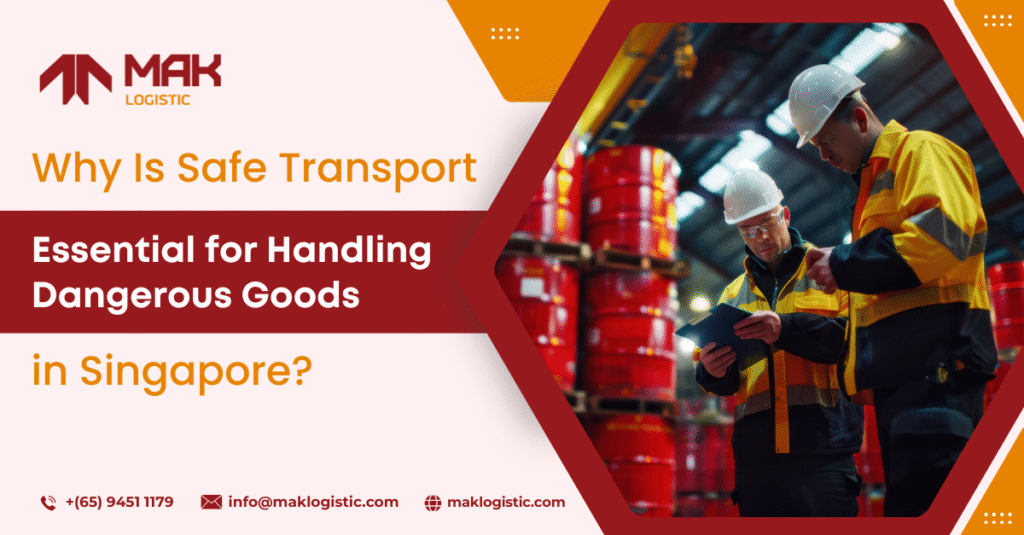
Singapore’s logistics and transport industry plays a vital role in supporting global trade and manufacturing. Among the wide range of goods moved daily, dangerous goods (DG) — or hazardous materials — require the highest standards of safety and compliance.
These materials can be highly reactive, flammable, corrosive, or toxic. Improper handling or transportation could result in severe consequences for people, property, and the environment.
What Are Dangerous Goods?
Dangerous goods are substances or materials that can pose potential risks when stored, handled, or transported. These may include chemicals, gases, explosives, flammable liquids, radioactive materials, and corrosive substances.
To manage these risks effectively, the transport of DG in Singapore is regulated under strict frameworks enforced by the Singapore Civil Defence Force (SCDF), Land Transport Authority (LTA), and National Environment Agency (NEA).
At MAK Logistic, every DG shipment is handled according to Singapore and local standards, including:
- UN Model Regulations for classification, labeling, and packaging
These frameworks ensure that each shipment complies with the required safety protocols from origin to destination.
Types of Dangerous Goods

Dangerous goods are categorized into nine hazard classes according to the United Nations classification system. Each class represents a unique type of risk:
- Explosives – Substances capable of causing explosions or mass fire.
- Gases – Flammable, non-flammable, or toxic gases such as propane or chlorine.
- Flammable Liquids – Fuels, paints, and solvents that ignite easily.
- Flammable Solids – Substances that can ignite upon contact with air or moisture.
- Oxidizing Substances and Organic Peroxides – Materials that can intensify combustion.
- Toxic and Infectious Substances – Chemicals harmful to health or biological agents.
- Radioactive Materials – Substances emitting ionizing radiation.
- Corrosives – Acids, alkalis, and other materials that can damage metals or tissues.
- Miscellaneous Dangerous Substances – Environmentally hazardous materials that don’t fit other categories.
MAK Logistic ensures that each DG category is accurately identified, packaged, and labeled according to its hazard class before transport. This prevents accidents, facilitates inspection, and supports emergency response preparedness.
Importance of Safe Transport for Dangerous Goods
The transportation of dangerous goods requires careful planning, specialized equipment, and trained personnel to ensure safety and compliance at every stage of the logistics process. Below are the key reasons why safe DG transport is essential:
1. Protecting People and Property
Human safety must always come first. Even a small error in handling flammable, corrosive, or toxic materials can result in severe injuries, fires, or property damage. Adhering to strict operational protocols, conducting regular safety training, and maintaining well-equipped vehicles are vital practices to prevent accidents and protect lives.
2. Environmental Protection
Dangerous goods can have long-lasting effects on the environment if spilled or mishandled. Leaks of hazardous chemicals or gases can contaminate soil, air, and water sources. Using approved containment systems, secure packaging, and eco-conscious transport methods significantly reduces the risk of environmental pollution and supports broader sustainability efforts.
3. Legal and Regulatory Compliance
In Singapore, dangerous goods transport is regulated by authorities such as the Singapore Civil Defence Force (SCDF) and Land Transport Authority (LTA). Strict compliance with these frameworks is mandatory to ensure public safety. Companies must maintain accurate documentation, valid permits, and trained personnel to meet all legal requirements and avoid heavy penalties or business disruptions.
4. Safeguarding Valuable Cargo
Many dangerous goods are essential raw materials for industries such as manufacturing, energy, and pharmaceuticals. Safe transport protects these valuable assets from loss or damage while preventing costly production delays. Implementing GPS tracking, planned routes, and regular vehicle maintenance helps ensure goods reach their destinations securely and on time.
5. Building Trust and Reliability
Consistent adherence to safety standards builds confidence among clients, regulatory bodies, and the public. When logistics providers demonstrate transparency, professionalism, and compliance, they establish themselves as reliable and trustworthy partners in the supply chain. A proven track record of safe operations enhances reputation and long-term business relationships.
Understanding Dangerous Goods Trucking: How It Is Done ?
Transporting dangerous goods requires specialized processes that go beyond standard logistics. Here’s how MAK Logistic manages DG transport from start to finish:
1. Classification and Documentation
Every shipment begins with accurate classification under UN standards and the preparation of all required documentation, including Safety Data Sheets (SDS) and Dangerous Goods Declarations (DGD). This ensures transparency and smooth regulatory clearance.
2. Certified Packaging and Labelling
Goods are packed using UN-approved containers designed for their hazard class and labeled with hazard symbols, UN numbers, and handling instructions. Proper labeling ensures quick identification during inspections and emergencies.
3. DG-Compliant Fleet
Our fleet of DG-certified trucks is equipped with spill containment kits, fire extinguishers, and tracking systems. Regular maintenance ensures each vehicle meets SCDF and LTA requirements for dangerous goods transport.
4. Trained and Certified Personnel
Our drivers and handlers undergo SCDF-approved DG training covering safe handling, emergency procedures, and risk assessment. Regular refresher programs ensure that every staff member remains competent and up to date with evolving regulations.
5. Emergency Response Preparedness
In the unlikely event of an incident, MAK Logistic has a 24/7 emergency response team ready to act swiftly. Our protocols are designed to minimize damage, protect lives, and ensure full regulatory compliance during crisis situations.
Looking for a Partner to Transport Dangerous Goods?
Safe and compliant transport of dangerous goods requires specialized expertise, industry experience, and a strong commitment to safety.
With a DG-certified fleet, trained personnel, and a proven safety record, we deliver end-to-end logistics solutions that ensure every shipment is handled with precision and care. Our operations are designed to protect people, property, and the environment while fully complying with Singapore’s strict regulations.
Whether your business operates in the chemical, manufacturing, or energy sector, MAK Logistic is your trusted partner for dangerous goods transport in Singapore — where safety meets reliability.
Contact MAK Logistic today to learn how we can manage the transport of dangerous goods safely, efficiently, and compliantly across Singapore.