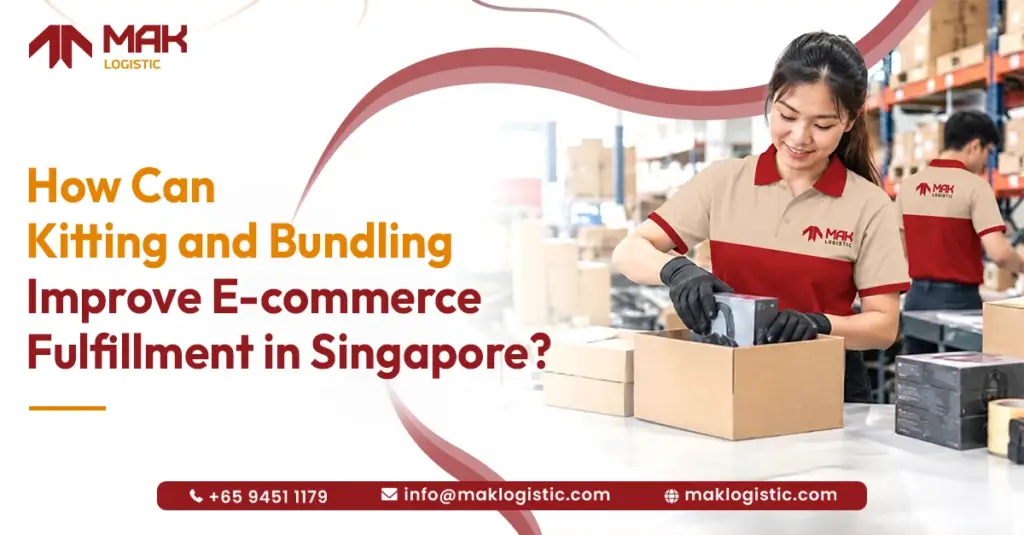
E-commerce businesses are constantly looking for ways to make order fulfillment faster, more organised, and easier to manage.
As product ranges grow, fulfillment operations can become more complicated. Orders may contain multiple products, promotional combinations, accessories, or products that are frequently purchased together.
This is where kitting and bundling in e-commerce can help.
Kitting and bundling allow businesses to prepare products in organised combinations before or during the fulfillment process. When properly planned, these processes can simplify picking and packing, improve order accuracy, and create a smoother workflow between inventory storage and customer order processing.
For businesses using e-commerce fulfillment in Singapore, kitting and bundling can also be useful for managing promotional campaigns, product launches, subscription boxes, gift sets, and multi-product orders.
What Is Kitting in E-commerce?
Kitting is the process of combining multiple individual products or components into one prepared set.
For example, an online beauty store may sell a skincare kit containing:
- Cleanser
- Toner
- Moisturiser
- Serum
Instead of treating each item as a separate fulfillment activity every time an order is placed, the products can be assembled into a kit according to the business’s requirements.
The kit can then be stored and picked as a prepared unit.
How Does E-commerce Kitting Work?
A typical kitting process may involve:
Individual Products → Product Selection → Assembly → Labelling → Storage → Order Picking → Packing → Dispatch
The exact process depends on the products and fulfillment model.
Kitting can be completed before orders are received or as part of the order fulfillment process.
What Is Product Bundling?
Product bundling involves selling two or more products together as one customer offer.
For example:
Shampoo + Conditioner + Hair Mask = Hair Care Bundle
The products may continue to exist as separate inventory items, but the business markets and sells them together as a bundle.
Bundling is commonly used for:
- Promotional offers
- Product combinations
- Gift sets
- Starter packs
- Seasonal packages
- Cross-selling
- Special campaigns
The purpose is often to create a convenient or attractive product combination for customers.
What Is the Difference Between Kitting and Bundling?
Although the terms are sometimes used interchangeably, kitting and bundling are not exactly the same.
| Kitting | Bundling |
| Focuses on physically combining products or components | Focuses on selling products together as an offer |
| Products may be assembled before fulfillment | Products may remain separate until an order is placed |
| Often involves warehouse preparation | Often focuses on the sales and product strategy |
| Creates a prepared kit or unit | Creates a combined customer purchase |
| Useful for fulfillment efficiency | Useful for promotions and product combinations |
A business can use both processes together.
For example, a company can sell a skincare bundle online and have a fulfillment warehouse prepare that bundle as a physical kit.
How Can Kitting Improve E-commerce Fulfillment?
Kitting can simplify certain fulfillment operations by preparing frequently ordered product combinations in advance.
1. Simplifies Picking
If several products are regularly ordered together, preparing them as a kit can reduce the number of individual items workers need to pick.
Instead of:
Product A + Product B + Product C
the warehouse may be able to pick:
One prepared kit
This can make the picking process more straightforward for suitable product combinations.
2. Can Reduce Packing Steps
When products are already prepared as a kit, the fulfillment team may spend less time assembling the combination during each individual order.
This can help create a more consistent packing workflow.
3. Supports Order Accuracy
Preparing standard kits according to defined product lists can help reduce the risk of missing components.
For example, a “Starter Kit” can have a defined list of products that must always be included.
Warehouse teams can use this standard to check kit contents before storage or dispatch.
4. Makes Promotional Campaigns Easier to Manage
E-commerce businesses often create special combinations for promotional periods.
Examples include:
- Buy-one-get-one offers
- Seasonal gift sets
- Starter kits
- Holiday packages
- Product launch sets
Kitting can help the warehouse prepare these combinations before order volumes increase.
How Can Bundling Improve E-commerce Fulfillment?
Bundling can help businesses combine complementary products into a single customer purchase.
For example:
Laptop + Laptop Bag + Mouse
or
Coffee Beans + Mug + Brewing Accessories
Bundling can create a more organised fulfillment process when the warehouse has a clear process for identifying the products included in each bundle.
Easier Product Identification
Each bundle can have a defined product list or SKU structure.
This gives warehouse teams a clear understanding of what needs to be included when processing an order.
Supports Promotional Orders
Businesses can create bundles specifically for campaigns, seasonal events, or new product launches.
Can Improve the Customer Experience
Customers may prefer purchasing products that are already selected as a useful combination rather than finding and ordering each item separately.
When Should E-commerce Businesses Use Kitting?
Kitting can be useful when the same combination of products is ordered frequently.
Businesses should consider kitting when:
- Products are commonly purchased together
- A standard kit is sold regularly
- Orders contain multiple related components
- Promotional kits are frequently used
- Assembly takes time during normal fulfillment
- The business wants a consistent fulfillment process
For example, a business selling electronics accessories could create a “Starter Kit” containing a charger, cable, adapter, and protective case.
Instead of assembling these items from scratch for every order, the warehouse can prepare the kit in advance when appropriate.
When Should Businesses Use Product Bundling?
Bundling can be useful when businesses want to create a combined offer from complementary products.
It may be suitable for:
- Cross-selling
- Seasonal promotions
- Gift sets
- Starter packs
- New customer offers
- Subscription products
- Product combinations
For example, an online skincare business could create a “Daily Skincare Bundle” containing several products that are normally used together.
The business can then determine whether the bundle should be physically kitted in the warehouse or assembled during order fulfillment.
How Do Kitting and Bundling Affect Inventory Management?
Inventory management becomes particularly important when businesses sell individual products as well as kits or bundles.
Consider a business with:
- 500 units of Product A
- 500 units of Product B
- 500 units of Product C
If these products are also sold as a three-product kit, the business needs to understand how kit sales affect the available inventory of each individual product.
Poor inventory tracking can result in situations where the system shows sufficient stock for individual products while some components have already been allocated to kits.
Businesses should therefore establish clear inventory rules for:
- Individual SKUs
- Kit SKUs
- Bundle components
- Stock allocation
- Replenishment
- Disassembly, where applicable
Accurate inventory information helps fulfillment teams understand what is actually available for customer orders.
Can Kitting and Bundling Reduce Fulfillment Errors?
They can, when the process is properly designed and controlled.
Without a standard process, multi-product orders may require workers to pick several individual items and check them separately.
This creates more opportunities for:
- Missing products
- Incorrect quantities
- Wrong product combinations
- Packing mistakes
A standardised kitting process can give warehouse teams a defined product list and preparation procedure.
However, kitting itself does not automatically eliminate errors. Businesses still need proper inventory records, product identification, quality checks, and warehouse procedures.
How Can Kitting Improve Warehouse Productivity?
Warehouse productivity is influenced by how much time employees spend moving, picking, checking, and packing products.
Kitting can help when products are frequently ordered together because it may reduce repeated picking activities.
For example:
Without Kitting
Product A → Pick
Product B → Pick
Product C → Pick
Check → Pack
With Prepared Kit
Prepared Kit → Pick
Check → Pack
The actual productivity improvement depends on order volumes, product characteristics, warehouse layout, and how the kitting process is managed.
What Types of Businesses Can Benefit From Kitting and Bundling?
Kitting and bundling can be used across different e-commerce categories.
Beauty and Skincare
Businesses can create skincare routines, haircare sets, or beauty gift boxes.
Electronics
Businesses can combine devices with accessories such as cables, chargers, adapters, or cases.
Health and Wellness
Product combinations can be prepared as starter packs or subscription sets.
Fashion and Lifestyle
Businesses can create seasonal combinations or accessory sets.
Food and Beverage
Businesses can create gift boxes, promotional packs, or themed product sets where appropriate.
Subscription Businesses
Subscription boxes can be prepared using a defined combination of products before dispatch.
The suitability of kitting depends on the product type, storage requirements, order volume, and fulfillment process.
How Can a 3PL Provider Support Kitting and Bundling?
Businesses do not always need to manage kitting and bundling internally.
A 3PL fulfillment provider may be able to support activities such as:
- Receiving products
- Warehouse storage
- Inventory handling
- Kitting
- Bundling
- Picking
- Packing
- Labelling
- Order fulfillment
- Dispatch
- Transportation
This can be useful for businesses that do not have their own warehouse team or do not want to manage additional fulfillment activities internally.
For an e-commerce business, the process could look like:
Supplier → Warehouse → Storage → Kitting/Bundling → Order → Picking → Packing → Dispatch → Delivery
Having these activities managed through one fulfillment operation can reduce the need to coordinate multiple logistics providers.
What Should Businesses Consider Before Introducing Kitting?
Before implementing a kitting process, businesses should evaluate:
Product Compatibility
Are the products frequently purchased or used together?
Demand
How frequently is the kit likely to be ordered?
Storage Space
Will prepared kits require additional warehouse space?
Inventory Management
Can individual products and kits be tracked accurately?
Labour Requirements
How much time will employees spend assembling the kits?
Packaging
Does the kit require special packaging or labelling?
Replenishment
How quickly can the components be replenished when kit inventory decreases?
These factors can help determine whether kitting will actually improve the fulfillment process.
How Can Businesses Manage Kitting and Bundling During Peak Seasons?
Peak periods can significantly increase order volumes.
E-commerce businesses may introduce special bundles during:
- Major shopping campaigns
- Festive seasons
- Product launches
- Promotional periods
- Holiday sales
Preparing frequently ordered kits or bundles before the peak period can help reduce pressure on fulfillment teams.
Businesses should forecast demand, prepare sufficient components, confirm warehouse capacity, and plan manpower before the campaign begins.
This is particularly important when promotional bundles are expected to generate a large number of orders within a short period.
How Can MAK Logistic Support E-commerce Kitting and Bundling?
MAK Logistic provides e-commerce fulfillment services in Singapore to support businesses with warehouse and fulfillment requirements.
Depending on business needs, logistics support can include:
- Warehouse storage
- Inventory handling
- Picking and packing
- Order fulfillment
- Kitting and bundling support
- Warehouse manpower
- Transportation
- 3PL services
For businesses selling product combinations, having storage and fulfillment activities coordinated within one logistics operation can help simplify day-to-day processes.
MAK Logistic can support businesses from inventory storage through order processing and dispatch, depending on the agreed fulfillment requirements.
Frequently Asked Questions
What is kitting in e-commerce fulfillment?
Kitting is the process of combining multiple products or components into a prepared set that can be stored, picked, and fulfilled as a unit.
What is the difference between kitting and bundling?
Kitting generally focuses on physically preparing multiple products as one set, while bundling usually refers to selling multiple products together as one customer offer. A business can use both processes together.
Can kitting reduce e-commerce fulfillment time?
Kitting can reduce fulfillment time when products are frequently ordered together because the warehouse may be able to pick a prepared kit instead of picking each component separately. The actual time savings depend on the fulfillment process and order volume.
Is kitting suitable for small e-commerce businesses?
Yes. Small e-commerce businesses can use kitting for frequently sold product combinations, starter packs, gift sets, or promotional products. The business should first consider demand, storage requirements, and inventory management.
Can a 3PL provider handle kitting and bundling?
Depending on the provider, 3PL fulfillment services may include kitting, bundling, inventory handling, storage, picking, packing, and dispatch. Businesses should confirm the specific services and processes available before implementation.
Conclusion
Kitting and bundling can help e-commerce businesses create more organised fulfillment processes when they are used for the right products and order types.
Kitting focuses on preparing products or components as a set, while bundling focuses on offering multiple products together for customers.
Both approaches can support:
- Easier picking
- More consistent packing
- Better order organisation
- Promotional campaigns
- Product combinations
- Fulfillment efficiency
However, successful kitting and bundling require accurate inventory management, clear product identification, suitable warehouse space, and well-defined fulfillment procedures.
For businesses looking for e-commerce fulfillment in Singapore, working with a logistics provider that can support storage, inventory handling, kitting, packing, manpower, and transportation can make the overall process easier to manage.
The right approach depends on your products, order volumes, customer demand, and fulfillment requirements.