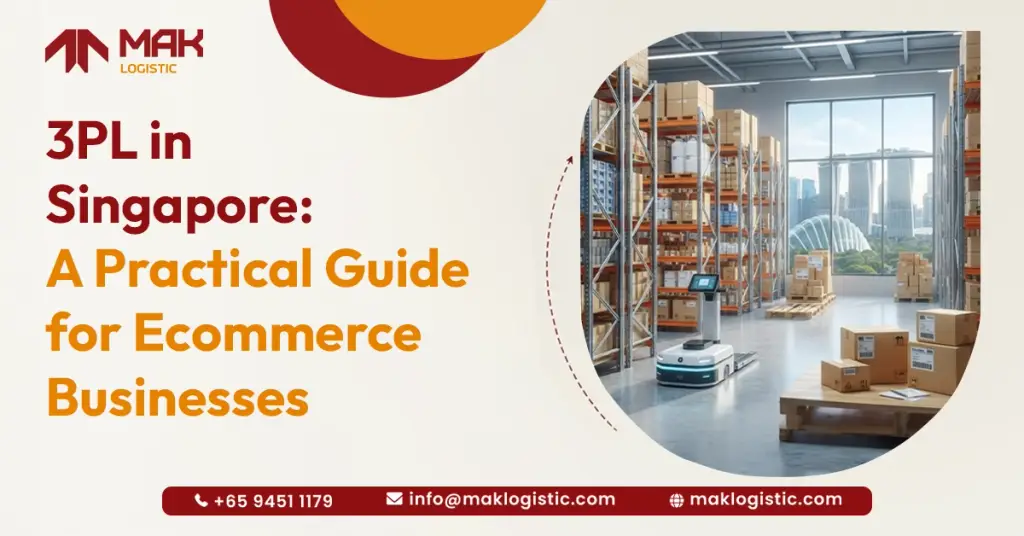
Running an e-commerce business in Singapore involves more than selling products through an online store. Businesses must manage inventory, warehouse storage, order processing, packaging, transportation and customer deliveries while maintaining a smooth shopping experience.
As order volumes increase, handling every logistics activity internally can become challenging. Limited warehouse space, inventory management issues, delayed deliveries and increasing operational expenses can affect business efficiency and customer satisfaction.
This is where 3PL in Singapore becomes an important solution for growing e-commerce businesses.
Third-party logistics (3PL) allows online retailers to outsource essential logistics activities to an external logistics provider. Instead of managing every warehouse and delivery operation independently, businesses can access services such as warehousing, inventory management, order fulfilment, transportation and returns management through a logistics partner.
For startups, established online retailers and expanding e-commerce brands, choosing the right 3PL services in Singapore can help simplify daily operations and support business growth.
In this practical guide, we explore how third-party logistics works, which services e-commerce businesses should consider and how to choose a suitable 3PL provider in Singapore.
What Is 3PL in Singapore?
Third-party logistics, commonly known as 3PL, refers to outsourcing logistics and supply chain activities to an external service provider.
A 3PL provider helps businesses manage activities related to storing, handling, processing and transporting products. Depending on the service arrangement, an e-commerce business may outsource some or all of its logistics operations.
Typical third-party logistics services in Singapore include warehousing and storage, inventory management, order fulfilment, transportation, e-commerce fulfilment, returns management and warehouse manpower support.
By outsourcing these activities, e-commerce businesses can focus more on product development, marketing, sales and customer relationships while their logistics partner supports the physical movement and storage of goods.
Why Do Ecommerce Businesses Need 3PL Services in Singapore?
Singapore has a competitive e-commerce environment where customers expect convenient ordering, accurate fulfilment and reliable deliveries. As online businesses grow, their logistics requirements also become more complex.
Managing orders from multiple sales channels, maintaining sufficient inventory and arranging deliveries can require considerable time and resources.
One common challenge is increasing order volumes. A business may initially manage a small number of orders using its own resources. However, promotional campaigns, seasonal demand and business expansion can increase daily order volumes. A suitable 3PL provider can support warehouse operations, picking, packing and dispatch activities according to the agreed service arrangement.
Another challenge is limited warehouse space. Growing businesses may find it difficult to store products within their existing premises. Outsourced e-commerce warehousing in Singapore gives businesses access to warehouse storage facilities without independently operating an entire warehouse.
Inventory management is equally important. Poor inventory management can lead to stock discrepancies, overselling, delayed orders and unnecessary storage costs. A structured warehouse operation can help businesses monitor incoming and outgoing stock and improve inventory visibility.
Transportation is another consideration. Arranging deliveries independently can involve multiple service providers, schedules and operational requirements. Working with a logistics partner that also supports transportation can simplify coordination between warehousing, order processing and distribution.
How Does a 3PL Provider Work for an Ecommerce Business?
A 3PL provider typically manages the physical logistics activities that take place after products are manufactured or sourced and before they reach the customer.
The process generally begins with inventory receiving. Products are received from suppliers or manufacturers and transferred to the designated warehouse. Once received, products are organised and stored according to their categories, quantities and storage requirements.
When a customer places an order through an online store or marketplace, the order details are passed to the fulfilment operation. Warehouse staff locate the ordered products, verify the items and prepare them for dispatch through appropriate packaging.
The packed orders are then handed over for transportation and delivery to the designated customer location.
Where returns management is included in the service arrangement, returned products can also be received, checked and processed according to the agreed procedures.
This structured process helps e-commerce businesses coordinate their warehousing and order fulfilment activities more effectively.
5 Essential 3PL Services for Ecommerce Businesses
Not every online retailer requires the same logistics arrangement. However, the following services are particularly important when evaluating a 3PL provider in Singapore.
1. Ecommerce Warehousing and Storage
Warehouse storage is one of the basic requirements of e-commerce logistics. Businesses need suitable space to store products before customer orders are received.
Outsourced e-commerce warehousing in Singapore allows online retailers to use warehouse facilities without independently managing their own storage operations.
Depending on business requirements, warehouse services may include general storage, pallet storage, inventory organisation and stock handling.
Businesses should consider warehouse capacity, product compatibility, storage charges and inventory management processes before selecting a provider.
2. Inventory Management
Inventory management helps e-commerce businesses monitor product availability and coordinate stock movements.
A structured inventory management process can help reduce stock discrepancies, identify low-stock items and improve visibility of incoming and outgoing products.
Businesses should check whether their 3PL provider offers inventory reporting, stock reconciliation and warehouse management system (WMS) support.
3. Order Picking and Packing
Picking and packing are essential parts of e-commerce order fulfilment.
When an order is received, warehouse staff locate the required products, verify the items and prepare them for dispatch.
An organised picking and packing process can help reduce order-handling errors and support consistent fulfilment operations.
For online retailers handling multiple products and daily orders, outsourcing these activities can reduce the workload associated with managing an in-house fulfilment team.
4. Transportation and Last-Mile Delivery
Once orders are packed, they need to be transported to customers, retail locations or distribution points.
A 3PL provider may support transportation coordination, warehouse-to-warehouse movements, distribution and last-mile delivery arrangements, depending on its service capabilities.
For e-commerce businesses, delivery coordination is important because transportation performance directly affects the customer experience.
Before choosing a provider, clarify delivery coverage, scheduling, shipment tracking availability and delivery charges.
5. Returns Management
Product returns are a regular part of many e-commerce operations. Customers may return items because of incorrect products, damaged packaging, sizing issues or other reasons.
Without a structured returns process, managing returned inventory can become time-consuming.
A returns management arrangement may include receiving returned products, checking their condition, updating inventory records and coordinating the next handling step.
Businesses should establish clear return procedures with their logistics provider to ensure returned products are processed consistently.
How to Choose the Right 3PL Company in Singapore
Choosing the right 3PL company in Singapore requires more than comparing warehouse rental or fulfilment prices. Businesses should evaluate the provider’s operational capabilities and whether its services match their current and future requirements.
Start by checking the range of services offered. A suitable provider should be able to support your warehousing, inventory management, order fulfilment, transportation and returns management requirements.
Warehouse facilities are another important consideration. Evaluate storage capacity, warehouse arrangements, security procedures and suitability for your products.
Inventory management capabilities should also be reviewed. Ask how stock movements are recorded, monitored and reported. Understanding the provider’s inventory tracking procedures can help you maintain better stock visibility.
Fulfilment accuracy is equally important. Businesses should understand the provider’s picking, packing, order verification and dispatch procedures.
Transportation support should also match your delivery requirements. Review delivery coverage, transportation arrangements and shipment coordination.
Finally, request a transparent pricing breakdown that covers storage fees, receiving charges, picking and packing costs, transportation charges and additional service fees.
A reliable logistics partner should provide clear communication, transparent service arrangements and operational support that matches your business needs.
3PL vs In-House Logistics: Which Is Better for Ecommerce Businesses?
Ecommerce businesses can either manage logistics internally or outsource selected activities to a third-party logistics provider.
Both approaches have advantages, and the right choice depends on order volume, available resources, warehouse requirements and business objectives.
| Factors | In-House Logistics | 3PL Services |
| Warehouse | Business manages its own facility | Uses provider’s warehouse facilities |
| Manpower | Business hires and manages staff | Provider supplies agreed operational support |
| Inventory | Managed internally | Managed through agreed warehouse processes |
| Order fulfilment | Business handles picking and packing | Provider handles outsourced fulfilment activities |
| Transportation | Business arranges transportation | Provider may coordinate transportation |
| Scalability | Requires additional internal resources | Service arrangements can be adjusted subject to capacity |
| Management | Direct operational control | Shared responsibility under a service agreement |
For businesses with specialised handling requirements or established warehouse infrastructure, in-house logistics may remain suitable.
However, startups and growing online retailers may find third-party logistics services in Singapore useful when they want to outsource warehouse and fulfilment activities.
The decision should be based on total operating costs, service requirements, control, flexibility and long-term business plans.
Common Mistakes Ecommerce Businesses Should Avoid When Selecting a 3PL Provider ?
Choosing an unsuitable logistics partner can create unnecessary operational difficulties.
One common mistake is choosing a provider based only on price. The lowest quotation may not include all storage, handling and transportation charges.
Businesses should also avoid overlooking inventory visibility. Without clear stock reporting, inventory planning can become difficult.
Another mistake is failing to understand fulfilment procedures. Before signing an agreement, businesses should know how products are received, picked, packed and dispatched.
Not checking service flexibility can also create problems when order volumes increase. A provider should be able to discuss changing requirements as the business grows.
Finally, businesses should not ignore returns management. Returned products need a clear receiving, inspection and inventory update process.
A clear service agreement helps both parties understand their responsibilities, service scope, reporting requirements and communication procedures.
The Role of Digitalisation in Ecommerce Logistics
Technology plays an important role in modern e-commerce logistics in Singapore. As businesses manage orders across websites, online marketplaces and multiple sales channels, digital tools can help improve inventory visibility and warehouse coordination.
Warehouse Management Systems (WMS) help manage stock records, warehouse locations, receiving and dispatch activities. Inventory management software helps businesses monitor available stock, incoming inventory and outgoing products.
Order management systems support order processing across different e-commerce sales channels, while shipment tracking systems help businesses and customers monitor delivery progress where tracking is available.
Singapore’s Infocomm Media Development Authority (IMDA) provides resources through its Logistics Industry Digital Plan, which guides logistics SMEs on digitalisation opportunities.
For businesses involved in importing products into Singapore, it is also important to understand customs procedures, permits and documentation requirements. Refer to the official Singapore Customs Import Operations Guide for further information.
How MAK Logistic Supports Ecommerce Businesses in Singapore?
Managing e-commerce logistics requires proper coordination between warehousing, inventory handling, order fulfilment and transportation. MAK Logistic provides flexible logistics solutions to support businesses with these operational requirements.
Our services are designed to help e-commerce businesses, online retailers, wholesalers and distributors manage their logistics activities more effectively.
Warehousing and Warehouse Storage
We support businesses with warehouse storage, pallet storage and inventory handling requirements, including bonded and non-bonded warehouse solutions.
E-Commerce Order Fulfilment
Our fulfilment support includes inventory handling, picking, packing and order dispatch coordination to help online businesses manage their daily order requirements.
Transportation Services
We provide transportation solutions, including warehouse-to-warehouse and airport-to-warehouse transportation, to support business distribution requirements.
Warehouse Manpower Supply
We provide flexible warehouse manpower to support operational activities such as inventory handling, sorting, packing and warehouse operations.
Inventory and Returns Support
We support warehouse inventory handling and returns management requirements as part of businesses’ wider logistics operations.
By combining warehousing, transportation and fulfilment services, MAK Logistic helps businesses explore practical ways to coordinate their supply chain activities.
Whether you are launching a new online store or expanding an existing e-commerce business, choosing suitable logistics support can make managing daily operations easier.
Explore our 3PL Services Explained: Warehousing, Transportation and Fulfilment in Singapore and Turnkey Fulfilment Service in Singapore to learn more.
Conclusion
Third-party logistics plays an important role in helping e-commerce businesses manage their warehousing, inventory and distribution requirements. From product storage and order processing to transportation and returns management, 3PL services in Singapore provide businesses with an opportunity to outsource essential logistics activities.
Choosing the right 3PL provider requires careful consideration of warehouse facilities, inventory management capabilities, fulfilment processes, transportation support and pricing transparency.
For startups, growing online retailers and established e-commerce brands, a suitable logistics partnership can help simplify daily operations and support business expansion.
Looking for reliable 3PL and e-commerce fulfilment support in Singapore?
Partner with MAK Logistic to explore flexible warehousing, transportation and fulfilment solutions for your business.
Contact MAK Logistic
Website: https://maklogistic.com/
Phone/WhatsApp: +65 9451 1179
Email: info@maklogistic.com
Frequently Asked Questions (FAQs)
1. What is 3PL in ecommerce?
3PL in e-commerce refers to outsourcing logistics activities such as warehousing, inventory management, picking, packing, order fulfilment and transportation to an external logistics provider.
2. Why do ecommerce businesses need 3PL services in Singapore?
E-commerce businesses use 3PL services to access warehouse storage, fulfilment support and transportation arrangements without independently managing every logistics operation.
3. What services does a 3PL provider offer?
A 3PL provider may offer warehousing, inventory management, order processing, picking and packing, transportation, distribution and returns management.
4. How much do 3PL services cost in Singapore?
The cost depends on warehouse storage requirements, inventory volume, order quantities, picking and packing activities, transportation arrangements and additional services. Businesses should request a customised quotation based on their operational requirements.
5. Is 3PL suitable for small ecommerce businesses?
Yes. Small e-commerce businesses can use 3PL services to access warehouse facilities and fulfilment support without independently establishing a complete logistics operation.
6. What should I check before choosing a 3PL company in Singapore?
Evaluate warehouse facilities, inventory management systems, order fulfilment procedures, transportation capabilities, pricing transparency, service flexibility and relevant industry experience before making a decision.