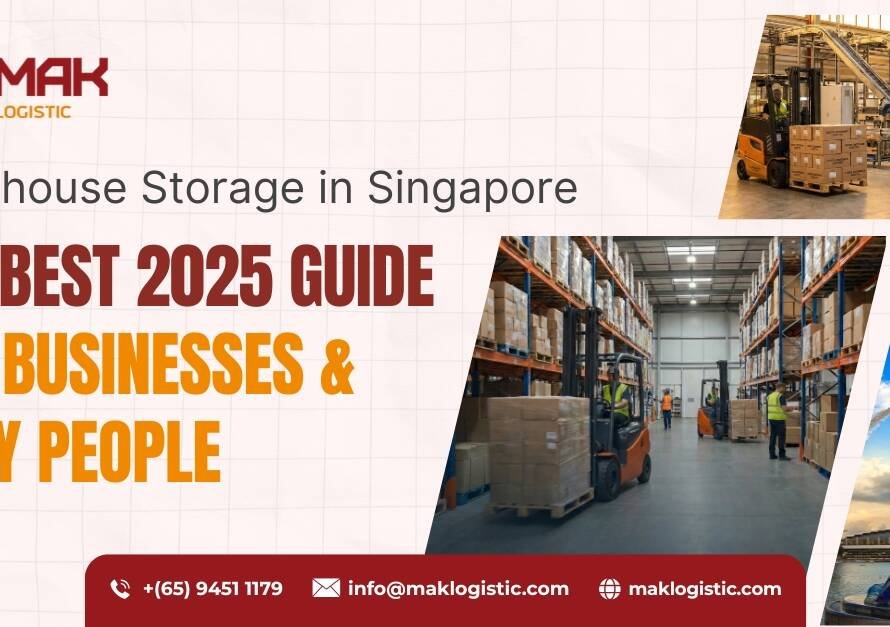
Businesses in Singapore need reliable storage solutions to manage inventory, fulfil customer orders, and maintain smooth supply chain operations. However, operating a warehouse independently can require significant investment in space, equipment, manpower, technology, and daily management. As business requirements change, maintaining an in-house warehouse may become more expensive or less flexible.
This is why many companies consider outsourcing warehouse storage in Singapore to a third-party logistics provider. Instead of managing every warehouse activity internally, businesses can use professional warehouse facilities and operational support based on their requirements.
Outsourced warehousing can help businesses manage inventory, optimise storage space, control operating expenses, and respond to changing demand. It is particularly useful for e-commerce businesses, retailers, distributors, importers, and companies that experience seasonal fluctuations in inventory.
In this guide, we explore the main benefits of outsourcing warehouse storage, how it works, and what businesses should consider when choosing a warehousing partner in Singapore.
What Is Outsourced Warehouse Storage?
Outsourced warehouse storage is a business arrangement in which a company uses an external logistics provider to store and manage its inventory rather than operating its own warehouse.
Depending on the provider and service agreement, warehouse storage solutions may include:
- Storage space for products, materials, and business inventory
- Inventory receiving and handling
- Stock organisation and tracking
- Picking and packing support
- Order fulfilment services
- Stock movement and dispatch coordination
- Transportation support
- Returns handling, where available
A third-party logistics provider, commonly known as a 3PL provider, may offer warehouse storage alongside other logistics services. This allows businesses to coordinate storage, inventory handling, and transportation through a single service partner.
For companies looking for warehouse storage in Singapore, outsourcing can provide access to suitable facilities and operational support without requiring them to establish and manage an entire warehouse independently.
8 Benefits of Outsourcing Warehouse Storage in Singapore
1. Reduce Warehouse Operating Costs
Setting up and operating a warehouse involves more than paying for space. Businesses may also need to invest in racking systems, material-handling equipment, warehouse management technology, utilities, maintenance, security, and staffing.
These expenses can increase as inventory volumes grow or operational requirements become more complex.
Outsourcing warehouse storage allows businesses to use an external provider’s facilities and services instead of managing all these resources themselves. Depending on the service agreement, companies may also be able to avoid substantial upfront investment in warehouse infrastructure.
The actual savings depend on storage volume, handling requirements, contract terms, and the services included. Businesses should compare the total cost of outsourced warehousing with the full cost of running an in-house facility before making a decision.
Best suited for: Small and medium-sized businesses, growing retailers, and companies that want to manage warehouse expenses more efficiently.
2. Access Flexible Storage Space
Inventory requirements rarely remain constant throughout the year. Retailers may need additional space during major sales campaigns, while importers and distributors may experience changes in stock levels due to supplier schedules or customer demand.
Managing these fluctuations in a fixed warehouse can be challenging. A business may pay for unused space during quieter periods or struggle to accommodate additional inventory during peak demand.
Outsourced warehouse storage solutions can offer greater flexibility, depending on the provider’s available capacity and contract terms. Businesses can discuss storage requirements based on current inventory levels and expected demand.
This flexibility can be particularly valuable for e-commerce sellers, seasonal businesses, and companies introducing new product lines.
Before signing an agreement, businesses should confirm minimum storage commitments, additional handling charges, notice periods, and the availability of extra space when demand increases.
3. Improve Inventory Management
Effective inventory management helps businesses understand what stock they have, where it is stored, and when replenishment may be required. Poor inventory visibility can lead to misplaced products, stock discrepancies, delayed orders, and unnecessary storage costs.
Professional warehousing arrangements can support better inventory organisation through designated storage locations, systematic receiving procedures, stock records, and regular inventory checks.
Depending on the provider’s systems and the agreed service scope, businesses may also receive inventory reports or access to digital stock information.
Better visibility helps teams make informed decisions about replenishment, purchasing, and stock movement. It can also reduce the risk of holding excess inventory or discovering shortages only when customer orders arrive.
When evaluating warehousing services in Singapore, ask how the provider records stock movements, reports discrepancies, manages stock counts, and shares inventory information with clients.
4. Focus on Core Business Activities
Warehouse management requires time, coordination, and ongoing supervision. Business owners and internal teams may need to oversee staff schedules, organise storage areas, monitor inventory, maintain equipment, and resolve operational issues.
These responsibilities can take attention away from activities that directly support business growth, such as sales, marketing, customer service, product development, and supplier relationships.
By outsourcing warehouse storage, businesses can delegate agreed warehousing activities to a specialist provider. This allows internal teams to concentrate on their core responsibilities while the external partner manages the assigned warehouse operations.
For example, an online retailer can focus on improving its product range and customer experience while its logistics partner supports storage and inventory handling.
Outsourcing does not remove the need for oversight. Businesses should still monitor service performance, inventory accuracy, reporting, and compliance with the agreed service levels.
5. Support E-commerce Growth and Order Fulfilment
E-commerce businesses must coordinate inventory storage with order processing, picking, packing, dispatch, and returns. As order volumes increase, handling these activities internally can become more difficult.
Outsourced warehouse storage can provide the physical space and operational support needed to manage growing inventory. When the provider also offers order fulfilment services, businesses may be able to coordinate storage and order processing within the same operation.
For example, an online store can hold its products in a third-party warehouse, arrange for items to be picked and packed when orders are received, and coordinate dispatch through the agreed transportation process.
This arrangement can help businesses manage higher order volumes without immediately investing in their own warehouse facility.
Companies should confirm whether the provider supports their e-commerce platform, order processing requirements, inventory reporting, returns procedures, and dispatch cut-off times.
For businesses comparing service options, our guide to turnkey fulfilment services in Singapore explains how integrated fulfilment support can help coordinate different stages of order processing.
6. Access Professional Warehouse Facilities and Processes
Managing a warehouse requires suitable storage arrangements, organised stock locations, appropriate handling procedures, and clear operational processes. Building these capabilities internally can take time and investment.
An established warehousing provider may offer access to existing facilities, equipment, and trained personnel. Businesses can benefit from these resources without having to develop every warehouse capability independently.
The actual level of support varies between providers. Some may focus mainly on storage space, while others offer inventory handling, picking and packing, dispatch coordination, and related logistics services.
Before selecting a provider, businesses should assess whether the facility and its operating procedures suit their products. Fragile goods, temperature-sensitive products, and specialised inventory may require additional controls or specific storage conditions.
It is also important to confirm how the provider manages access control, stock discrepancies, damage reporting, and other operational risks.
7. Scale Operations Without Building a New Warehouse
Business expansion often brings new operational requirements. A company entering additional markets, introducing new products, or increasing sales may need more storage space and warehouse support.
Building or leasing a larger warehouse can involve substantial commitments. Businesses must consider the location, lease duration, facility setup, staffing, equipment, and ongoing maintenance.
Outsourcing can provide an alternative by allowing businesses to use a logistics provider’s available warehouse capacity and services. This may make it easier to expand storage requirements without establishing a new facility immediately.
For example, a distributor experiencing increased demand may explore additional outsourced storage instead of committing to a larger warehouse before its long-term requirements are clear.
However, scalability depends on the provider’s capacity, available locations, service agreement, and ability to support changing requirements. Businesses should discuss future growth plans and capacity limits before entering a contract.
8. Coordinate Storage and Transportation More Efficiently
Warehouse storage is only one part of the supply chain. Businesses also need to move products between suppliers, warehouses, distribution points, and customers.
When storage and transportation are managed separately, businesses may face additional coordination requirements, communication gaps, and scheduling challenges.
Working with a provider that offers both warehousing and transportation support can help streamline coordination between storage and goods movement. For instance, businesses may be able to arrange warehouse-to-warehouse transfers or coordinate dispatch requirements through a single service partner.
This does not automatically guarantee faster deliveries or lower costs. Results depend on route planning, scheduling, warehouse location, vehicle availability, order volumes, and the service arrangement.
Businesses should evaluate whether the provider can meet their collection and delivery requirements and whether its transportation services complement their warehouse operations.
To learn more about coordinating these activities, read our article on how 3PL providers improve coordination between warehousing and transportation.
Which Businesses Should Consider Outsourcing Warehouse Storage?
Outsourced warehousing can suit businesses with different inventory requirements. The right arrangement depends on stock volume, product characteristics, order frequency, budget, and operational complexity.
Here are some examples of businesses that may benefit.
E-commerce businesses: Online sellers that need organised stock storage and support for picking, packing, and order dispatch.
Retailers: Businesses managing inventory for multiple product lines or preparing for seasonal demand.
Importers and distributors: Companies that need space to hold products before distributing them to retailers, business customers, or other locations.
Small and medium-sized enterprises: Businesses that want to access warehouse facilities without taking on the full responsibility of operating their own facility.
Seasonal businesses: Companies with fluctuating stock levels that need to review their storage requirements throughout the year.
Growing businesses: Organisations whose existing storage space or internal warehouse processes are no longer sufficient for their operational needs.
Outsourcing is not necessarily the best option for every company. Businesses with specialised handling requirements, highly sensitive inventory, or strong reasons to maintain direct control over all warehouse activities should assess the available options carefully.
How to Choose the Right Warehouse Storage Provider in Singapore
Selecting a warehouse partner requires more than comparing storage rates. The provider must be able to meet your operational requirements and support your business as those requirements change.
Consider these factors before making a decision.
Storage Capacity and Facility Suitability
Check whether the provider has sufficient space for your current inventory and potential growth. Discuss the types of products you store, storage conditions, access requirements, and any special handling needs.
Pricing and Contract Terms
Ask for a clear breakdown of storage charges, receiving fees, handling costs, picking and packing charges, transportation fees, and any additional services. Review minimum commitments, billing methods, notice periods, and charges for changing or terminating the arrangement.
Inventory Visibility and Accuracy
Understand how inventory is recorded, updated, and reported. Ask about stock counts, discrepancy handling, reporting frequency, and the process for investigating missing or damaged products.
Operational Support
Determine whether you need storage only or additional services such as inventory handling, order fulfilment, and transportation. Choose a provider whose service scope matches your actual requirements.
Security and Risk Management
Ask about facility access controls, inventory protection, incident reporting, insurance responsibilities, and procedures for handling damage or loss. Confirm which responsibilities belong to the provider and which remain with your business.
Communication and Service Performance
Establish how you will contact the warehouse team, receive updates, and resolve operational issues. Agree on measurable service expectations, including inventory reporting, receiving timelines, and order processing where applicable.
A suitable warehouse storage partner should provide transparent terms, clear communication, and services that align with your business objectives.
Outsourced Warehouse Storage vs In-House Warehousing
Both approaches have advantages. The right choice depends on your business size, inventory requirements, operational priorities, and financial resources.
| Factor | Outsourced warehouse storage | In-house warehousing |
| Initial investment | May reduce the need for major facility setup costs | Usually requires investment in space, equipment, and setup |
| Space flexibility | Depends on provider capacity and contract terms | Limited by the facility’s available space |
| Operational control | Shared according to the service agreement | Greater direct control over daily operations |
| Staffing | Provider manages the activities included in the agreement | Business manages its own warehouse team |
| Scalability | May allow access to additional capacity when available | Expansion may require additional space and resources |
| Management responsibility | Some warehouse activities are delegated | Most warehouse responsibilities remain internal |
Outsourcing can be useful when flexibility and reduced operational responsibility are priorities. In-house warehousing may be more suitable when a business requires direct control over specialised processes or has stable, high-volume operations that justify managing its own facility.
Some businesses also choose a hybrid arrangement, keeping selected inventory or activities in-house while outsourcing other storage and handling requirements.
How MAK Logistic Supports Warehouse Storage in Singapore
Choosing a suitable logistics partner can help businesses manage inventory and warehouse requirements without having to handle every operational activity independently.
MAK Logistic supports businesses seeking warehouse storage and logistics solutions in Singapore. Depending on the agreed service requirements, businesses can explore storage support alongside related warehouse operations and transportation services.
By discussing your inventory volumes, product types, storage duration, and movement requirements with a logistics provider, you can identify a solution that better fits your operations.
Whether your business needs additional storage capacity, support for inventory handling, or coordination between warehousing and transportation, the first step is to understand your requirements and compare them with the services available.
To discuss your warehouse storage requirements, visit MAK Logistic or contact the team at +65 9451 1179 or info@maklogistic.com.
Frequently Asked Questions
1. What is outsourced warehouse storage?
Outsourced warehouse storage is when a business uses an external logistics provider to store its inventory instead of managing its own warehouse. Depending on the agreement, services may also include inventory handling, picking and packing, order fulfilment, and transportation support.
2. What are the main benefits of outsourcing warehouse storage in Singapore?
The main benefits include potentially reducing warehouse setup costs, accessing flexible storage capacity, improving inventory organisation, reducing internal management responsibilities, supporting e-commerce fulfilment, and coordinating warehousing with transportation.
3. Is outsourced warehouse storage suitable for small businesses?
Yes. Small businesses may benefit from using an external warehouse when they need additional storage space but are not ready to invest in their own facility. The suitability depends on storage volume, pricing, minimum commitments, and the services required.
4. How much does outsourced warehouse storage cost in Singapore?
The cost varies depending on the amount of space required, storage duration, product type, handling requirements, inventory volume, and additional services. Businesses should request an itemised quotation and compare the total cost with their current or planned in-house warehouse expenses.
5. How do I choose a warehouse storage provider in Singapore?
Compare the provider’s available capacity, facility suitability, pricing, inventory management procedures, security arrangements, service scope, communication practices, and contract flexibility. Make sure the provider can support both your current requirements and your expected future growth.
Conclusion
Outsourcing warehouse storage in Singapore can help businesses manage inventory, access suitable storage facilities, and reduce the responsibility of running warehouse operations internally. It can also support business growth and improve coordination between storage, order fulfilment, and transportation when these services are available under a suitable arrangement.
However, the benefits depend on the provider, the contract, and the specific needs of the business. Comparing the full cost, service scope, operational processes, and flexibility of different options can help businesses make an informed decision.
For companies looking to improve their warehousing arrangements, working with a suitable logistics partner such as MAK Logistic can be a practical step towards more organised and adaptable operations.
SEO Details
Focus keyword:
Secondary keywords: