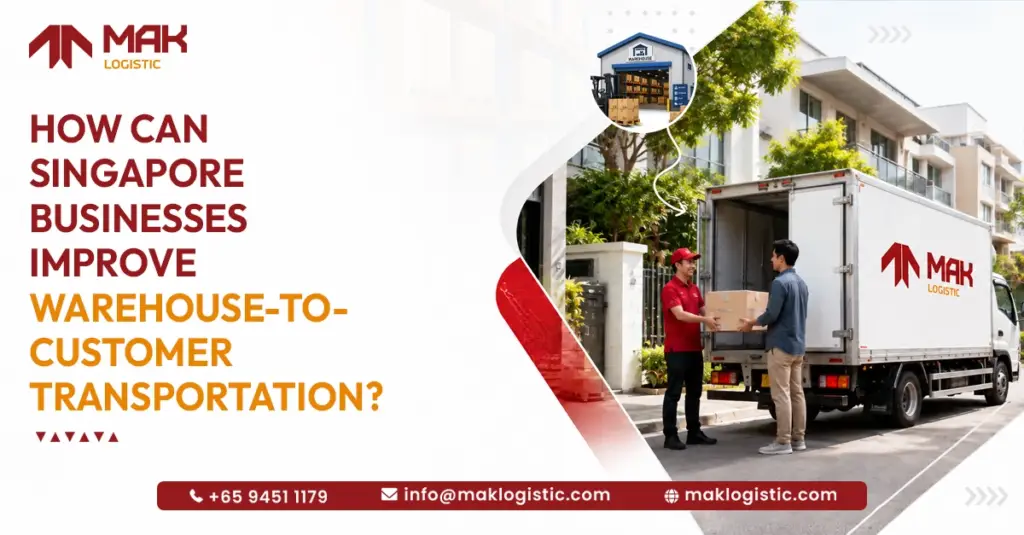
Moving products from a warehouse to the customer involves more than simply arranging a vehicle. Businesses need to coordinate inventory, order preparation, vehicle scheduling, route planning, delivery timing, and communication.
When these activities are not properly coordinated, businesses may experience delayed deliveries, incorrect orders, inefficient vehicle utilisation, and higher transportation costs.
For businesses operating in Singapore, improving the connection between warehousing and delivery can create a more organised logistics process.
Quote html“Efficient transportation starts before the vehicle leaves the warehouse. When warehouse operations and delivery planning work together, products can move more smoothly from storage to the customer.”
How Does Warehouse-to-Customer Transportation Work?
Warehouse-to-customer transportation is the process of moving products from a storage facility to the final customer or delivery destination.
A typical process includes:
Order Received → Inventory Checked → Products Picked → Orders Packed → Dispatch Scheduled → Vehicle Assigned → Products Collected → Delivery Completed
Each stage needs to be coordinated to avoid unnecessary delays.
For example, if products are not ready when the vehicle arrives, the delivery schedule may be affected. Similarly, inaccurate inventory information can result in orders being prepared incorrectly.
This is why warehouse transportation in Singapore operations need to be connected with warehouse activities.
What Challenges Affect Warehouse-to-Customer Transportation in Singapore?
Businesses can face several challenges when managing transportation from warehouses to customers.
Delivery Scheduling
Coordinating multiple deliveries within different time windows can be challenging, especially when businesses have a high number of orders.
Traffic and Route Conditions
Traffic conditions can affect delivery schedules. Route planning needs to consider delivery locations, vehicle capacity, timing, and road conditions.
Poor Warehouse and Transport Coordination
When warehouse teams and transportation teams operate separately, vehicles may arrive before orders are ready or orders may remain waiting after being prepared.
Inaccurate Inventory Information
If inventory records are not updated accurately, the wrong products may be picked or an order may be delayed because the required stock is unavailable.
Changing Order Volumes
Order volumes can fluctuate based on promotions, seasonal demand, customer activity, and business growth.
Businesses therefore need transportation arrangements that can accommodate changing requirements.
How Can Businesses Improve Warehouse-to-Customer Transportation?
Improving transportation does not depend on one single activity. Businesses can make improvements across warehouse operations, planning, communication, and delivery management.
1. Improve Inventory Visibility
Accurate inventory information helps warehouse teams know what products are available and where they are stored.
When an order is received, the warehouse can identify the required products more efficiently and prepare them for dispatch.
Better inventory visibility can also help businesses avoid situations where an order is accepted but the required product is unavailable.
2. Coordinate Warehouse and Transportation Schedules
Warehouse operations and transportation should be planned together.
Once an order is ready, the transportation schedule should align with the expected collection time.
A coordinated process can look like:
Order Ready → Dispatch Confirmed → Vehicle Assigned → Collection → Delivery
This reduces unnecessary waiting time and helps warehouse teams prepare products before the vehicle arrives.
3. Plan Delivery Routes Efficiently
Route planning can help businesses organise multiple deliveries more effectively.
Businesses should consider:
- Delivery locations
- Number of deliveries
- Vehicle capacity
- Delivery time windows
- Product requirements
- Expected traffic conditions
Good route planning can help reduce unnecessary travel and improve delivery scheduling.
4. Choose the Right Vehicle
Different products and delivery requirements may require different vehicle types.
Businesses should consider:
- Product size
- Product quantity
- Weight
- Delivery location
- Temperature requirements
- Collection and delivery schedules
Selecting an appropriate vehicle can help businesses use transportation resources more efficiently.
5. Prepare Orders Before Vehicle Collection
Products should ideally be picked, checked, packed, labelled, and prepared before the scheduled vehicle collection.
This creates a clear handover between warehouse and transportation operations.
When orders are not ready, vehicles may have to wait, affecting the rest of the delivery schedule.
6. Improve Communication
Clear communication between warehouse teams, transportation teams, and customers is important.
Information such as:
- Order status
- Collection timing
- Vehicle availability
- Delivery location
- Special handling requirements
- Delivery updates
should be communicated accurately.
Better communication can help teams respond quickly when delivery schedules change.
Why Is Warehouse and Transportation Coordination Important?
Warehousing and transportation are closely connected.
A warehouse prepares products for movement, while transportation physically moves those products to their next destination.
If one part of the process is delayed, the other can also be affected.
For example:
Warehouse Delay → Vehicle Waiting → Delivery Schedule Delayed
Or:
Vehicle Arrives Early → Order Not Ready → Additional Waiting Time
Effective warehouse and transportation coordination helps businesses connect these activities and create a smoother movement of products.
For businesses operating across Singapore, this coordination can be particularly important when multiple delivery locations and schedules need to be managed.
Singapore’s strong logistics infrastructure and connectivity support businesses involved in regional and local supply chains. The Singapore Economic Development Board highlights Singapore’s logistics ecosystem and its role as a major logistics and supply chain hub. Singapore Economic Development Board – Logistics & Supply Chain Management
How Can Technology Improve Transportation Coordination?
Technology can help businesses improve visibility and communication across logistics operations.
Depending on the business and logistics setup, digital systems can support:
- Inventory visibility
- Order processing
- Delivery scheduling
- Transportation planning
- Delivery status updates
- Data management
Connecting warehouse and transportation information can reduce manual communication and provide teams with more accurate operational information.
Singapore is also encouraging digitalisation within the logistics industry. The Infocomm Media Development Authority’s Logistics Industry Digital Plan provides guidance for logistics businesses looking to adopt digital solutions and improve operational capabilities. IMDA – Logistics Industry Digital Plan
How Can Businesses Reduce Transportation Delays?
Businesses can take several practical steps to reduce avoidable transportation delays.
Prepare Orders in Advance
Orders should be picked, packed, checked, and ready before the planned collection time.
Confirm Delivery Information
Accurate delivery addresses, contact information, and delivery instructions can help reduce failed delivery attempts.
Monitor Vehicle Schedules
Businesses should coordinate vehicle arrival and warehouse readiness to reduce waiting time.
Group Suitable Deliveries
Where appropriate, deliveries with nearby destinations can be planned together to improve route efficiency.
Maintain Clear Communication
If an order or delivery schedule changes, the relevant teams should be informed quickly.
These small improvements can contribute to a more organised warehouse delivery Singapore process.
When Should Businesses Outsource Transportation?
Managing transportation internally can work for businesses with a small and predictable delivery operation.
However, outsourcing may become useful when:
- Delivery volumes are increasing
- Businesses need additional vehicles
- Delivery locations are changing frequently
- Internal transportation management requires significant time
- Businesses need specialised transportation
- Warehouse and transportation activities need better coordination
A logistics provider can manage transportation according to the business’s requirements, allowing internal teams to focus on other operations.
How Can a 3PL Provider Support Warehouse-to-Customer Transportation?
A third-party logistics provider can connect warehousing and transportation as part of a broader logistics solution.
A 3PL transportation in Singapore service may include:
- Warehouse collection
- Vehicle scheduling
- Transportation planning
- Warehouse-to-warehouse movement
- Delivery coordination
- General transportation
- Specialised transportation requirements
The advantage of using an integrated logistics provider is that warehouse and transportation activities can be coordinated instead of being managed as completely separate processes.
For businesses looking to improve their overall logistics operations, working with a 3PL provider can also support broader supply chain planning.
Enterprise Singapore highlights logistics as an important industry and supports initiatives that strengthen productivity, technology adoption, and supply chain capabilities. Enterprise Singapore – Logistics
What Should Businesses Look for in a Transportation Provider?
Choosing a transportation provider requires businesses to consider more than vehicle availability.
Important factors include:
Transportation Coverage
Check whether the provider can support the required delivery locations and schedules.
Vehicle Availability
Ensure suitable vehicles are available for the type and quantity of products being transported.
Warehouse Coordination
The provider should be able to coordinate collection schedules with warehouse operations.
Industry Experience
Businesses handling specialised products should consider whether the provider understands their transportation requirements.
Communication
Clear communication is important for coordinating collection, delivery, and schedule changes.
Flexible Support
Businesses with changing delivery volumes may benefit from a provider that can adjust transportation support according to operational requirements.
How Can MAK Logistic Support Transportation in Singapore?
MAK Logistic provides transportation services in Singapore businesses can use for different logistics requirements.
Our transportation solutions include:
- General and dry transportation
- Semiconductor transportation
- Cold chain transportation
- Warehouse-to-warehouse transportation
- Airport-to-warehouse transportation
MAK Logistic can also coordinate transportation with warehouse and fulfillment activities according to business requirements.
By connecting storage, order preparation, and transportation, businesses can create a more organised process for moving products from warehouse to destination.
As a logistics company in Singapore businesses can work with, MAK Logistic supports businesses that require warehousing, fulfillment, transportation, and warehouse manpower solutions.
How Can Businesses Build a More Efficient Warehouse-to-Customer Process?
A practical approach is to review the complete process rather than focusing only on transportation.
Businesses can ask:
Are inventory records accurate?
Are orders ready before vehicle collection?
Are warehouse and transportation schedules coordinated?
Are delivery routes planned efficiently?
Are suitable vehicles being used?
Is delivery information communicated clearly?
Can transportation be outsourced to a logistics provider?
Answering these questions can help businesses identify areas where improvements can be made.
Frequently Asked Questions
What is warehouse-to-customer transportation?
Warehouse-to-customer transportation is the movement of products from a warehouse or fulfillment facility to the customer’s delivery location. It usually involves order preparation, dispatch planning, vehicle collection, transportation, and final delivery.
How can businesses improve warehouse-to-customer transportation?
Businesses can improve transportation by maintaining accurate inventory information, coordinating warehouse and vehicle schedules, planning delivery routes, choosing suitable vehicles, preparing orders before collection, and maintaining clear communication.
Why is warehouse and transportation coordination important?
Warehouse and transportation coordination helps ensure products are ready when vehicles arrive and that deliveries can be planned according to warehouse schedules. Better coordination can help reduce unnecessary waiting and operational delays.
Should businesses outsource transportation?
Businesses may consider outsourcing when delivery volumes increase, transportation becomes difficult to manage internally, or they require additional vehicles, specialised transportation, or better coordination between warehouse and delivery operations.
Can a 3PL provider manage warehouse-to-customer transportation?
Yes. A 3PL provider can coordinate warehouse collection, transportation scheduling, delivery planning, and other logistics activities depending on the services required by the business.
Conclusion
Warehouse-to-customer transportation is an important part of the overall logistics process.
Efficient transportation starts with accurate inventory, organised order preparation, coordinated warehouse operations, suitable vehicles, route planning, and clear communication.
Businesses in Singapore can improve their transportation processes by connecting warehouse activities with delivery planning instead of treating them as separate operations.
For businesses that need additional logistics support, outsourcing transportation and working with a provider that can coordinate warehousing and delivery can simplify daily operations.
MAK Logistic provides warehousing, fulfillment, warehouse manpower, and transportation services in Singapore businesses can use to support their logistics requirements.
Looking to improve your warehouse-to-customer transportation? Contact MAK Logistic to discuss your warehousing and transportation requirements.