Singapore has become a global hub for semiconductor manufacturing and advanced electronics. With leading manufacturers and suppliers operating in the region, logistics plays a critical role in ensuring smooth supply chain operations.
However, many businesses still assume that semiconductor logistics is similar to general transportation. In reality, the differences are significant. From environmental control to handling precision, semiconductor logistics requires a completely different approach.
At MAK Logistic Singapore, we have worked with clients in the electronics sector who initially relied on standard transport methods. Over time, they realized that specialized electronics logistics Singapore solutions were essential to maintain product quality and delivery performance.
What Is Semiconductor Logistics ?
Semiconductor logistics in Singapore involves the transportation, storage, and handling of sensitive electronic components such as microchips, wafers, and integrated circuits.
These products are:
- Highly sensitive to temperature and humidity
- Vulnerable to electrostatic discharge
- Extremely high in value
Global companies like Intel and TSMC rely on advanced logistics systems to ensure product integrity throughout the supply chain.
In Singapore, the growing demand for chip logistics Singapore services reflects the expansion of the semiconductor and electronics industry.
What Is General Transportation ?
General transportation in Singapore refers to the movement of standard goods such as retail products, raw materials, or packaged items.
This type of logistics typically focuses on:
- Cost efficiency
- Standard packaging
- Basic handling procedures
While it is suitable for most industries, it does not meet the strict requirements of semiconductor logistics.
Key Differences Between Semiconductor Logistics and General Transportation
1 Handling Sensitivity
Semiconductors require extremely careful handling. Even minor vibrations or static discharge can cause invisible damage that affects performance.
Because of this, companies must rely on sensitive cargo logistics solutions that include anti static packaging, controlled handling, and trained personnel.
In contrast, general transportation handles goods that are less fragile and do not require such precision.
2 Environmental Control
Semiconductor logistics often requires strict environmental conditions such as:
- Temperature controlled transport
- Humidity regulation
- Cleanroom compatible packaging
According to SEMI, maintaining these conditions is critical to prevent contamination and defects.
General transportation usually operates without these requirements.
3 Security Requirements
Semiconductors are high value products, making them a target for theft or loss.
Specialized logistics providers implement:
- Real time GPS tracking
- Secure warehousing
- Controlled access systems
Singapore’s strong regulatory environment also ensures that high value shipments are handled securely.
General transportation may not provide this level of security.
4 Speed and Precision
Semiconductor supply chains depend on just in time manufacturing. Even small delays can disrupt production and lead to significant financial losses.
Research from McKinsey & Company highlights the importance of speed and precision in high tech supply chains.
General transportation allows more flexibility in delivery timelines.
5 Compliance and Regulations
Semiconductor logistics must comply with strict regulations, including:
- Export control requirements
- Industry standards
- Specialized packaging guidelines
Singapore enforces strong compliance measures for high tech goods, making it a trusted hub for global trade.
General transportation typically involves fewer regulatory complexities.
Real World Example from Singapore
At MAK Logistic Singapore, we supported an electronics client that initially used general transportation for shipping microchips.
The challenges included:
- Increased product defects
- Delayed deliveries
- Customer complaints
After switching to a specialized semiconductor logistics approach:
- Product damage was reduced significantly
- Delivery timelines improved
- Customer satisfaction increased
This real experience highlights the importance of choosing the right logistics strategy.
Why Semiconductor Logistics Matters in Singapore?
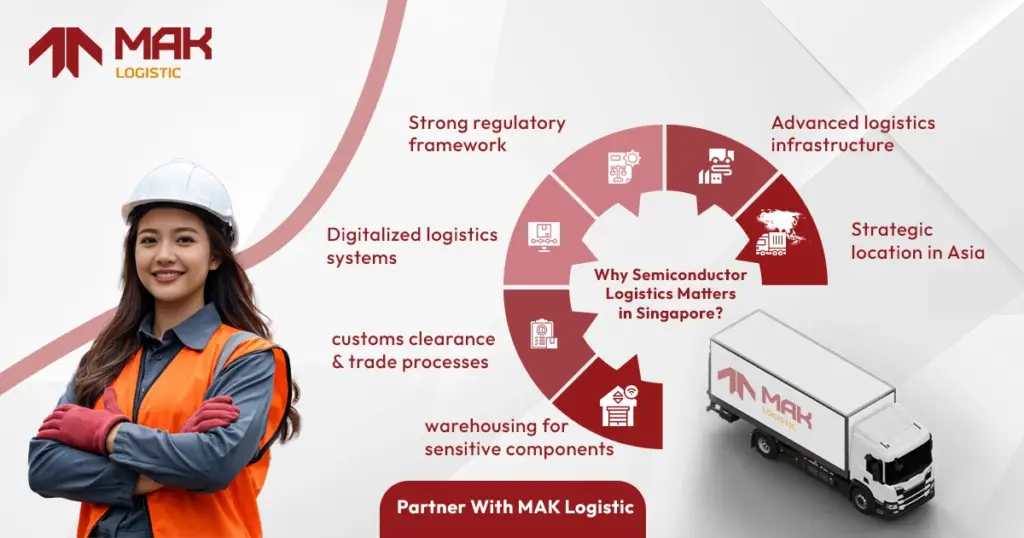
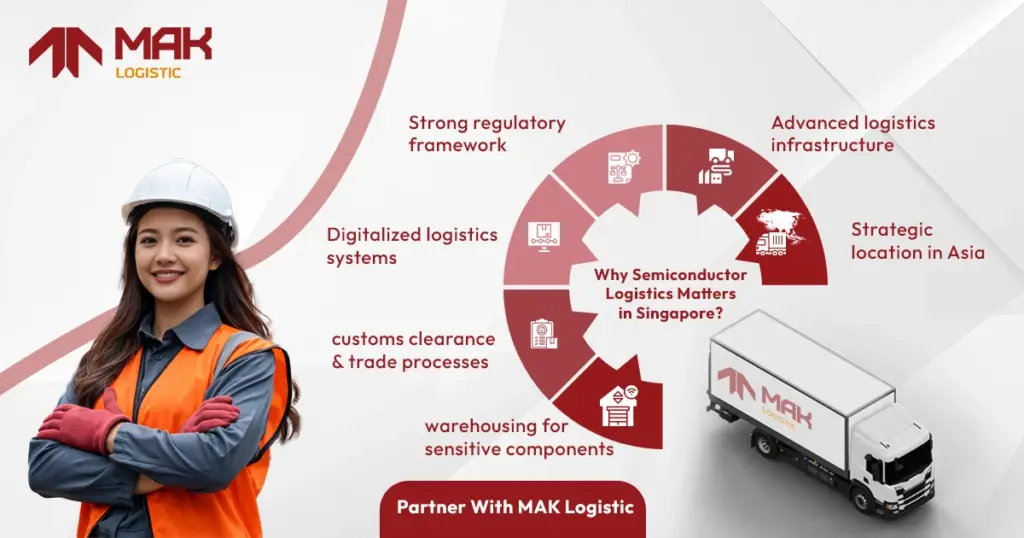
Singapore is a key player in the global semiconductor supply chain due to its:
- Strategic location in Asia
- Advanced logistics infrastructure
- Strong regulatory framework
According to Singapore Economic Development Board, the electronics sector remains a major contributor to the country’s economy.
This makes reliable and specialized logistics solutions essential for business success.
When Should You Choose Semiconductor Logistics ?
You should consider specialized logistics if:
- You handle electronic components or microchips
- Your products require controlled environments
- You operate in high value supply chains
- You need consistent and reliable delivery performance
Why Businesses Trust MAK Logistic Singapore ?
At MAK Logistic Singapore, we understand the complexities of handling sensitive cargo in the electronics industry.
Our approach includes:
- Controlled handling processes
- Secure and monitored transport
- Experienced logistics professionals
- Consistent and reliable delivery
We work closely with businesses to ensure their semiconductor shipments are handled with precision and care.
Conclusion
Semiconductor logistics in Singapore is far more complex than general transportation. It requires expertise, precision, and strict control at every stage of the supply chain.
While general transportation may work for standard goods, it cannot meet the demands of semiconductor logistics. Businesses relying on electronics logistics Singapore, chip logistics Singapore, and sensitive cargo logistics must choose experienced logistics partners to ensure product safety and operational efficiency.
FAQs
What is semiconductor logistics ?
Semiconductor logistics involves transporting and handling sensitive electronic components under controlled conditions to prevent damage and ensure quality.
Why is semiconductor logistics different from general transportation ?
It requires strict environmental control, high security, and precise handling, unlike general transportation which focuses on standard goods.
Is Singapore important for semiconductor logistics ?
Yes, Singapore is a major hub for semiconductor manufacturing and global supply chains due to its infrastructure and strategic location.
What risks are involved in transporting semiconductors ?
Risks include electrostatic discharge, temperature changes, contamination, and theft if not handled properly.