Singapore’s logistics industry is evolving rapidly as businesses look for faster and more cost-effective ways to move goods. With increasing demand for same-day delivery and efficient inventory movement, cross-docking has become an important strategy for modern supply chains.
At MAK Logistic, we have worked with businesses across Singapore that needed quicker inventory turnover, reduced storage costs, and faster distribution. In many of these cases, cross-docking helped streamline operations while improving delivery performance.
For companies focused on improving ecommerce fulfillment in Singapore, cross-docking can significantly reduce handling time and accelerate order fulfillment.
What Is Cross-Docking?
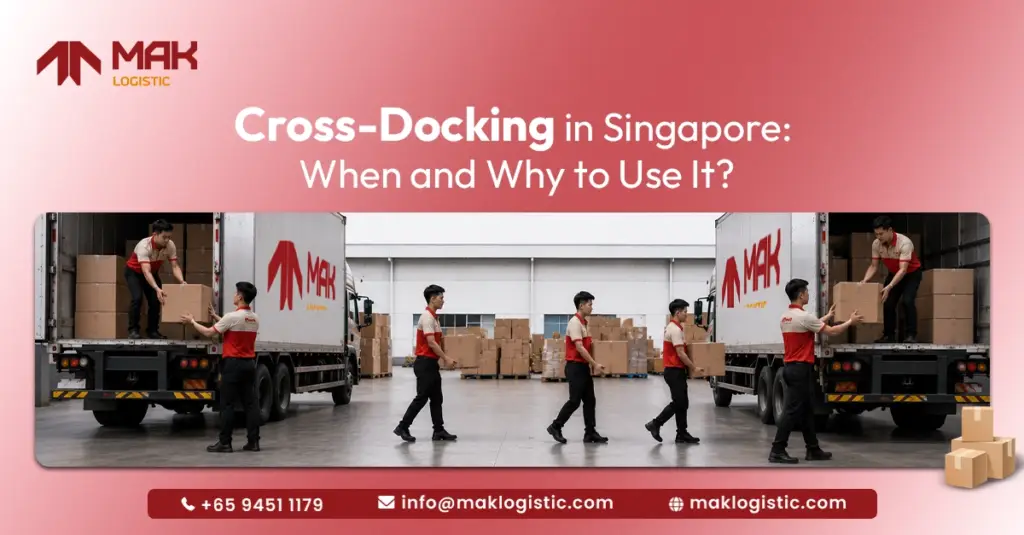
Cross-docking is a logistics process where products are unloaded from inbound trucks and directly transferred to outbound vehicles with minimal or no warehouse storage.
Instead of storing inventory for long periods, goods move quickly through the distribution process.
Cross-docking is a supply chain strategy where incoming goods are transferred directly from receiving docks to outbound transportation with little or no storage in between.
How Cross-Docking Works ?
The process is simple but requires strong coordination:
- Goods arrive at the warehouse or distribution hub
- Products are sorted and consolidated
- Items are immediately loaded onto outbound vehicles
- Deliveries are dispatched to retailers or customers
This reduces storage time and speeds up the supply chain.
At MAK Logistic, efficient dock scheduling and inventory visibility are essential for successful cross-docking operations in Singapore’s fast-moving logistics environment.
Why Cross-Docking Is Growing in Singapore?
Singapore’s strategic location as a global trade hub makes cross-docking highly effective.
Several factors are driving adoption:
- Rising e-commerce demand
- Increasing warehouse costs
- Need for faster last-mile delivery
- Limited warehousing space in urban areas
According to Deloitte, companies that optimize supply chain flow through strategies like cross-docking can reduce warehousing expenses and improve operational efficiency.
Key Benefits of Cross-Docking
Faster Delivery Times
Products move through the supply chain quickly, reducing delays and improving customer satisfaction.
Lower Storage Costs
Since inventory spends less time in warehouses, businesses reduce storage and handling expenses.
Improved Inventory Flow
Cross-docking minimizes overstocking and improves inventory turnover rates.
Reduced Product Handling
Less handling lowers the risk of product damage, especially for fragile or high-demand items.
Better Supply Chain Efficiency
Businesses can improve transportation planning and optimize delivery schedules.
Industries That Benefit from Cross-Docking
E-commerce
Online retailers use cross-docking to speed up deliveries and reduce fulfillment delays.
Retail Distribution
Retailers can quickly distribute goods to multiple store locations without storing products for extended periods.
FMCG and Grocery
Fast-moving consumer goods often require rapid movement to maintain freshness and inventory turnover.
Electronics and Consumer Goods
High-demand products benefit from reduced storage and faster distribution cycles.
Types of Cross-Docking
Continuous Cross-Docking
Goods are transferred immediately from inbound to outbound transport without storage.
Consolidation Cross-Docking
Products from multiple suppliers are combined into one shipment for efficient delivery.
Deconsolidation Cross-Docking
Large shipments are broken into smaller deliveries for different destinations.
Challenges Businesses Should Consider
Although cross-docking improves efficiency, it requires:
- Accurate inventory tracking
- Real-time communication
- Reliable transportation coordination
- Strong warehouse management systems
Without proper planning, shipment delays can affect the entire supply chain.
At MAK Logistic, we help businesses implement structured cross-docking solutions supported by operational expertise and advanced logistics coordination.
Technology Supporting Cross-Docking
Modern cross-docking operations rely on:
- Warehouse Management Systems (WMS)
- Barcode and RFID tracking
- Transportation Management Systems (TMS)
- Real-time inventory monitoring
According to McKinsey & Company, supply chains using digital logistics technology achieve better operational visibility and faster order processing.
Why Businesses Choose MAK Logistic?
MAK Logistic supports businesses in Singapore with practical and efficient logistics solutions tailored to modern supply chain demands.
Our cross-docking services focus on:
- Faster cargo movement
- Reduced warehousing costs
- Improved delivery coordination
- Optimized inventory handling
With local expertise and hands-on operational experience, we help businesses maintain faster and more efficient distribution networks across Singapore.
Is Cross-Docking Right for Your Business?
Cross-docking works best for businesses that:
- Handle high-volume shipments
- Require fast inventory turnover
- Need quicker delivery timelines
- Operate within e-commerce or retail distribution
Businesses with predictable demand and consistent shipment flow benefit the most from this strategy.
Conclusion
Cross-docking is becoming a valuable logistics strategy for businesses operating in Singapore’s fast-paced market. By reducing storage time and accelerating product movement, companies can improve efficiency while lowering operational costs.
For businesses focused on ecommerce fulfillment in Singapore, cross-docking provides a smarter and faster approach to inventory distribution.
At MAK Logistic, we continue to help businesses optimize logistics operations through reliable cross-docking and fulfillment solutions designed for Singapore’s growing supply chain demands.