For many businesses, changing a logistics partner is not an easy decision.
Whether you operate an ecommerce business, manage retail distribution, or oversee supply chain operations, your logistics provider plays a critical role in customer satisfaction and business performance. When fulfillment issues, inventory discrepancies, or delivery delays become frequent, businesses often begin evaluating alternative solutions.
However, one concern usually stands in the way:
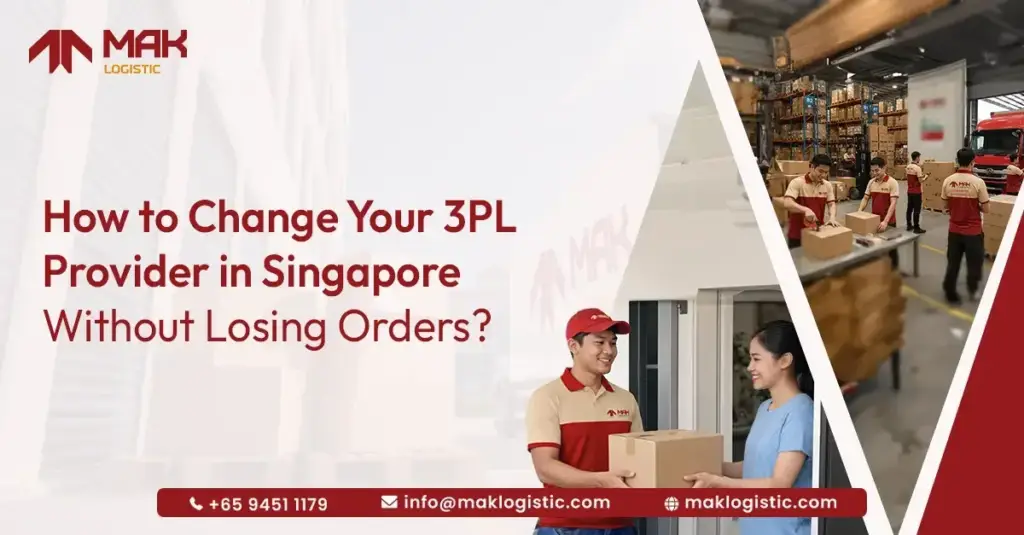
How do you change your 3PL provider in Singapore without disrupting customer orders?
A poorly managed transition can lead to inventory inaccuracies, delayed shipments, and unhappy customers. On the other hand, a well-planned migration can improve operational efficiency, strengthen supply chain performance, and support long-term growth.
“The best logistics transitions are the ones customers never notice, but businesses immediately benefit from.” — MAK Logistic Singapore
Why Businesses Change Their 3PL Provider in Singapore ?
A logistics partner that supported your business a few years ago may not be the right fit today.
As companies grow, logistics requirements become more complex. Increased order volumes, expanding product lines, and rising customer expectations can expose operational limitations.
Common reasons businesses switch to a new 3PL provider in Singapore include:
- Recurring order fulfillment errors
- Inventory visibility challenges
- Limited warehouse capacity
- Slow order processing
- Delivery performance issues
- Lack of technology integration
- Difficulty scaling during peak seasons
If these challenges begin affecting customer experience, it may be time to evaluate a more capable logistics provider in Singapore.
The Hidden Risks of Switching Logistics Providers
Changing providers offers long-term benefits, but businesses must also prepare for potential risks.
Without proper planning, transitions can result in:
Inventory Discrepancies
Inventory records may not align with physical stock during warehouse transfers.
Order Fulfillment Delays
Customer orders may be delayed if systems are not fully integrated before launch.
Supply Chain Disruptions
A poorly coordinated migration can affect warehousing, transportation, and distribution operations.
Customer Service Challenges
Missed deliveries and shipping delays can damage customer trust and brand reputation.
Fortunately, these risks can be minimized with a structured transition plan.
Step 1: Assess Your Current Logistics Operations
Before selecting a new provider, evaluate your existing logistics setup.
Review:
- Monthly order volume
- Inventory levels
- Product categories
- Storage requirements
- Delivery expectations
- Seasonal demand patterns
This assessment helps identify operational gaps and provides a clear understanding of what your future third party logistics company in Singapore should deliver.
Step 2: Select the Right Logistics Partner
Choosing the right logistics partner involves more than comparing prices.
A reliable 3PL provider in Singapore should offer:
- Scalable warehousing infrastructure
- Advanced inventory visibility
- Technology integration
- Reliable transportation support
- Operational flexibility
- Experience managing business growth
Businesses should also evaluate whether the provider offers complementary services such as inventory management services in Singapore, distribution support, and supply chain coordination.
Step 3: Create a Detailed Transition Plan
A successful migration starts with preparation.
Your transition plan should include:
- Inventory transfer timelines
- System integration schedules
- Operational testing phases
- Stakeholder responsibilities
- Contingency procedures
The objective is to ensure every stage of the migration is controlled and measurable.
Step 4: Conduct a Comprehensive Inventory Audit
Before inventory leaves your current facility, verify stock accuracy.
Businesses using warehouse storage in Singapore should confirm:
- Product quantities
- SKU accuracy
- Product condition
- Damaged inventory
- Slow-moving stock
A thorough inventory audit reduces discrepancies and helps ensure a smooth warehouse transition.
Step 5: Transfer Inventory Strategically
One of the biggest mistakes businesses make is moving all inventory at once.
Instead, consider a phased transfer approach.
Benefits include:
- Improved inventory visibility
- Reduced operational risk
- Faster issue resolution
- Greater fulfillment continuity
Businesses relying on warehousing services in Singapore often find phased inventory transfers easier to manage and monitor.
Step 6: Test Ecommerce and Order Management Integrations
Technology plays a critical role in modern fulfillment operations.
Companies using ecommerce fulfillment services in Singapore should verify that all systems are integrated before going live.
This includes:
- Shopify
- WooCommerce
- Lazada
- Shopee
- ERP platforms
- Inventory management systems
Successful integration helps maintain inventory accuracy and supports uninterrupted order processing.
Step 7: Validate Fulfillment Workflows
Before processing live customer orders, test operational workflows.
This includes:
- Order transmission
- Inventory synchronization
- Picking processes
- Packing procedures
- Shipping label generation
- Tracking updates
Businesses that depend on order fulfillment services in Singapore should treat workflow testing as a critical stage of the migration process.
Step 8: Maintain Delivery Continuity
Customer experience should remain consistent throughout the transition.
Maintaining safety stock and monitoring shipments closely can help prevent service disruptions.
A dependable logistics company in Singapore should also have transportation and distribution capabilities that support seamless order fulfillment during migration.
Why Singapore Businesses Need a Scalable Logistics Partner
Singapore remains one of Asia’s leading logistics hubs due to its infrastructure, connectivity, and supply chain ecosystem.
According to Enterprise Singapore, businesses are increasingly investing in productivity, digitalization, and operational resilience to remain competitive in global markets.
In addition, the Singapore Economic Development Board (EDB) continues to position Singapore as a strategic logistics and supply chain hub supporting regional and international trade.
As customer expectations continue to rise, businesses need logistics partners capable of supporting growth without compromising service quality.
Common Mistakes to Avoid During a 3PL Transition
Many logistics transitions encounter avoidable challenges because businesses underestimate the planning required.
Common mistakes include:
- Choosing a provider based solely on cost
- Skipping inventory audits
- Inadequate system testing
- Poor communication between stakeholders
- Moving inventory without contingency plans
- Failing to establish clear performance benchmarks
Avoiding these mistakes significantly improves the likelihood of a successful transition.
How MAK Logistic Supports Business Growth ?
At MAK Logistic, we understand that changing logistics providers is about more than relocating inventory.
Businesses require a logistics partner capable of supporting warehousing, fulfillment, transportation, inventory management, and long-term supply chain performance.
Our integrated solutions support companies seeking:
- Ecommerce fulfillment services in Singapore
- Order fulfillment services in Singapore
- Warehouse storage in Singapore
- Inventory management services in Singapore
- Distribution services in Singapore
- Supply chain management in Singapore
By combining operational expertise with scalable logistics solutions, we help businesses strengthen efficiency while preparing for future growth.
Frequently Asked Questions
How long does it take to change a 3PL provider in Singapore?
The timeline depends on inventory volume, technology requirements, and operational complexity. Most businesses require several weeks of planning, testing, and implementation to ensure a smooth transition.
What is the biggest challenge when changing logistics providers?
Inventory accuracy is one of the most common challenges. Conducting a complete inventory audit before migration helps reduce discrepancies and maintain fulfillment continuity.
How can businesses avoid losing orders during a logistics transition?
Businesses can minimize risk by maintaining safety stock, validating system integrations, testing fulfillment workflows, and implementing a phased inventory transfer strategy.
What should businesses look for in a new logistics provider?
Businesses should evaluate warehousing capabilities, fulfillment accuracy, inventory visibility, transportation support, technology integration, scalability, and industry experience before selecting a new provider.
Final Thoughts
Changing a 3PL provider in Singapore can feel complex, but with proper planning, businesses can complete the transition without disrupting customer orders.
A successful migration requires accurate inventory management, strong communication, reliable technology integration, and a logistics partner capable of supporting future growth.
When executed correctly, changing logistics providers does more than solve operational challenges. It creates a stronger foundation for fulfillment performance, customer satisfaction, and long-term business success.