
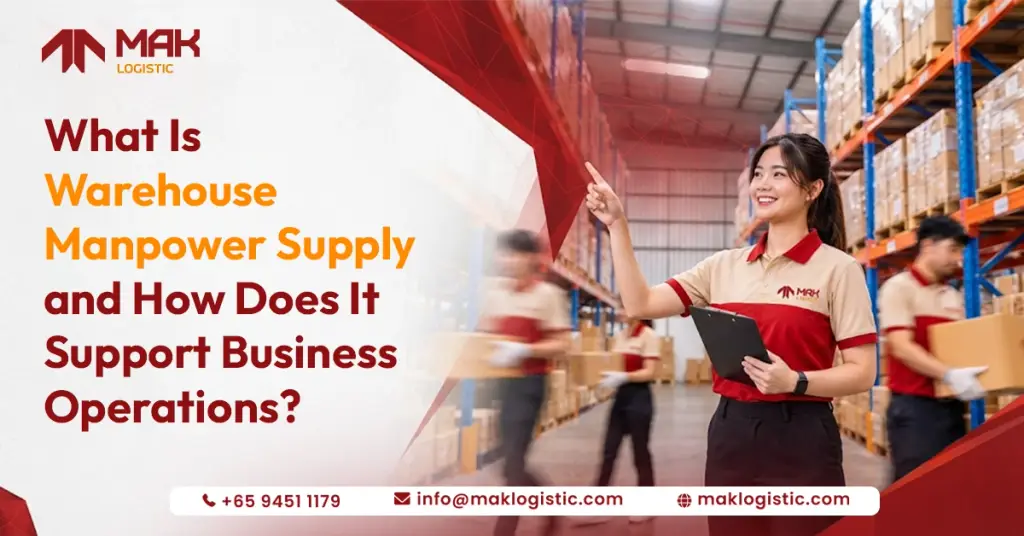
Warehouse operations play an important role in keeping businesses running smoothly. From receiving incoming goods and managing inventory to picking, packing and dispatching orders, every warehouse activity requires sufficient manpower and proper coordination. However, managing warehouse staffing can become challenging when order volumes increase, business demands fluctuate or additional workers are needed during peak seasons.
This is where warehouse manpower supply in Singapore becomes valuable. It helps businesses access the workforce and operational support needed to manage warehouse activities efficiently while maintaining productivity and meeting delivery schedules.
For businesses in Singapore, understanding how warehouse manpower supply works can help improve daily operations, manage workforce requirements and maintain a more organised supply chain.
In this article, we explore what warehouse manpower supply means, the roles involved, its benefits and how businesses can choose the right warehouse manpower support.
What Is Warehouse Manpower Supply?
Warehouse manpower supply refers to workforce support arrangements that help businesses meet the staffing requirements of their warehouse operations. Depending on the service arrangement and applicable employment regulations, this may involve recruitment, staffing coordination or managed operational support for different warehouse activities.
Warehouse manpower requirements vary depending on the size of the facility, type of products handled, inventory volume and daily order requirements.
Common warehouse activities that require manpower include:
- Receiving and unloading incoming goods.
- Sorting and organising products.
- Picking and packing customer orders.
- Labelling and barcode scanning.
- Loading and unloading shipments.
- Stock counting and inventory checking.
- Palletising and preparing goods for transportation.
- Maintaining warehouse cleanliness and organisation.
With suitable workforce planning, businesses can maintain consistent warehouse operations and respond more effectively to changing workloads.
What Are the Different Roles in Warehouse Manpower Supply?
Warehouse operations involve several responsibilities, and each role contributes to the overall movement and management of goods.
1. Warehouse Assistants
Warehouse assistants support general warehouse activities, including receiving goods, sorting products, arranging inventory and preparing items for dispatch. They help maintain an organised working environment and ensure products are handled correctly.
2. Pickers and Packers
Pickers and packers are responsible for selecting products according to customer orders, checking quantities and packing items for shipment. Their accuracy and efficiency are particularly important for e-commerce fulfilment operations.
3. Loading and Unloading Workers
These workers assist with handling incoming and outgoing shipments. Their responsibilities include unloading deliveries, transferring goods to designated storage areas and preparing shipments for transportation.
4. Inventory Handling Personnel
Inventory handling personnel support stock counting, product identification, barcode scanning and inventory recording. Their work helps businesses maintain accurate stock information and reduce discrepancies.
5. Warehouse Supervisors
Warehouse supervisors coordinate daily activities, monitor productivity, allocate tasks and ensure warehouse processes follow operational procedures. They also help identify workflow issues and support communication between warehouse teams.
The workforce required depends on the warehouse’s operational structure, product categories and business requirements.
How Does Warehouse Manpower Supply Support Business Operations?
Having suitable workforce arrangements can improve several areas of warehouse performance. Here are some important ways warehouse manpower support contributes to business operations.
1. Improves Warehouse Productivity
Warehouse productivity depends on how efficiently goods move through different operational stages. When responsibilities are clearly assigned and sufficient workers are available, businesses can manage receiving, sorting, picking, packing and dispatch activities more effectively.
For example, an e-commerce warehouse handling hundreds of orders daily needs organised picking and packing processes. Proper workforce planning helps prevent unnecessary delays and keeps order processing moving.
2. Supports Better Inventory Management
Inventory management requires regular stock checks, accurate product identification and proper storage arrangements.
Warehouse personnel assist with stock counting, barcode scanning, labelling and product organisation. These activities help businesses maintain better inventory visibility and reduce the possibility of misplaced or incorrectly recorded goods.
When combined with a suitable Warehouse Management System (WMS), these processes can support more accurate inventory tracking.
3. Helps Manage Seasonal Workload Changes
Many businesses experience fluctuations in warehouse activity throughout the year.
For example, e-commerce companies may receive increased orders during major online shopping campaigns, festive seasons and promotional periods. Similarly, distributors may experience higher warehouse activity when handling large incoming shipments.
Warehouse manpower planning helps businesses prepare for these changes by identifying workforce requirements in advance and arranging suitable operational support.
4. Reduces Operational Bottlenecks
Insufficient staffing can create delays across different warehouse processes.
For instance, if incoming goods are not unloaded on time, products may take longer to reach their designated storage locations. This can affect inventory updates, order picking and subsequent deliveries.
Having suitable workforce coverage helps businesses coordinate different warehouse activities and minimise avoidable bottlenecks.
5. Supports Faster Order Fulfilment
Order fulfilment involves several connected activities, including picking, packing, labelling, sorting and dispatching.
When these processes are properly coordinated, warehouse teams can prepare orders more efficiently and support timely transportation.
This is particularly important for online retailers and businesses managing multiple sales channels, where customers expect accurate order processing and reliable deliveries.
6. Helps Businesses Manage Operational Costs
Warehouse staffing involves more than employee salaries. Businesses may also need to consider recruitment, training, workforce administration, scheduling and other employment-related expenses.
A well-planned manpower arrangement can help businesses understand their actual workforce requirements and avoid unnecessary staffing gaps or overstaffing.
The objective is not simply to reduce workforce costs but to maintain an appropriate balance between operational capacity, productivity and service quality.
7. Improves Warehouse Workflow Coordination
Warehouse activities are interconnected. Receiving, put-away, storage, picking, packing and dispatch must work together to maintain a smooth flow of goods.
Suitable workforce planning helps ensure that each operational stage receives the attention it requires. Clear task allocation and communication also make it easier to identify delays and resolve workflow issues.
Which Businesses Can Benefit from Warehouse Manpower Support?
Warehouse manpower requirements are not limited to large distribution centres. Businesses across different industries may require workforce planning and operational support.
| Business type | Warehouse manpower requirements |
| E-commerce businesses | Order picking, packing, labelling and dispatch preparation |
| Retail distributors | Receiving, sorting, stock handling and inventory checking |
| Electronics and semiconductor businesses | Careful product handling, sorting and inventory coordination |
| FMCG distributors | Goods receiving, stock arrangement and order preparation |
| Food suppliers | Product handling and coordination according to applicable storage requirements |
| Third-party logistics providers | Receiving, storage, fulfilment and dispatch operations |
| Wholesale businesses | Bulk goods handling, palletising and shipment preparation |
The appropriate workforce arrangement depends on the nature of the products, warehouse environment, order volumes and applicable regulatory requirements.
When Should Businesses Consider Warehouse Manpower Support?
Businesses should review their warehouse workforce requirements when they experience operational changes or increasing workload demands.
Some common situations include:
- Increasing order volumes: More orders require additional coordination across picking, packing and dispatch.
- Seasonal demand: Promotional campaigns and festive periods can increase warehouse activity.
- Business expansion: Opening a new warehouse or expanding storage capacity may require additional operational resources.
- Large shipment arrivals: Receiving and organising bulk shipments can place additional demands on existing warehouse teams.
- E-commerce growth: Managing orders across different online marketplaces can increase picking, packing and inventory handling requirements.
- Operational delays: Repeated delays in receiving, sorting or dispatch may indicate that workforce planning needs improvement.
Reviewing these requirements early helps businesses prepare their warehouse operations for changing demands.
What Should Businesses Consider When Choosing Warehouse Manpower Support?
Choosing a suitable warehouse manpower arrangement requires more than looking at the number of workers available. Businesses should evaluate the following factors.
1. Understand Your Warehouse Requirements
Identify the specific activities that require support. Determine whether your business needs assistance with goods receiving, inventory handling, picking, packing, loading or dispatch preparation.
A clear understanding of operational requirements helps establish suitable workforce arrangements.
2. Evaluate Relevant Experience
Warehouse environments differ depending on the products handled and the operational processes involved.
For example, electronics handling may require different procedures from general retail inventory management. Businesses should consider relevant warehouse experience and the ability to follow operational instructions.
3. Review Training and Safety Practices
Warehouse activities may involve manual handling, pallet movement, storage equipment and machinery.
Ensure that appropriate training, supervision and workplace safety measures are in place. Singapore’s Ministry of Manpower (MOM) outlines workplace safety responsibilities, including risk assessments, safe working conditions and adequate worker instruction.
4. Check Regulatory Compliance
Businesses in Singapore must pay attention to employment regulations and applicable work pass conditions when arranging workforce support.
Importantly, MOM states that deploying work pass holders to a client’s premises solely to supplement the client’s workforce is generally not permitted, except under specified conditions, such as certain construction and process-sector arrangements or where express approval applies.
Therefore, businesses should verify that any proposed manpower arrangement has a legally compliant employment and supervision structure before proceeding.
5. Consider Workforce Planning and Coordination
Reliable warehouse operations require clear responsibilities, suitable task allocation and effective communication.
Businesses should understand how workforce requirements will be assessed, how operational activities will be coordinated and how staffing needs will be reviewed when workloads change.
6. Evaluate Overall Service Value
Instead of focusing only on pricing, consider the overall value of the arrangement.
Evaluate operational suitability, workforce planning, service reliability, communication, safety practices and the ability to support your warehouse requirements.
How Does Warehouse Manpower Supply Work with Other Logistics Services?
Warehouse manpower support is closely connected with other logistics activities. Efficient coordination between these functions helps businesses maintain a smooth supply chain.
For example:
- Warehousing: Supports goods receiving, storage, stock organisation and inventory handling.
- Inventory management: Helps maintain accurate stock records and product visibility.
- E-commerce fulfilment: Supports order picking, packing, labelling and dispatch preparation.
- Transportation: Connects warehouse dispatch activities with the movement of goods to their destinations.
- Last-mile delivery: Completes the delivery process by moving orders from distribution points to customers.
When these activities are properly coordinated, businesses can improve warehouse workflow and overall logistics performance.
How MAK Logistic Supports Warehouse and Logistics Operations in Singapore
Managing warehouse activities requires proper coordination, suitable operational resources and reliable logistics processes.
At MAK Logistic, we support businesses in Singapore with integrated logistics solutions designed to address different supply chain requirements.
Our logistics services include:
- Warehouse Manpower Supply: Workforce-related support for warehouse operational requirements.
- Warehousing and Storage: Storage solutions to support business inventory requirements.
- 3PL Logistics Services: Integrated third-party logistics support for business operations.
- E-commerce Fulfilment: Support for order processing and fulfilment activities.
- Transportation Services: Movement of goods between warehouses and business destinations.
- Inventory Management: Support for organised stock handling and warehouse coordination.
By bringing different logistics activities together, MAK Logistic helps businesses plan their warehousing and supply chain requirements more effectively.
Whether you are managing an existing warehouse, expanding your distribution operations or looking for logistics support in Singapore, choosing the right operational arrangement can make a meaningful difference.
Looking for warehouse manpower and logistics support in Singapore?
Contact MAK Logistic to discuss your warehouse and logistics requirements.
- Phone: +65 9451 1179
- Email: info@maklogistic.com
- Website: https://maklogistic.com/
Frequently Asked Questions (FAQs)
1. What is warehouse manpower supply?
Warehouse manpower supply refers to workforce-related services and arrangements that help businesses meet the staffing requirements of warehouse operations, including receiving, sorting, picking, packing, inventory handling and dispatch preparation.
2. Why is warehouse manpower important for businesses?
Warehouse manpower is important because it supports daily warehouse activities, improves workflow coordination, assists inventory handling and helps businesses manage changing operational demands.
3. Which workers are commonly required in warehouse operations?
Common warehouse roles include warehouse assistants, pickers and packers, loading and unloading workers, inventory handling personnel and warehouse supervisors.
4. Can warehouse manpower support help e-commerce businesses?
Yes. Warehouse workforce planning can support e-commerce activities such as order picking, packing, labelling, sorting and dispatch preparation, helping businesses manage increasing order volumes.
5. What should businesses check before arranging warehouse manpower in Singapore?
Businesses should evaluate operational requirements, relevant experience, safety practices, workforce coordination and compliance with Singapore employment and work pass regulations.
Conclusion
Warehouse manpower supply plays an important role in supporting efficient warehouse operations. From receiving and storing goods to picking, packing and preparing shipments, suitable workforce planning helps businesses maintain productivity and manage changing operational requirements.
For businesses in Singapore, choosing an appropriate and compliant warehouse manpower arrangement can support better inventory management, smoother order fulfilment and more organised logistics operations.
By combining effective workforce planning with reliable warehousing and transportation services, businesses can build a more efficient supply chain and focus on their core operations.