
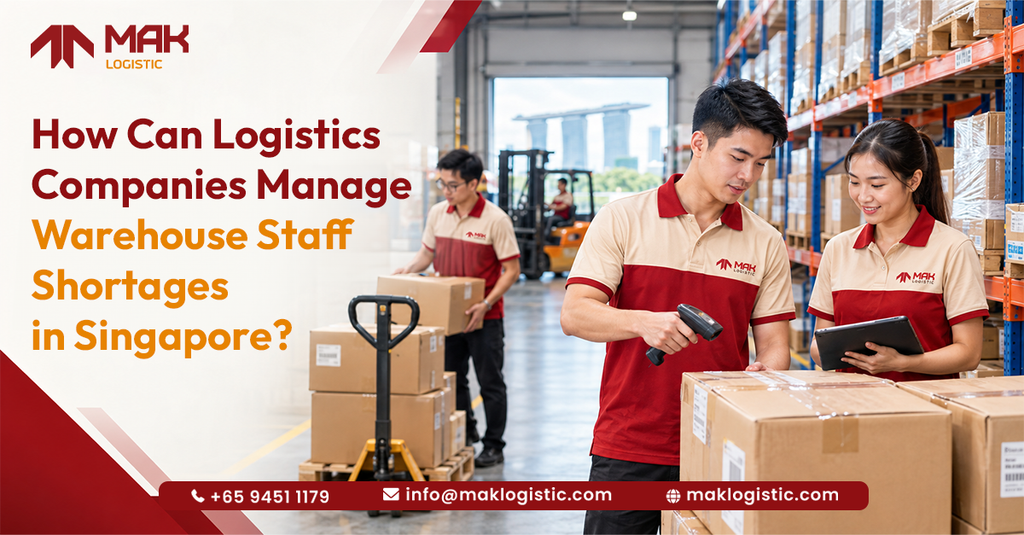
Warehouse operations depend on having the right people available at the right time. From receiving and sorting products to inventory handling, picking, packing, and dispatch, every activity requires proper coordination. When warehouse staff are unavailable or manpower levels are insufficient, even routine operations can experience delays.
For logistics companies in Singapore, managing warehouse staff shortages is an ongoing operational challenge. Fluctuating order volumes, seasonal demand, employee turnover, and increasing fulfilment requirements can make it difficult to maintain consistent staffing levels.
A shortage of warehouse workers can affect productivity, order accuracy, delivery schedules, and customer satisfaction. Businesses may also put additional pressure on existing employees, increasing the risk of mistakes and operational disruptions.
So, how can logistics companies manage warehouse staff shortages while keeping their operations running smoothly?
The solution involves better workforce planning, flexible manpower arrangements, efficient warehouse processes, and access to reliable staffing support. This article explores practical ways to address warehouse manpower challenges in Singapore.
Why Do Logistics Companies Experience Warehouse Staff Shortages?
Before identifying solutions, businesses need to understand the common reasons behind warehouse manpower shortages.
1. Fluctuating Workloads
Warehouse activities do not always follow a consistent schedule. Logistics companies may experience higher workloads during festive periods, promotional campaigns, large customer orders, or seasonal business peaks.
Maintaining a permanent workforce large enough for peak demand can increase costs during quieter periods. However, operating with too few employees can create delays when order volumes increase.
2. Employee Turnover and Absenteeism
Staff turnover, unexpected absences, and difficulties filling vacant positions can affect daily warehouse operations. When experienced employees leave, businesses may also need time to recruit and train replacements.
This can place additional pressure on the remaining workforce, particularly when operations depend on employees with specific warehouse experience.
3. Physically Demanding Warehouse Tasks
Warehouse jobs can involve prolonged standing, repetitive movements, lifting, packing, sorting, and handling products. These responsibilities may contribute to fatigue, making employee wellbeing and proper task allocation important parts of workforce management.
4. Increasing E-commerce and Fulfilment Requirements
The growth of online shopping has increased the importance of accurate inventory handling, picking, packing, and timely dispatch. Warehouses handling multiple customer orders may need more manpower to maintain processing schedules, particularly during busy periods.
5. Recruitment and Training Requirements
Finding suitable warehouse employees involves more than filling vacancies. Workers need to understand warehouse procedures, product handling requirements, safety practices, and inventory processes.
Recruitment and onboarding can take time, making it challenging for logistics companies to respond quickly to unexpected manpower gaps.
8 Practical Ways to Manage Warehouse Staff Shortages in Singapore
1. Plan Warehouse Manpower Based on Operational Demand
One of the most effective ways to manage warehouse staff shortages is to plan manpower according to actual workloads.
Instead of assigning the same number of employees every day, logistics companies should review their operational requirements and identify when additional workers may be needed.
For example, a warehouse may require more employees during high-volume receiving periods, major sales campaigns, or large order dispatch schedules.
Businesses can improve manpower planning by:
- Reviewing historical order and inventory volumes.
- Identifying busy periods and seasonal demand patterns.
- Estimating the number of workers required for each warehouse activity.
- Planning staff schedules around receiving and dispatch requirements.
- Maintaining a backup plan for unexpected absences.
Better workforce planning helps companies avoid both understaffing and unnecessary labour costs.
2. Use Flexible and Temporary Warehouse Manpower
Permanent employees are important for maintaining consistent warehouse operations. However, relying entirely on a fixed workforce may not be practical when workloads fluctuate.
Flexible manpower arrangements can help logistics companies manage temporary increases in demand without making long-term staffing commitments for every additional requirement.
For instance, a business may need extra workers for a short-term inventory movement project, seasonal order processing, or increased packing activities.
Depending on operational requirements, companies can consider:
- Temporary warehouse workers.
- Contract-based manpower support.
- Additional workers during peak periods.
- Short-term staffing for specific warehouse projects.
Working with a reliable warehouse manpower supply provider in Singapore can help businesses explore staffing arrangements that match their workload and operational requirements.
3. Cross-Train Employees Across Different Warehouse Tasks
When warehouse employees are trained to handle more than one responsibility, businesses can distribute available manpower more effectively.
For example, employees who understand both inventory handling and picking operations may be able to support different tasks when workloads change.
Cross-training can cover activities such as:
- Receiving and checking incoming products.
- Sorting and organising inventory.
- Stock counting and inventory handling.
- Picking and packing orders.
- Preparing products for dispatch.
However, employees should only perform tasks for which they have received appropriate training and authorisation. Equipment operation and specialised handling activities require suitable instruction and safety controls.
Cross-training helps improve workforce flexibility while reducing dependence on a small number of employees for specific activities.
4. Improve Warehouse Layout and Workflow
A shortage of staff does not always mean a business needs to recruit more workers immediately. In some cases, inefficient warehouse processes can increase the amount of manpower required to complete routine activities.
For example, poorly organised storage locations may force employees to spend additional time searching for products. Unnecessary movement between storage areas can also slow down picking and replenishment activities.
Logistics companies can improve warehouse efficiency by:
- Assigning clear storage locations.
- Using visible product and shelf labels.
- Grouping frequently handled products appropriately.
- Keeping receiving and dispatch areas organised.
- Reducing unnecessary movement between tasks.
- Establishing clear procedures for stock handling.
A more organised warehouse allows available employees to complete tasks with less wasted time and effort.
5. Introduce Warehouse Management Technology
Technology can help warehouse teams manage tasks more efficiently, particularly when handling large inventory volumes.
Depending on business requirements, warehouse management systems (WMS) and digital tools can support inventory visibility, stock location tracking, receiving records, picking instructions, and dispatch updates.
These systems may help reduce repetitive manual record-keeping and make it easier for employees to identify what needs attention.
For example, digital inventory records can help warehouse teams locate products more efficiently, while barcode scanning can support stock verification during receiving and picking.
Technology does not replace the need for trained warehouse employees. Instead, it supports their work by improving information accuracy and reducing avoidable administrative tasks.
6. Prioritise Employee Training and Retention
Recruiting additional warehouse workers is only one part of solving manpower shortages. Retaining existing employees is equally important.
Frequent employee turnover can increase recruitment and training costs while affecting operational consistency.
Logistics companies should create a work environment that supports employee wellbeing, safety, and development.
Practical steps include:
- Providing clear onboarding and task instructions.
- Conducting regular safety training.
- Maintaining suitable rest breaks.
- Distributing workloads fairly.
- Recognising employee performance.
- Offering opportunities to develop additional warehouse skills.
Employees who understand their responsibilities and receive appropriate support may be better equipped to perform their tasks consistently.
7. Outsource Warehouse Manpower Requirements
For logistics companies that regularly experience staffing gaps, outsourcing warehouse manpower can provide an additional source of operational support.
Instead of managing every recruitment requirement internally, businesses can work with a manpower provider to arrange suitable workers for agreed warehouse activities.
Depending on the provider’s service scope, manpower support may cover:
- General warehouse operations.
- Loading and unloading support.
- Sorting and product handling.
- Inventory management assistance.
- Picking and packing activities.
- Temporary and contract manpower requirements.
This arrangement can help businesses manage changing workloads and reduce the pressure on internal recruitment teams.
However, companies should clearly define job responsibilities, required skills, working schedules, safety requirements, supervision arrangements, and employment responsibilities before engaging a manpower provider.
For more information, read our guide on what warehouse tasks businesses can outsource to manpower providers in Singapore.
8. Monitor Warehouse Productivity and Workforce Performance
Managing manpower effectively requires regular performance monitoring. Logistics companies should understand how their available workforce is performing and identify operational areas where improvements are needed.
Useful warehouse performance indicators include:
| Performance indicator | What it measures |
| Orders processed per worker | Number of orders handled by each employee |
| Picking accuracy | Accuracy of products and quantities picked |
| Order processing time | Time taken to prepare orders |
| Receiving turnaround time | Time taken to process incoming inventory |
| Absenteeism rate | Frequency of employee absences |
| Overtime hours | Additional working hours required to complete tasks |
These measurements can help managers identify workload imbalances, recurring delays, and training requirements.
The purpose is not simply to increase the number of tasks completed by each employee. Productivity should be evaluated alongside accuracy, safety, and workload sustainability.
When Should Logistics Companies Consider Outsourcing Warehouse Manpower?
Outsourcing warehouse manpower may be worth considering when internal staffing arrangements can no longer support operational requirements.
Here are some situations where external manpower support may be useful.
During peak seasons: Businesses may need additional workers to handle higher receiving, picking, packing, and dispatch volumes.
When permanent recruitment takes time: Companies facing recruitment challenges may explore external manpower arrangements to support agreed operational requirements.
For short-term warehouse projects: Temporary inventory movements, stocktaking, and warehouse reorganisation may require additional workers for a limited period.
When operations are expanding: Businesses increasing storage capacity or handling more orders may need additional manpower to support their growth.
When internal teams are overloaded: If existing employees are regularly required to work overtime or manage multiple responsibilities, additional support may help distribute workloads more effectively.
Before outsourcing, businesses should compare costs, service terms, worker suitability, availability, and the provider’s ability to meet their operational requirements.
What Should Businesses Look for in a Warehouse Manpower Provider in Singapore?
Choosing the right manpower provider is important because warehouse productivity depends on worker suitability, reliability, and proper coordination.
Consider the following factors when evaluating a provider.
Experience in Warehouse Operations
Look for a provider that understands warehouse activities, including receiving, sorting, inventory handling, picking, packing, and dispatch support.
Flexible Manpower Arrangements
Check whether the provider can support permanent, temporary, or contract manpower requirements based on your operational needs.
Worker Suitability and Training
Discuss the experience, skills, onboarding procedures, and safety training provided to workers before they begin warehouse activities.
Clear Service Terms
Understand the pricing structure, working schedules, replacement arrangements, supervision responsibilities, and other contractual conditions.
Communication and Coordination
A reliable provider should establish clear communication channels to manage attendance, work allocation, operational updates, and staffing changes.
Compliance and Workplace Safety
Ensure that the manpower arrangement meets applicable Singapore employment, workplace safety, and work pass requirements. Businesses should clarify the respective responsibilities of the provider and the hiring organisation.
Selecting a suitable partner can help businesses maintain more consistent warehouse operations while managing manpower requirements responsibly.
How MAK Logistic Supports Warehouse Manpower Requirements in Singapore
Managing warehouse staff shortages requires a practical approach that balances workforce availability, operational efficiency, and business costs.
MAK Logistic provides warehouse manpower supply in Singapore, supporting businesses with different staffing requirements. Companies can explore permanent, temporary, and contract manpower arrangements based on their warehouse operations.
Whether your business needs support for general warehouse activities, inventory handling, picking and packing, or changing operational workloads, understanding your requirements is the first step towards identifying a suitable manpower arrangement.
By discussing your staffing needs, work schedules, and warehouse activities with MAK Logistic, you can explore manpower support that aligns with your business operations.
Learn more about our warehouse manpower supply services in Singapore.
Contact MAK Logistic
Phone: +65 9451 1179
Email: info@maklogistic.com
Website: https://maklogistic.com/
Frequently Asked Questions
1. Why do logistics companies face warehouse staff shortages in Singapore?
Logistics companies may experience warehouse staff shortages due to employee turnover, absenteeism, fluctuating workloads, seasonal demand, recruitment challenges, and increasing e-commerce fulfilment requirements.
2. How can logistics companies manage warehouse manpower shortages?
Businesses can manage manpower shortages through better workforce planning, temporary staffing, employee cross-training, improved warehouse layouts, technology adoption, and outsourcing warehouse manpower requirements.
3. Is outsourcing warehouse manpower suitable for small businesses?
Yes. Small businesses can consider outsourcing when they need additional warehouse workers but do not want to manage every recruitment requirement internally. The arrangement should match their workload, budget, and staffing needs.
4. What types of warehouse jobs can be supported through manpower outsourcing?
Depending on the provider’s service scope, outsourced manpower may support receiving, sorting, loading and unloading, inventory handling, picking, packing, stocktaking, and dispatch preparation.
5. What is the difference between temporary and contract warehouse manpower?
Temporary manpower generally supports short-term or immediate staffing requirements, while contract manpower is arranged for an agreed employment or service period. The exact terms, responsibilities, and duration depend on the arrangement.
Conclusion
Warehouse staff shortages can affect productivity, inventory handling, order processing, and delivery schedules. For logistics companies in Singapore, managing these challenges requires more than recruiting additional employees.
Better manpower planning, cross-training, organised warehouse workflows, technology adoption, and employee retention can help businesses make better use of their available workforce. When additional support is required, outsourcing warehouse manpower can provide another way to manage changing operational demands.
The right approach depends on your warehouse activities, staffing requirements, and business goals. By choosing suitable manpower arrangements and improving daily processes, logistics companies can build more adaptable warehouse operations.
If your business needs additional warehouse staffing support, MAK Logistic can help you explore permanent, temporary, and contract manpower solutions in Singapore.