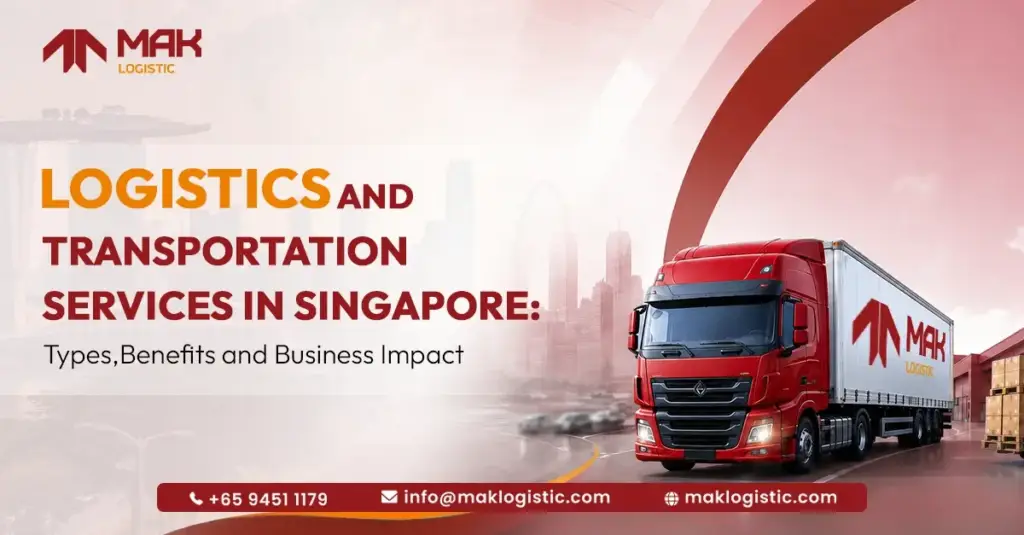
Singapore is one of the world’s leading logistics and transportation hubs, connecting businesses to regional and global markets through its strategic location, world class infrastructure, and highly efficient trade ecosystem. From ecommerce retailers and manufacturers to wholesalers and distributors, businesses across industries rely on professional logistics and transportation solutions to move goods efficiently and maintain supply chain continuity.
However, logistics today is far more than simply moving products from one location to another. It involves coordinating inventory, warehousing, transportation, fulfillment, distribution, and supply chain activities to ensure products reach the right place at the right time.
As customer expectations continue to rise and supply chains become increasingly complex, investing in reliable logistics and transportation services in Singapore has become a strategic business decision rather than just an operational necessity.
“Efficient logistics is not about moving goods faster. It is about creating a supply chain that supports growth, improves customer satisfaction, and delivers long term business value.”
— MAK Logistic Pte Ltd
In this guide, we explore the different types of logistics, transportation solutions, key business benefits, and the impact these services have on modern organizations.
What Are Logistics and Transportation Services?
Featured Snippet Answer
Logistics and transportation services involve the planning, storage, movement, and management of goods throughout the supply chain. These services include warehousing, transportation, inventory control, fulfillment, distribution, and supply chain coordination to ensure products move efficiently from suppliers to customers.
While transportation focuses on moving products between locations, logistics covers the broader process of managing the entire flow of goods across the supply chain.
Together, logistics and transportation help businesses improve efficiency, reduce delays, optimize inventory, and enhance customer satisfaction.
Why Logistics and Transportation Services Are Important in Singapore?
Singapore plays a critical role in global trade and regional supply chain operations. Businesses operating in the country face increasing customer expectations, growing ecommerce demand, and the need for faster and more efficient fulfillment.
Professional logistics services in Singapore and transportation services in Singapore help organizations:
- Improve operational efficiency
- Reduce supply chain disruptions
- Enhance inventory visibility
- Improve order accuracy
- Optimize transportation planning
- Support business expansion
- Increase customer satisfaction
Businesses that invest in efficient logistics operations are often better positioned to remain competitive in today’s fast changing marketplace.
Types of Logistics in Singapore
Understanding the different types of logistics helps businesses identify the solutions most relevant to their operations.
Inbound Logistics
Inbound logistics focuses on the movement of raw materials, components, and supplies from vendors or suppliers to warehouses, distribution centers, or production facilities.
Key activities include:
- Supplier coordination
- Transportation planning
- Goods receiving
- Inventory replenishment
- Warehouse receiving operations
Efficient inbound logistics helps businesses maintain inventory availability while reducing procurement delays and operational interruptions.
Outbound Logistics
Outbound logistics involves moving finished products from warehouses or fulfillment centers to customers, retailers, wholesalers, or business locations.
This area of logistics directly affects customer satisfaction because it includes:
- Order processing
- Distribution planning
- Shipment coordination
- Delivery management
- Customer fulfillment
For businesses selling products online, outbound logistics is one of the most important components of customer experience.
Reverse Logistics
Reverse logistics manages the movement of products from customers back to businesses.
Examples include:
- Product returns
- Warranty claims
- Product exchanges
- Repairs and refurbishment
- Recycling and disposal
As ecommerce continues to expand, effective reverse logistics has become increasingly important for customer retention and inventory management.
Third Party Logistics (3PL)
Many businesses partner with a professional 3PL provider in Singapore to outsource logistics operations.
Third Party Logistics providers typically manage:
- Warehousing
- Transportation
- Inventory management
- Distribution
- Fulfillment operations
A 3PL model allows businesses to focus on growth while leveraging specialized logistics expertise and infrastructure.
Fourth Party Logistics (4PL)
Fourth Party Logistics focuses on supply chain management and coordination.
Rather than managing individual logistics functions, a 4PL provider oversees the entire logistics ecosystem and coordinates multiple logistics partners to improve efficiency and visibility.
Organizations with complex supply chains often adopt 4PL strategies to improve performance and optimize logistics operations.
Specialized Logistics
Many industries require logistics solutions tailored to specific operational requirements.
Examples include:
Ecommerce Logistics
Supports online retailers through inventory storage, fulfillment, delivery coordination, and returns management.
Cold Chain Logistics
Provides temperature controlled transportation and storage for food, pharmaceutical, and healthcare products.
Freight Logistics
Manages cargo movement through road, sea, air, and multimodal transportation networks.
Project Logistics
Supports oversized, complex, or high value shipments requiring specialized planning and transportation arrangements.
Types of Transportation Services in Singapore
Transportation forms a critical component of logistics operations.
Local Transportation Services
Local transportation services support the movement of goods throughout Singapore.
These services are commonly used for:
- Retail deliveries
- Business to business shipments
- Warehouse transfers
- Customer deliveries
Reliable transportation helps maintain supply chain continuity and delivery performance.
Regional Transportation Services
Businesses serving Southeast Asian markets often require regional transportation support.
These services facilitate cross border product movement and help organizations expand their market reach.
Freight Transportation Services
Freight transportation focuses on moving goods through:
- Road freight
- Air freight
- Sea freight
- Multimodal transportation
Choosing the appropriate freight solution depends on delivery requirements, shipment volume, and operational objectives.
Last Mile Delivery Services
Last mile delivery refers to the final stage of the delivery process where products reach the end customer.
This stage has a significant impact on customer satisfaction and overall service quality.
Transportation Management Solutions
Modern transportation management involves planning, coordinating, and optimizing transportation activities.
Effective transportation management helps businesses:
- Improve route efficiency
- Reduce transportation costs
- Increase delivery reliability
- Enhance operational visibility
Business Services Supported by Logistics Operations
Professional logistics providers support a wide range of business functions.
Warehousing Services
Professional warehousing services in Singapore help businesses manage inventory efficiently while supporting operational flexibility.
Warehouse Storage Solutions
Scalable warehouse storage in Singapore enables organizations to accommodate changing inventory requirements while maintaining accessibility and control.
Inventory Management
Effective inventory management services in Singapore help businesses maintain accurate stock levels, improve forecasting, and reduce inventory related challenges.
Inventory Handling
Specialized inventory handling services in Singapore support receiving, storage, movement, tracking, and dispatch activities within warehouse operations.
Ecommerce Fulfillment
As online retail continues to grow, ecommerce fulfillment services in Singapore help businesses manage inventory, process orders, and coordinate deliveries efficiently.
Order Fulfillment
Professional order fulfillment services in Singapore ensure customer orders are processed accurately and delivered on time.
Pick and Pack Operations
Reliable pick and pack services in Singapore improve fulfillment accuracy while supporting faster order processing.
Ecommerce Returns Management
Efficient ecommerce returns management in Singapore helps businesses handle product returns, exchanges, and inventory recovery effectively.
Distribution Services
Professional distribution services in Singapore ensure products move efficiently between suppliers, warehouses, retailers, and customers.
Supply Chain Management
Strong supply chain management in Singapore improves visibility, coordination, and operational efficiency across the entire supply chain.
Benefits of Professional Logistics and Transportation Services
Improved Customer Satisfaction
Reliable logistics operations help businesses meet customer expectations through accurate fulfillment and on time deliveries.
Better Inventory Visibility
Professional inventory management systems improve stock accuracy and support informed business decisions.
Reduced Operational Complexity
Outsourcing logistics functions allows businesses to focus on core operations while improving supply chain efficiency.
Increased Scalability
Professional logistics infrastructure helps businesses accommodate growth without significant capital investment.
Cost Optimization
Efficient warehousing, transportation, and inventory management contribute to lower operational costs and improved resource utilization.
Business Impact of Efficient Logistics Operations
Organizations with strong logistics capabilities often experience measurable business benefits.
Higher Customer Retention
Accurate deliveries and reliable service improve customer trust and encourage repeat business.
Stronger Inventory Control
Improved inventory visibility reduces stock shortages and excess inventory.
Enhanced Operational Performance
Integrated logistics processes help streamline operations and improve productivity.
Greater Competitive Advantage
Businesses with efficient logistics networks are often better positioned to meet customer expectations and respond to market changes.
Sustainable Business Growth
Reliable logistics infrastructure provides the foundation needed to support long term expansion and operational scalability.
How to Choose the Right Logistics and Transportation Partner in Singapore ?
Selecting the right logistics partner can significantly influence operational performance and business growth.
Businesses should evaluate:
- Industry experience
- Warehousing capabilities
- Transportation networks
- Fulfillment expertise
- Technology and visibility
- Scalability
- Supply chain knowledge
- Customer support
A strong logistics partner should help businesses improve efficiency, reduce operational challenges, and support future growth objectives.
Frequently Asked Questions
What are logistics and transportation services?
Logistics and transportation services involve managing the storage, movement, fulfillment, and distribution of goods throughout the supply chain.
What is the difference between logistics and transportation?
Transportation focuses on moving products between locations, while logistics includes transportation, warehousing, inventory management, fulfillment, distribution, and supply chain coordination.
What does a 3PL provider in Singapore do?
A 3PL provider manages logistics functions such as warehousing, inventory management, transportation, fulfillment, and distribution on behalf of businesses.
Why are logistics services important for businesses?
Logistics services improve operational efficiency, customer satisfaction, inventory visibility, and overall supply chain performance.
Why is supply chain management important?
Effective supply chain management helps businesses improve coordination, optimize inventory, reduce costs, and support long term growth.
Conclusion
Efficient logistics and transportation operations are essential for modern business success. From inbound logistics and outbound logistics to transportation management, fulfillment, distribution, and inventory control, every component contributes to supply chain performance and customer satisfaction.
Whether businesses require ecommerce fulfillment services in Singapore, order fulfillment services in Singapore, warehousing services in Singapore, distribution services in Singapore, or comprehensive supply chain management in Singapore, investing in professional logistics solutions can improve operational efficiency, strengthen resilience, and support sustainable growth.
As Singapore continues to strengthen its position as a global logistics hub, businesses that prioritize logistics excellence will be better equipped to compete, scale, and succeed in an increasingly demanding marketplace.