In Singapore’s fast-moving logistics environment, businesses cannot afford delays in inventory movement. Whether it is retail, ecommerce, or manufacturing, smooth warehouse to warehouse transportation in Singapore plays a key role in keeping operations stable.
Many companies operate multiple storage locations across the island. This makes inter warehouse logistics in Singapore essential for balancing stock, meeting demand, and avoiding disruptions.
At MAK Logistic, we have supported businesses in managing goods transfer between warehouses across Singapore. From scheduled pallet deliveries to urgent inventory movement, efficient planning always makes the difference.
This guide explains how businesses in Singapore actually move goods between warehouses efficiently, based on real operational practices.
Why Warehouse to Warehouse Transportation Matters in Singapore?
Singapore is a global logistics hub with limited land space. Businesses often rely on multiple warehouses instead of one large facility.
Because of this, warehouse transport services in Singapore are used daily for:
- Inventory balancing between locations
- Faster order fulfillment
- Distribution planning
- Managing seasonal demand
Without proper warehouse distribution services in Singapore, businesses risk delays, stock shortages, and higher costs.
How Singapore Businesses Move Goods Between Warehouses Efficiently ?
1. Scheduled Warehouse Transfers Instead of Last Minute Moves
Efficient businesses plan ahead. They rely on fixed schedules for warehouse to warehouse transportation in Singapore rather than reacting to problems.
Common practices include:
- Daily transfers for fast-moving inventory
- Weekly transfers for bulk goods
From our experience at MAK Logistic, scheduled transfers reduce delays and improve inventory flow across warehouses.
2. Centralized Inventory Tracking Across Locations
Companies use inventory systems to manage stock across all warehouses.
Before any inventory transfer logistics process, they:
- Check stock levels in each warehouse
- Identify surplus and shortage points
- Plan movement accordingly
This reduces unnecessary transport and supports efficient Singapore supply chain logistics.
3. Route Planning Based on Local Conditions
Even in a well-connected city like Singapore, delivery timing matters.
Businesses optimize routes by:
- Avoiding peak traffic hours
- Using industrial zones efficiently
- Planning multi-stop deliveries
With strong local knowledge, companies improve freight transport between warehouses and reduce transit time.
4. Using the Right Transport Method for Each Load
Different types of goods require different transport solutions.
Businesses choose:
- Pallet transport Singapore for bulk items
- Full truck load for large shipments
- Shared transport for smaller loads
Selecting the right option improves efficiency and lowers costs.
5. Real Time Tracking for Better Coordination
Modern third party logistics Singapore providers offer real-time tracking.
This allows businesses to:
- Monitor delivery progress
- Coordinate with receiving warehouses
- Avoid unloading delays
At MAK Logistic, we see that visibility helps clients reduce miscommunication during warehouse transfers.
6. On Demand Logistics for Urgent Transfers
Even with planning, urgent needs arise.
Businesses use on demand logistics for:
- Emergency stock movement
- Sudden demand spikes
This ensures continuity without disrupting the entire supply chain.
Common Challenges in Warehouse Transport (And Practical Solutions)
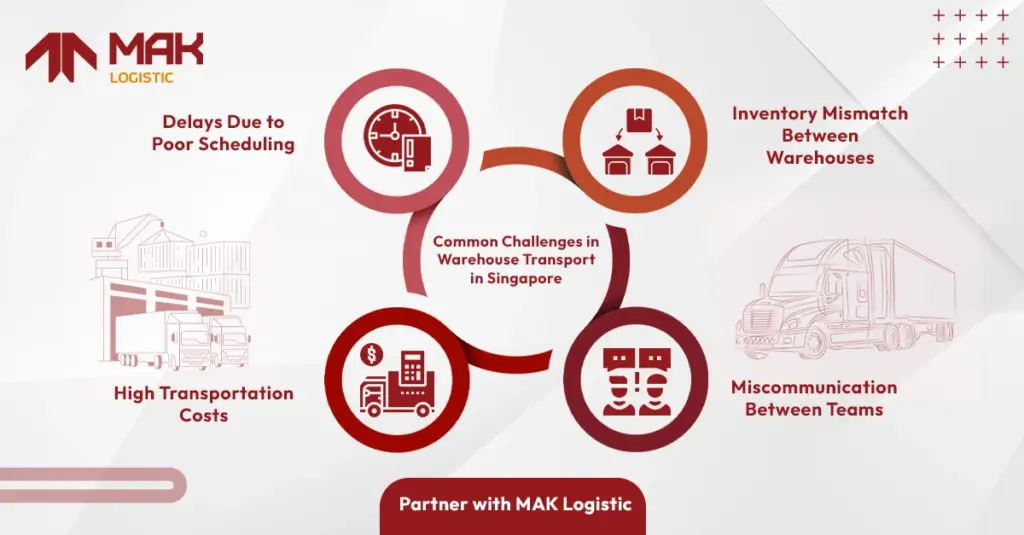
Delays Due to Poor Scheduling
Solution: Use fixed transfer schedules and avoid peak hours
Inventory Mismatch Between Warehouses
Solution: Implement real-time inventory tracking
High Transportation Costs
Solution: Consolidate shipments and optimize routes
Miscommunication Between Teams
Solution: Align dispatch and receiving teams before transport
These are real issues we regularly solve while handling inter warehouse logistics in Singapore at MAK Logistic.
Real World Example from Singapore Operations
A multi-location retail business struggled with uneven stock distribution. Some warehouses had excess goods, while others faced shortages.
After improving their warehouse to warehouse transportation in Singapore, they:
- Introduced scheduled transfers
- Used centralized inventory tracking
- Optimized delivery routes
The result:
- Faster stock movement
- Reduced delays
- Better inventory balance
This shows how proper goods transfer between warehouses improves overall efficiency.
Key Factors That Make Warehouse Transfers Efficient
Proper Planning
Businesses plan transfers in advance instead of reacting late
Clear Coordination
Both warehouses are prepared before shipment
Local Logistics Expertise
Understanding Singapore routes improves delivery speed
Reliable Logistics Partner
Working with experienced providers like MAK Logistic ensures smoother operations
Cost Factors in Warehouse to Warehouse Transportation
Costs depend on several factors:
- Distance between warehouses
- Type of goods
- Delivery urgency
- Shipment size
Cost Saving Tips
- Combine multiple shipments
- Avoid urgent deliveries when possible
- Use scheduled warehouse transport services Singapore
Future of Warehouse Logistics in Singapore
The logistics industry in Singapore continues to evolve.
Key trends include:
- Smart warehouse systems
- Automation in inventory handling
- Advanced tracking technologies
These innovations will improve Singapore supply chain logistics and make warehouse transfers more efficient.
Why Businesses Choose MAK Logistic ?
MAK Logistic supports companies with reliable warehouse to warehouse transportation in Singapore.
Businesses trust us because:
- We understand local logistics challenges
- We offer flexible transport solutions
- We provide consistent and timely deliveries
Our experience in handling freight transport between warehouses helps businesses improve efficiency and reduce delays.
Frequently Asked Questions
What is warehouse to warehouse transportation in Singapore ?
Warehouse to warehouse transportation in Singapore refers to moving goods between storage facilities to manage inventory and support distribution.
How do businesses move goods between warehouses efficiently?
They use scheduled transfers, centralized inventory systems, and optimized routes to ensure smooth movement.
What are warehouse transport services in Singapore?
These services include pallet transport, full truck load delivery, and scheduled distribution between warehouses.
How can I reduce warehouse transport costs ?
You can reduce costs by consolidating shipments, planning transfers in advance, and using reliable logistics providers.
Why is inter warehouse logistics important?
It helps maintain inventory balance, improve delivery speed, and support efficient supply chain operations.
Conclusion
Efficient warehouse to warehouse transportation in Singapore is essential for businesses that rely on multiple storage locations.
Companies that focus on planning, coordination, and smart logistics strategies can move goods faster and reduce operational issues.
With practical experience and strong local knowledge, MAK Logistic helps businesses manage inter warehouse logistics in Singapore with confidence.