In today’s digital era, e-commerce fulfillment in Singapore has become a strategic backbone for online businesses seeking to deliver exceptional customer experiences and scale rapidly. Fulfillment is more than shipping — it’s about precision, speed, visibility and reliability.
At MAK Logistic, based in Singapore, we combine deep logistics expertise with innovative solutions to help brands succeed locally and regionally. In this guide, we explore types of fulfillment services, common challenges, how to choose the right provider, and real examples of success.
What is E-commerce Fulfillment?
E-commerce fulfillment includes every step from the moment a customer places an order to the point they receive it — inventory storage, order processing, packing, shipping and returns. Done well, it improves customer satisfaction and boosts repeat purchases.
“Order fulfillment isn’t just logistics — it’s customer experience delivered in real time.” — John Tan, Head of Operations at MAK Logistic, with 13+ years in supply chain and e-commerce fulfillment.
Types of E-commerce Fulfillment Services in Singapore
Choosing the right fulfillment model shapes your customer delivery experience and operational efficiency. Below are the core service types.
A. Warehousing and Inventory Management
Efficient inventory management is a cornerstone for seamless e-commerce fulfillment. It ensures stock levels are optimal, prevents stockouts, reduces the cost of excess inventory, and improves demand forecasting — essential for peak and festive seasons.
1. Warehousing Options: Shared vs Dedicated
i. Shared Warehousing
Multiple retailers share storage space in a common facility. This is cost-effective and flexible, making it ideal for small or medium businesses with moderate volume.
✔ Lower operational costs
✔ Flexible space usage
✖ Limited operational control
ii. Dedicated Warehousing
Here, your inventory occupies an exclusive facility. It’s suited for larger sellers with high volumes or specialized storage needs.
✔ Full control over layout & operations
✔ Custom processes tailored to business
✖ Higher investment and long-term commitment
B. Order Processing and Fulfillment
Smooth order execution builds trust with customers. A strong fulfillment partner optimizes every stage.
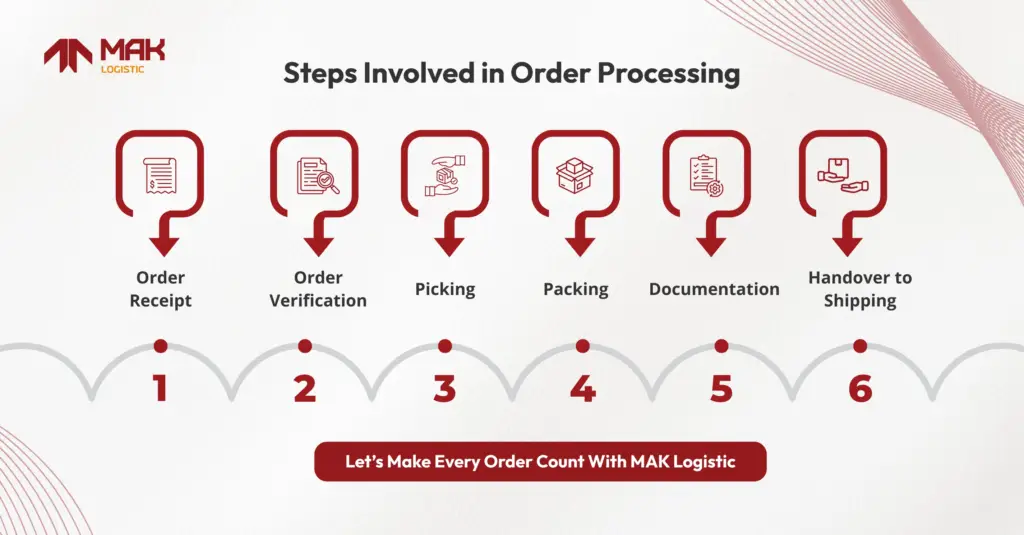
1. Steps Involved in Order Processing
a. Order Receipt — Order information is electronically received and logged.
b. Order Verification — Stock availability and order accuracy are confirmed.
c. Picking — Items are located in the warehouse using manual or automated systems.
d. Packing — Products are carefully packed using appropriate materials.
e. Documentation — Invoices, packing slips and labels are generated.
f. Handover to Shipping — Parcels are handed to the courier for delivery.
2. Pick and Pack Process for Efficiency
An efficient pick and pack process matters to fulfillment speed and accuracy:
a. Batch Optimization — Orders grouped to minimize travel time.
b. Pick Path Optimization — Routes inside the warehouse are optimized to speed up retrieval.
c. Quality Control — Ensures right products are packed.
d. Packing Efficiency — Packing areas are structured to ensure speed with consistency.
C. Shipping and Delivery
A seamless shipping experience translates directly into customer satisfaction.
1. Available Shipping Options
a. Ground Shipping — Cost-effective option for domestic delivery.
b. Expedited Shipping — Faster delivery at a premium cost.
c. International Shipping — Cross-border delivery requires custom documentation and compliance.
2. Tracking and Customer Communication
Real-time tracking and proactive notifications build trust:
a. Shipment Tracking: Customers receive tracking links with real-time status.
b. Alerts & Notifications: Email or SMS updates at key stages (order confirmation, shipped, in transit, delivered).
c. Customer Support: Fulfillment partners offer assistance with delivery issues, exceptions, and inquiries.
At MAK Logistic, we pair advanced shipment tracking with dedicated customer support to ensure transparent delivery journeys.
Key Challenges in E-commerce Fulfillment in Singapore
Even with Singapore’s advanced infrastructure, businesses still face hurdles.
1. Inventory Inaccuracy
Without real-time tracking systems, brands risk stockouts or overselling. This leads to cancellation penalties, lost trust, and revenue loss.
Our Approach: Automated inventory updates and syncing with online sales platforms.
2. Delivery Speed Expectations
Today’s shoppers expect faster delivery windows and transparent tracking. Without optimized carrier networks, brands lose competitiveness.
3. Complexity of Cross-Border Fulfillment
International shipping introduces customs clearance, duties, and varying regulations — areas where expertise matters most.
MAK Logistic Experience: We handle customs documentation and carrier coordination to reduce delays.
Real Success Stories: MAK Logistic Case Studies
Here are examples of measurable improvements achieved with our fulfillment solutions.
Case Study 1: Reducing Delivery Times for a Fashion Retailer
Challenge: Delivery delays and high cart abandonment rates.
Solution: Integrated multi-carrier shipping and strategic warehouse placement.
Outcome:
• 45% reduction in delivery times within Singapore
• 30% boost in customer satisfaction scores
Case Study 2: Inventory Accuracy for Electronics Brand
Challenge: Overstock and frequent stockouts reduced profitability.
Solution: Automated inventory synchronization with real-time updates.
Outcome:
• Inventory accuracy improved from 82% to 98%
• 25% decrease in carrying cost due to optimized stock levels
How to Choose the Right E-commerce Fulfillment Service Provider ?
Finding the right partner affects your bottom line and scalability.
1. Warehouse Location & Network
Choose a provider with warehouses close to your key customer bases to reduce delivery time and lower shipping costs.
2. Technology & Real-Time Tracking
Systems that show order progress, stock levels, and carrier performance allow you to make data-driven decisions.
3. Scalability for Growth
Your partner should support peak seasons without delays — for example, during year-end shopping events where volume spikes over 50%.
4. Reverse Logistics & Returns Handling
Return processing is crucial for customer trust — quick returns and clear communication foster repeat purchases.
5. Transparent Pricing
Avoid partners with hidden fees. Look for clear breakdowns of storage, handling, and shipping costs.
6. Proven Performance
Case studies, reviews and partnerships demonstrate real performance.
Client Testimonials & Trust Signals
Here’s what our partners say:
“MAK Logistic helped reduce our fulfillment costs by 30% and improved delivery speed across Singapore.” — Jessica Lee, CEO, Tembusu Lifestyle
“Their team’s attention to detail reduced our inventory errors, and their customer support is superb.” — Ahmed Rahman, Founder, TechGears SG
Certifications, Credentials & Trust Elements
Trust matters — here’s what MAK Logistic brings:
✔ ISO 9001 Quality Management certified
✔ Strategic API integrations with major carriers
✔ Singapore logistics licenses and compliance credentials
✔ Secure warehouse facilities with CCTV and climate control
These certifications enhance service quality, reliability and customer confidence.
Data & Industry References (with Sources)
According to the World Bank Logistics Performance Index, Singapore consistently ranks among the world’s top logistics hubs, reflecting its superior infrastructure, trade efficiency, and supply chain reliability.
World Bank Logistics Performance Index – Singapore Overview
This ranking highlights Singapore’s strengths in customs efficiency, infrastructure quality, and international shipments, all of which make it a premier base for e-commerce fulfillment operations across Asia.
Recent insights from the eCommerce Foundation and Statista show that e-commerce in Southeast Asia continues to expand rapidly, with an average annual growth rate of over 20%.
eCommerce Foundation Report – Southeast Asia Growth Trends
Statista: Southeast Asia E-commerce Market Size 2025 Forecast
Conclusion
Selecting the right e-commerce fulfillment service in Singapore requires strategic consideration of fulfillment types, technology, trustworthiness, and scalability. A reliable partner like MAK Logistic — backed by real success stories, client testimonials, certifications, and cutting-edge systems — helps businesses deliver superior customer experiences and achieve growth.
Ready to elevate your e-commerce fulfillment?
Contact MAK Logistic Singapore for custom solutions that streamline operations and delight your customer